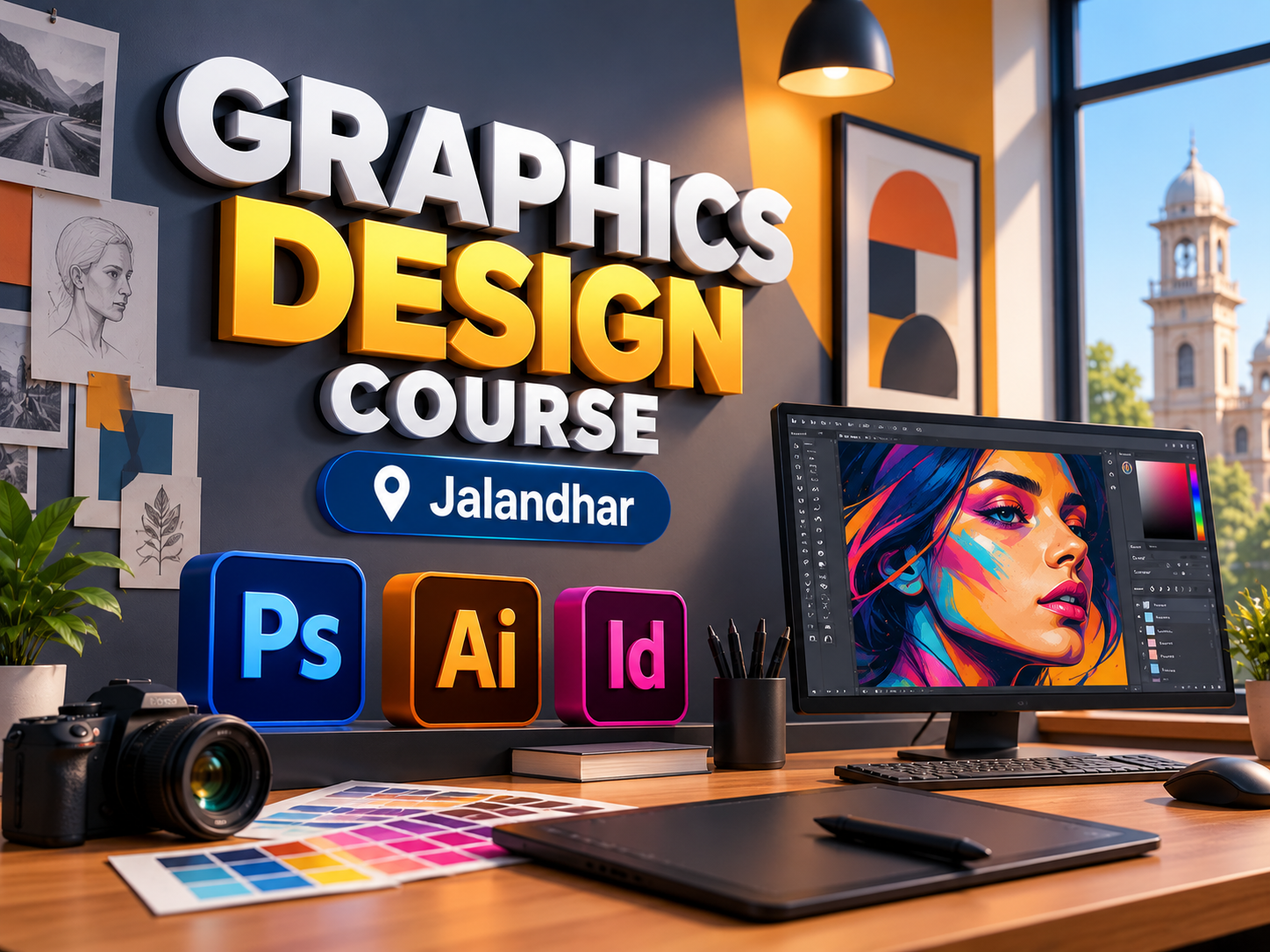
Graphics Design Course in Jalandhar
Graphic design turns ideas into visuals that people can understand, remember, and connect with. From product packaging and business logos to social media campaigns and brochures, design helps organisations communicate clearly. For students who enjoy working with colours, images, typography, and creative concepts, learning graphic design can be a practical way to develop that interest.
A Graphics Design Course in Jalandhar can introduce you to the principles, software, and working methods behind effective visual communication. The aim should extend beyond creating attractive images. Good training helps you understand a brief, identify an audience, organise information, and explain your design choices.
For learners exploring local study options, IAM Jalandhar is worth considering. IAM stands for the Institute of Animation and Multimedia, and its official Jalandhar campus page lists an Advanced Graphic Design course. Students can contact the institute to discuss the current syllabus, admission requirements, and learning format.
What Is Graphic Design?
Graphic design is the practice of combining text, images, shapes, and space to communicate a message. A designer makes decisions about what viewers should notice first, how information should flow, and which visual elements suit the intended audience.
For example, a training institute’s admission poster needs more than a colourful background. Its course name must be readable, its key information should be easy to find, and its call to action should tell interested students what to do next.
Common graphic design projects include:
Business logos and visual identities.
Social media posts and advertising creatives.
Brochures, flyers, and promotional posters.
Product labels and packaging.
Business cards and stationery.
Website banners and digital campaign graphics.
Magazine pages and other publication layouts.
A Professional Graphic Design Course should help students connect these practical applications with clear design thinking.
Why Study Graphic Design in Jalandhar?
Studying locally can make it easier to attend classes consistently, interact with instructors, and maintain a regular practice routine. For learners based in or near Jalandhar, classroom learning may also provide opportunities to discuss assignments and receive direct feedback.
The city itself can provide useful inspiration for practice projects. Students might develop a fictional identity for a café, create a sports product brochure, or design a promotional campaign for an education business. These exercises encourage observation and help connect classroom learning with familiar communication needs.
When comparing Graphic Design Classes in Jalandhar, focus on the quality of teaching and student work. A convenient location is helpful, but the course should also provide enough time for assignments, revisions, and portfolio development.
Who Can Join a Graphic Design Course?
Graphic design can appeal to learners from different educational and professional backgrounds. You do not need to arrive with a fully developed artistic style. Curiosity, patience, and a willingness to practise are useful starting points.
A Graphic Designing Course in Jalandhar may interest:
School leavers exploring creative study options.
College students developing an additional skill.
Beginners interested in visual communication.
Marketing professionals who create campaign content.
Business owners working on their brand materials.
Content creators seeking greater visual consistency.
Career changers considering a creative field.
Eligibility varies between programmes, so applicants should confirm the institute’s requirements. Basic computer confidence can help, while regular practice supports progress throughout the course.
Design Fundamentals You Should Learn
Software helps you produce a design, but design principles help you decide what to create. Strong foundations allow students to move beyond copying examples and begin making purposeful choices.
Colour and Contrast
Colour influences the appearance and tone of a design. Students should practise selecting palettes, creating contrast, and keeping text readable against different backgrounds. Colour choices should support the message and remain consistent across related materials.
Typography
Typography involves selecting and arranging type. It includes font choice, size, spacing, alignment, and hierarchy. A useful exercise is to communicate the same message through several typographic layouts and compare how each version changes the emphasis.
Layout and Composition
Composition determines how elements work together. Balance, alignment, proximity, and empty space help organise a page. A clear layout guides the viewer through information without making every element compete for attention.
Visual Hierarchy
Hierarchy establishes an order of importance. A headline, supporting detail, and contact information should have distinct roles. Learning this skill is essential for creating posters, advertisements, and other materials that people can scan quickly.
Software Skills to Explore
A useful Graphic Design Training in Jalandhar programme should explain both software operations and their purpose within a project. Students need opportunities to apply tools independently after watching demonstrations.
The following software areas are relevant when comparing course syllabuses. The exact applications included should be confirmed with the institute.
Adobe Photoshop
A Photoshop Course in Jalandhar can support learning about image editing and raster-based compositions. Practice may include working with layers, selections, masks, adjustments, and text.
Useful assignment ideas include:
Creating a promotional poster from a brief.
Correcting the colour and exposure of photographs.
Combining images into a balanced composition.
Preparing product graphics for a digital campaign.
Adobe Illustrator
An Illustrator Course in Jalandhar can introduce vector drawing and scalable artwork. Vector workflows are particularly useful for logos, icons, and illustrations that need to work at different sizes.
Practice should include shape construction, curve control, alignment, typography, and organised file preparation.
Publication and Supporting Tools
Publication design introduces students to longer documents, repeated layouts, and consistent text formatting. Supporting tools may also help with quick campaign variations and collaborative content work. Whatever the application, students should understand the design decisions behind the final output.
Logo Design and Brand Identity
A logo is one part of a larger identity system. A useful Logo Design Course should teach students how to investigate a business, explore concepts, and test whether a design works across different applications.
A structured branding exercise can include:
Writing a short brand brief.
Identifying the intended audience.
Collecting relevant visual references.
Sketching several original concepts.
Developing selected ideas digitally.
Testing the logo at small sizes.
Choosing supporting colours and typography.
Presenting the identity on suitable mockups.
Students should learn to explain why a concept fits the brief. A visually polished logo becomes more convincing when its choices have a clear purpose.
Social Media and Advertising Design
Social media design requires clarity, consistency, and awareness of viewing conditions. Many graphics appear on small screens, so a crowded layout or tiny text can weaken an otherwise attractive idea.
Through Graphic Design Classes in Jalandhar, students can practise creating campaign materials with a shared visual identity. A project might include an announcement post, an educational carousel, a promotional story, and an advertisement.
The learning goals should include:
Making the main message immediately visible.
Keeping supporting text readable.
Maintaining consistent brand elements.
Choosing images that support the content.
Adapting layouts for different formats.
Creating a clear call to action.
Designers should also check spelling, dates, contact information, and alignment before delivering files.
Print Design and Production Basics
Designing for print involves practical considerations beyond how an image looks on a monitor. Students should understand dimensions, image quality, margins, bleed, and the specifications requested by the printer.
Suitable practice projects include brochures, business cards, menus, packaging labels, and event posters. These assignments help learners manage content within a fixed physical space.
A Professional Graphic Design Course should also encourage careful production habits. Students need to check their files, organise linked assets where relevant, and export according to the agreed requirements. Asking a printer for specifications before completing a project can prevent avoidable rework.
Why Practical Projects Matter
Following a tutorial can introduce a technique, but an independent assignment reveals whether the student understands it. Project work requires learners to make decisions, manage constraints, and solve problems without copying every step.
Useful portfolio exercises include:
A fictional café identity with a logo and menu.
An admission campaign for a training institute.
Packaging for an imagined personal-care product.
A brochure for a local service business.
A coordinated social media campaign.
An event poster with several format adaptations.
Each project should begin with a brief describing the audience, objective, required content, and deliverables. Feedback and revision then help students understand how to strengthen the result.
Building a Graphic Design Portfolio
A portfolio demonstrates how you apply your skills. It should help a reviewer understand the kinds of problems you can solve and the quality of your execution.
When pursuing Graphic Design Training in Jalandhar, develop your portfolio throughout the learning process. Save sketches, early layouts, feedback, and revised versions so you can explain how a project developed.
A focused portfolio should include:
A selection of your strongest completed projects.
Short descriptions of each brief.
Clear examples of typography and layout.
Consistent, readable project presentations.
Relevant applications of branding work.
Accurate identification of your contribution.
Label fictional briefs as concept projects. Original thinking and thoughtful execution are more valuable than filling a portfolio with repetitive tutorial copies.
Exploring Graphic Design at IAM Jalandhar
Students searching for a Graphic Design Institute in Jalandhar can review IAM’s course information and speak with its admissions team. The institute’s official campus page lists Advanced Graphic Design and describes portfolio reviews and project-based learning as part of its broader teaching approach.
Before enrolling at IAM Jalandhar, ask questions that connect the course to your goals:
Which design principles and applications are covered?
How much supervised practice is included?
What assignments will you complete?
How frequently will your work receive feedback?
What are the current duration, fees, and batch timings?
What portfolio and career support applies to this programme?
Reviewing these details helps you make a more informed decision about whether the course suits your starting level and intended direction.
Career Directions After Learning Graphic Design
Graphic design skills can support several types of creative work. Your options will depend on your portfolio, proficiency, communication skills, and the requirements of individual employers or clients.
Possible directions include:
Junior graphic designer: Producing visual materials under guidance.
Social media designer: Creating coordinated digital content.
Brand identity designer: Developing logos and supporting brand assets.
Layout designer: Organising information for publications and brochures.
Production artwork roles: Preparing and adapting approved designs.
Freelance designer: Managing defined projects for clients.
Some roles require additional specialist training. For example, interface design and motion graphics involve skills beyond a basic graphic design foundation. Course completion should be treated as a starting point for continued development.
Freelancing and Client Communication
Freelancing involves more than making visuals. Designers also need to understand a client’s requirements, define deliverables, estimate time, and manage revisions.
Beginners can practise writing simple project briefs and presenting their ideas professionally. Before starting paid work, clarify what the assignment includes and how the final files will be delivered.
Useful working habits include:
Confirming project scope in writing.
Agreeing on deadlines and revision limits.
Checking permission to use supplied assets.
Maintaining organised project folders.
Recording feedback clearly.
Explaining design choices in straightforward language.
A Graphics Design Course in Jalandhar becomes more useful when students develop these professional habits alongside their creative skills.
How to Get More Value from Your Training
Consistent practice helps turn classroom demonstrations into dependable skills. Set aside time to work independently and revisit assignments after receiving feedback.
Study everyday design examples, including packaging, signs, advertisements, and publications. Ask what attracts attention, what improves readability, and what makes the message difficult to understand.
To support your progress:
Complete assignments before moving to new techniques.
Explore several concepts for the same brief.
Practise typography without relying on decorative effects.
Keep a record of feedback.
Check your designs at their intended viewing size.
Revise weaker work before adding it to your portfolio.
Improvement often comes from repeated decisions and careful revisions rather than learning more shortcuts.
Conclusion
A Graphics Design Course in Jalandhar can help you build a foundation in visual communication, creative software, and practical project work. The most useful learning experience connects design principles with assignments, feedback, and a portfolio that demonstrates your progress.
For students considering IAM Jalandhar, reviewing the current Advanced Graphic Design programme and discussing its learning outcomes is a sensible next step. Confirm the syllabus, schedule, fees, and support available before enrolling.
Whether your goal is employment, freelancing, or creating stronger visuals for your own business, progress depends on regular practice and thoughtful application. Start with the fundamentals, develop original ideas, and keep refining your work into clear, purposeful design.
Explore VFX and Compositing Skills with IAM
Explore VFX with IAM in Hoshiarpur. Learn compositing, rotoscoping, tracking and keying through guided projects then build your visual effects skills. Get course details!
Tell us whatyou wantto create.
A few lines about yourself and the course you're interested in. Our admissions team replies within two working days, and you can book a free campus visit or demo class.
Call admissions→Or send an enquiry to your nearest campus- Phone
- +91 98881 22241
- Address
- 1st Floor, IAM, Crystal Plaza, SCS 78, opp. PIMS Hospital, Jalandhar, Punjab 144001