• Duration5 months
  • Topics16
  • Software04

Advanced Graphic Design Course at IAM — Turn Your Creative Ideas into Powerful Visual Experiences

Design, AI & Marketing

Build advanced graphic design skills at IAM (Institute of Animation and Multimedia), where creativity meets professional design practice. Learn to transform ideas into impactful visuals through typography, colour theory, brand identity, digital illustration, advertising design, publication layouts, and digital media graphics. Develop the creative thinking, technical expertise, and visual communication skills needed to design for modern brands, businesses, advertising agencies, digital platforms, and creative industries.

Graphic Design

Advanced Course · 5 months

You'll learn · 01/16

01About this course

About thecourse.

5 months
Duration
16
Modules
4
Software
Ask about the next batch→

Whether you aspire to become a professional graphic designer, brand identity designer, advertising creative, visual communication specialist, or freelance design professional, this course is designed to help you understand the complete design process—from research and concept development to execution, presentation, and portfolio creation.

At IAM, students are encouraged to move beyond simply creating attractive graphics. The focus is on understanding why a design works, how visual elements communicate a message, and how professional designers solve communication challenges through thoughtful and purposeful design.

Explore your creative potential. Develop your design expertise. Build a portfolio that showcases your vision.

The course,chapter by chapter.

  1. 01

    About the Advanced Graphic Design Course

    Graphic design is an essential part of modern communication, branding, advertising, marketing, publishing, entertainment, and digital media. Every business that wants to communicate effectively with its audience depends on visual content to express its identity, promote its products, explain its services, and build recognition. From logos and packaging to social media creatives, advertising campaigns, websites, promotional materials, and editorial publications, graphic design shapes the way people understand and interact with information.

    The Advanced Graphic Design course at IAM (Institute of Animation and Multimedia) is designed for aspiring designers who want to develop a deeper understanding of visual communication and acquire the practical skills required to create professional-quality design work. The course focuses on the relationship between creative thinking, design principles, technical execution, audience understanding, and visual storytelling.

    Students explore how images, typography, colours, shapes, layouts, illustrations, and other visual elements can be combined to communicate ideas clearly and effectively. They learn to approach design as a structured problem-solving process rather than a purely decorative activity. This approach helps learners understand how to create visuals that are not only aesthetically appealing but also purposeful, consistent, readable, and aligned with a specific communication objective.

    The course covers the essential foundations of advanced graphic design, including composition, colour psychology, typography, layout systems, visual hierarchy, image manipulation, digital illustration, brand identity, advertising graphics, editorial design, and digital marketing creatives. Students also develop an understanding of how design requirements change across different platforms, formats, industries, and target audiences.

    Through practical exercises, creative assignments, design briefs, and portfolio-oriented projects, learners develop the ability to take a design idea from the initial research stage through concept development, visual exploration, refinement, and final presentation. They learn to analyse a brief, identify the intended audience, understand the message, research relevant visual references, develop alternative concepts, select appropriate design elements, and prepare polished final artwork.

    A key aspect of advanced graphic design is the ability to make informed creative decisions. A professional designer must understand why a particular typeface suits a brand, why a colour combination supports a campaign objective, why certain elements should receive more visual emphasis, and how a layout can guide the viewer's attention. Students learn to evaluate these decisions in relation to communication goals rather than relying solely on personal preferences.

    The course also introduces learners to the importance of consistency across visual communication materials. A brand may require a logo, colour palette, typography system, business stationery, advertising graphics, packaging, and social media templates. Each design must work independently while maintaining a recognisable visual identity. By working on related design outputs, students develop an understanding of how individual graphics contribute to a larger visual system.

    Digital design workflows form another important part of the learning experience. Students explore how to work with image files, vector artwork, raster graphics, document layouts, colour modes, resolution requirements, and export settings. They learn why artwork intended for print requires different preparation from graphics created for screens, and how to organise design files for editing, collaboration, presentation, and production.

    At IAM, the learning approach emphasises creative exploration, technical practice, and the development of original work. Students are encouraged to experiment with different visual styles, study design references critically, understand contemporary design practices, and refine their work through feedback and iteration. The aim is to help learners build confidence in their creative abilities while developing the discipline required to meet professional design expectations.

    Portfolio development is an important outcome of the learning journey. Students are encouraged to document their design process, explain the reasoning behind their creative decisions, present their strongest work, and demonstrate their ability to solve different visual communication problems. A well-organised portfolio can help aspiring designers communicate their strengths to potential employers, clients, agencies, studios, and other creative organisations.

    The Advanced Graphic Design course is suitable for learners interested in pursuing opportunities in graphic design, branding, advertising, digital marketing, publication design, packaging design, visual communication, and freelance creative services. It can also provide a valuable foundation for individuals who want to create better visual content for their own businesses or expand their existing creative capabilities.

    By combining design fundamentals with advanced creative applications, IAM aims to help students develop a practical understanding of the graphic design process and prepare them to approach visual communication challenges with creativity, clarity, and professionalism.
  2. 02

    Why Choose Advanced Graphic Design at IAM?

    Creative thinking beyond software: Understand the principles that make design effective instead of relying exclusively on software tools or ready-made templates.

    Practical, project-oriented learning: Explore design challenges that reflect the kinds of work graphic designers may encounter in branding, advertising, digital marketing, and publishing.

    Professional visual communication: Learn to organise information, establish visual hierarchy, use typography effectively, and communicate messages to clearly defined audiences.

    Branding and identity development: Understand how to develop cohesive visual identities and apply them consistently across different communication materials.

    Digital and print design knowledge: Develop awareness of the technical requirements involved in preparing artwork for digital platforms and print production.

    Portfolio-focused development: Build a collection of original design projects that demonstrates creative thinking, design versatility, technical skills, and presentation ability.

    Industry-relevant creative awareness: Explore how design requirements vary across businesses, industries, audiences, campaigns, and communication channels.

    A foundation for creative careers: Develop skills relevant to graphic design, branding, advertising, marketing communication, visual content creation, and freelance design opportunities.

  3. 03

    Course Objectives

    The Advanced Graphic Design course aims to develop a comprehensive understanding of visual design and its application across professional communication environments.

    By progressing through the course, students work towards the following objectives: develop a strong understanding of graphic design principles and their application in complex visual compositions; learn to interpret creative briefs and translate communication objectives into effective visual solutions; apply colour theory, typography, composition, contrast, alignment, balance, and visual hierarchy in professional design work; understand the relationship between visual identity, brand personality, audience expectations, and communication strategy; develop skills in creating logos, brand assets, advertising graphics, promotional materials, social media designs, and editorial layouts; explore digital illustration, image manipulation, photo compositing, and creative image-making techniques; understand how to adapt designs for different screen sizes, print formats, media channels, and audience requirements; develop awareness of print production, digital output specifications, colour modes, image resolution, and file preparation; strengthen conceptual thinking, visual research, creative experimentation, and design problem-solving abilities; learn to evaluate design work critically and improve it through feedback, testing, and refinement; develop professional presentation skills and communicate the rationale behind creative decisions; build a diverse design portfolio that demonstrates practical capabilities and readiness for further professional development.

  4. 04

    Industries Where Graphic Designers Can Work

    Graphic design skills are relevant to many sectors, including advertising agencies and creative studios; branding and design consultancies; digital marketing agencies; media, publishing, and printing companies; e-commerce and retail businesses; product manufacturing and packaging companies; education and training organisations; entertainment and multimedia businesses; corporate marketing and communications departments; technology companies and digital service providers; hospitality, food, and consumer brands; freelance, remote, and independent creative businesses.

  5. 05

    How to Build a Strong Graphic Design Career

    A strong career in graphic design depends on continuous practice and the ability to demonstrate practical competence. Students should aim to develop a portfolio that includes a variety of project types while maintaining a high standard of execution.

    It is helpful to demonstrate the thinking behind each project, not just the final artwork. A clear explanation of the brief, target audience, design concept, creative decisions, and final applications can help employers and clients understand how a designer approaches problems.

    Designers should also continue developing their software proficiency, visual research habits, typography knowledge, presentation skills, and awareness of changing design practices. The ability to learn, accept feedback, refine ideas, and meet professional requirements is important for long-term development.

  6. 06

    Why Graphic Design Matters in Today's Creative Industry

    Visual communication has become an essential part of how organisations present themselves, promote products, share information, and connect with audiences. Businesses communicate through websites, digital advertisements, social media, packaging, presentations, printed materials, and many other visual touchpoints.

    Graphic design helps ensure that these communications are organised, recognisable, and aligned with the intended message. Effective design can make information easier to understand, strengthen brand consistency, improve the presentation of products and services, and create a more coherent experience across communication channels.

    As digital platforms continue to support business communication, the ability to create purposeful visual content is relevant to a broad range of creative and marketing activities. However, professional design involves more than keeping up with visual trends. Designers need to understand the underlying principles that help a composition communicate effectively.

    They must be able to interpret a brief, research the audience, establish a concept, select appropriate visual elements, and refine the final output. They also need to recognise technical requirements, manage design assets, respond to feedback, and prepare artwork for its intended use.

    The Advanced Graphic Design course at IAM is intended to help learners explore these connected aspects of design. By developing a combination of visual understanding, practical skills, and portfolio-oriented experience, students can build a foundation for further development in graphic design and related creative fields.

→Try it

Shape, colour, type.

A brand mark comes down to a few deliberate choices. Make them yourself and see how much each one changes.

IAM

// Raw vs final

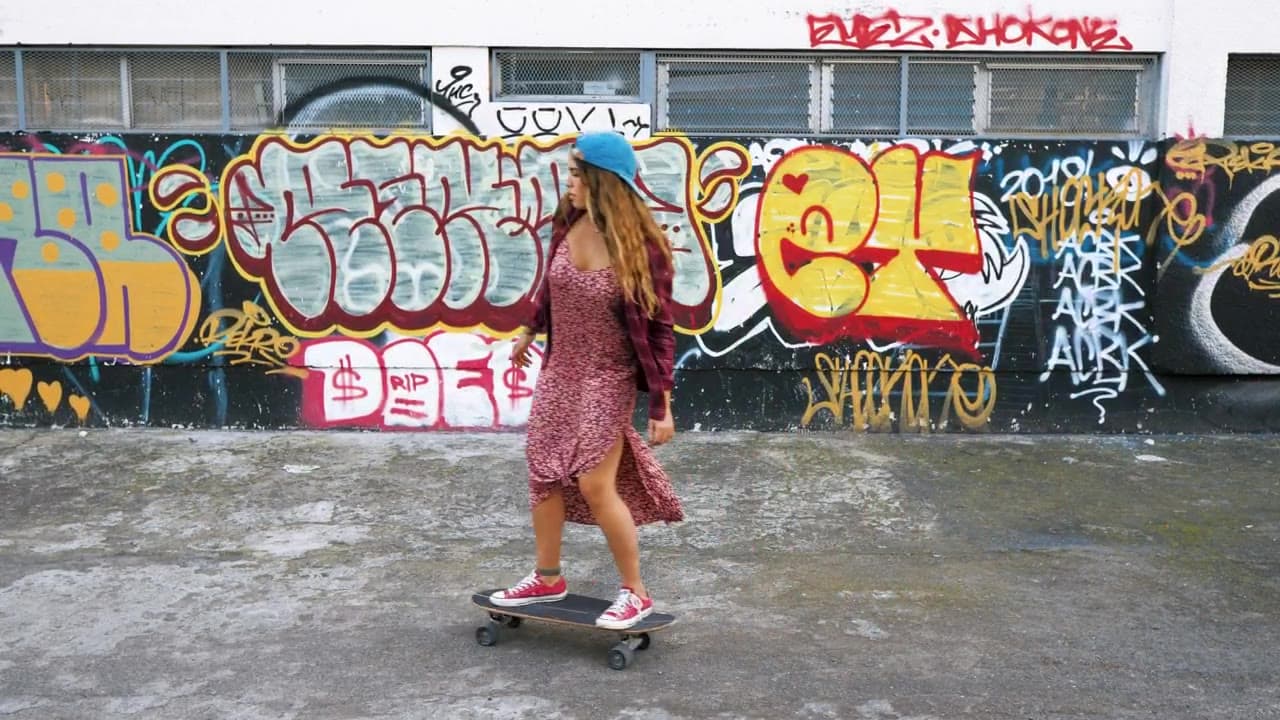
From a raw phototo a finished poster.

A designer rarely starts from nothing. Here one street photograph becomes a film poster, using only colour, cropping and type.

The photograph

A skate film · 2026

Concrete
waves

The poster

Footage: Mixkit

  1. Stage 011/3

    Select

    The frame with the strongest shape is chosen and cropped to lead the eye.

  2. Stage 022/3

    Colour

    The photo is reduced to two tones, so it carries one mood and the type stands out.

  3. Stage 033/3

    Type

    A title and credits are set in a strong typeface, on a clear grid.

02Course content

What you'lllearn.

The curriculum in the order you'll meet it. Play through it module by module, or jump to any one.

16
Modules
199
Topics
16
Practicals
Module 01 / 16

Introduction to Advanced Graphic Design

This module introduces students to graphic design as a professional discipline and explores its role in modern visual communication. Learners examine how graphic design combines creative thinking, visual organisation, audience understanding, and technical execution to communicate ideas effectively.

Students explore the different areas of graphic design, including branding, advertising, publication design, digital marketing graphics, packaging, illustration, and corporate communication.

The module also introduces the professional design workflow, from receiving a brief and researching the problem to developing concepts, refining layouts, preparing final artwork, and presenting the result.

Learning outcomeStudents develop a clear understanding of graphic design as a purposeful communication process and learn to identify the stages involved in creating a design solution.

Topics covered · 10

  • Meaning, purpose, and scope of graphic design
  • Evolution of graphic design and contemporary visual communication
  • Differences between graphic design, illustration, digital art, and related creative disciplines
  • Role of graphic design in branding, marketing, publishing, and digital media
  • Understanding clients, audiences, communication objectives, and deliverables
  • Introduction to creative briefs and design requirements
  • Research, ideation, concept development, and visual exploration
  • Design review, refinement, presentation, and final delivery
  • Introduction to professional design ethics and responsible asset use
  • Overview of portfolio development and professional expectations

Practical application

Students analyse examples of visual communication from different industries and identify the audience, message, visual hierarchy, typography, imagery, and design approach used in each example.

Up next

All modules

03Skills you'll build

Step bystep.

18 stages, in the order the course builds them up.

  • 01Step 1 of 18

    Apply Advanced Graphic Design Principles

    Students will be able to apply composition, balance, alignment, contrast, repetition, proximity, and visual hierarchy to create structured and effective design layouts. They will understand how to establish focal points, organise visual information, and create a clear reading sequence.

  • 02Step 2 of 18

    Analyse and Interpret Creative Briefs

    Students will develop the ability to understand the purpose of a design assignment, identify its target audience, recognise the key message, and determine the required deliverables. They will learn to translate written requirements into visual concepts that address the communication objective.

  • 03Step 3 of 18

    Develop Strong Typography Skills

    Students will be able to select appropriate typefaces, establish typographic hierarchy, refine spacing, and combine text with imagery. They will understand how typography influences readability, tone, identity, and visual emphasis.

  • 04Step 4 of 18

    Create Effective Colour Palettes

    Students will learn to build colour palettes based on brand personality, campaign objectives, audience considerations, and design context. They will understand contrast, colour harmony, and the technical differences between screen and print colour workflows.

  • 05Step 5 of 18

    Develop Original Visual Concepts

    Students will be able to research, brainstorm, sketch, and explore alternative design directions before selecting and refining a concept. They will develop a more systematic approach to creative problem-solving and visual experimentation.

  • 06Step 6 of 18

    Design Brand Identities

    Students will understand the process of developing logos and supporting visual identity elements. They will be able to explore brand characteristics, create visual directions, and apply consistent colours, typography, and graphic elements across relevant brand materials.

  • 07Step 7 of 18

    Produce Advertising and Promotional Graphics

    Students will develop the ability to create graphics for product promotion, brand communication, event publicity, and marketing campaigns. They will learn to organise headlines, supporting information, imagery, and calls to action according to the communication objective.

  • 08Step 8 of 18

    Create Digital and Social Media Designs

    Students will be able to prepare digital graphics suited to different platform formats and communication requirements. They will understand how to preserve visual consistency while adjusting layout, typography, and image placement for different dimensions.

  • 09Step 9 of 18

    Develop Editorial Layouts

    Students will gain an understanding of grid-based layouts, page structure, typographic systems, and image placement. They will learn how to organise content for brochures, catalogues, magazines, and other publication formats.

  • 10Step 10 of 18

    Apply Digital Illustration Techniques

    Students will explore the creation of original illustrations, icons, patterns, and graphic elements. They will understand how to use illustration to support a visual concept and establish a distinctive design style.

  • 11Step 11 of 18

    Edit and Manipulate Images

    Students will develop practical awareness of image correction, retouching, compositing, masking, cropping, and image preparation. They will learn to integrate photographs and visual assets into cohesive design compositions.

  • 12Step 12 of 18

    Prepare Artwork for Print and Digital Output

    Students will understand file formats, resolution, colour modes, bleed, safe areas, export settings, and production requirements. They will develop the ability to prepare artwork according to the specifications of a particular output medium.

  • 13Step 13 of 18

    Maintain Visual Consistency

    Students will learn to apply consistent visual systems across multiple related design materials. They will understand the importance of using approved brand colours, typefaces, graphic elements, spacing rules, and logo treatments.

  • 14Step 14 of 18

    Evaluate and Improve Design Work

    Students will develop the ability to review their work critically, identify weaknesses, respond to feedback, and refine layouts and concepts. They will understand that professional design usually involves multiple stages of revision.

  • 15Step 15 of 18

    Present Design Projects Professionally

    Students will learn to explain the objective, audience, concept, and visual decisions behind a project. They will develop an understanding of mockups, presentation layouts, design rationale, and clear project documentation.

  • 16Step 16 of 18

    Build a Diverse Design Portfolio

    Students will work towards assembling a portfolio containing relevant design projects that demonstrate conceptual thinking, technical execution, visual versatility, and presentation skills.

  • 17Step 17 of 18

    Understand Professional Design Practices

    Students will develop awareness of deadlines, file organisation, revision management, asset licensing, communication with clients, and the importance of delivering artwork that meets an agreed brief.

  • 18Step 18 of 18

    Prepare for Further Creative Opportunities

    Students will develop a foundation for pursuing relevant roles, freelance assignments, additional specialist training, or further study in graphic design and related creative disciplines.

01–03 / 18

04Software

The toolsyou'll use.

4 programs, circling the one in focus. Pick any logo to bring it to the centre.

01 / 04Design & textures

Image editing, retouching and digital painting.

05What you get

Included withthe course.

11 things you take away, from the first model to the finished showreel.

  • Advanced Design Principles and Visual Communication

    Students develop an understanding of how visual elements influence the way information is perceived, interpreted, and remembered. They explore the principles of balance, proportion, rhythm, contrast, unity, repetition, alignment, proximity, and hierarchy.

    Learners examine how these principles can be applied to different types of design work, including posters, advertising layouts, brand identities, brochures, digital graphics, and promotional campaigns. They learn how to guide a viewer's attention, establish a clear focal point, organise complex information, and create visual relationships between elements.

    The emphasis is on understanding design decisions in context. Students explore how a layout may need to communicate urgency in an advertisement, clarity in an informational graphic, sophistication in a premium brand identity, or creativity in an entertainment campaign.

  • Typography and Advanced Text Styling

    Typography is one of the most important tools in graphic design because it affects readability, tone, hierarchy, and brand recognition. Students explore type classifications, font pairing, letter spacing, line spacing, kerning, alignment, text hierarchy, and typographic composition.

    They learn how to select fonts according to audience, purpose, visual style, and communication requirements. Practical exercises explore the use of typography in headlines, body text, logos, posters, editorial layouts, promotional materials, and digital campaigns.

    Learners also study expressive typography, text as a visual element, and the relationship between type and imagery. They develop the ability to balance creative experimentation with legibility and accessibility.

  • Colour Theory and Colour Psychology

    Students explore colour relationships, colour harmonies, contrast, saturation, temperature, and the emotional associations that colours may communicate in different contexts.

    They learn how to create effective colour palettes for brands, advertisements, social media campaigns, packaging, publications, and digital interfaces. The course examines how colour choices can influence visual emphasis, reinforce brand personality, improve readability, and establish consistency.

    Learners also develop awareness of colour accessibility and the importance of maintaining sufficient contrast between text and backgrounds. They explore the differences between RGB and CMYK colour models and understand why colours can appear differently on screens and in printed materials.

  • Digital Illustration and Creative Image-Making

    Digital illustration enables designers to create original visuals, decorative elements, icons, stylised artwork, and conceptual imagery. Students explore illustration techniques and visual development methods that support a variety of design objectives.

    They learn to simplify complex forms, develop visual metaphors, create graphic elements, and combine illustration with typography and layout. Exercises encourage experimentation with shapes, line work, textures, patterns, and stylistic treatments.

    The objective is to help learners understand how original illustration can make a design more distinctive and support a message that may not be communicated as effectively through photography alone.

  • Image Editing and Photo Manipulation

    Students learn how image selection, cropping, colour correction, retouching, compositing, and visual enhancement contribute to professional design outcomes.

    They explore how to prepare images for advertising, promotional graphics, editorial layouts, posters, and digital campaigns. They develop an understanding of layers, masks, selections, blending, image adjustments, and non-destructive editing workflows.

    The course also encourages responsible image editing, attention to visual consistency, and awareness of image licensing and usage rights. Learners practise ensuring that edited imagery supports the design concept without compromising clarity or credibility.

06Who it is for

Made forpeople like you.

7 kinds of learner this course is built around. Find yours.

  • 01

    Students Interested in Creative Careers

    Students who enjoy drawing, typography, colours, photography, digital media, or visual storytelling can explore graphic design as a structured creative discipline. The course helps them understand how these interests can be applied to purposeful communication and professional design projects.

  • 02

    Beginners Building Their Design Foundation

    Learners who are new to graphic design may benefit from structured instruction in design principles, typography, colour, composition, and digital workflows. Their suitability will depend on the course's confirmed entry requirements and the level of foundational instruction included in the curriculum.

  • 03

    Aspiring Professional Graphic Designers

    Individuals who want to develop the ability to create logos, advertisements, promotional materials, layouts, and digital graphics can use the course to strengthen their design knowledge and practical experience.

  • 04

    Students Interested in Branding and Advertising

    Learners who enjoy creating identities, campaign visuals, promotional graphics, and visual concepts may find the branding and advertising components particularly relevant to their interests.

  • 05

    Digital Content Creators

    Individuals who create online content and want to improve their understanding of visual consistency, typography, layout, and branding can develop skills that support more purposeful digital communication.

  • 06

    Entrepreneurs and Business Owners

    Business owners who want to understand visual identity, promotional design, packaging, and marketing graphics may find graphic design knowledge useful when planning their communication materials or collaborating with creative professionals.

Career options: Graphic Designer, Brand Identity Designer, Advertising Designer, Social Media Graphic Designer, Digital Marketing Designer, Layout and Publication Designer, Packaging Designer, Digital Illustrator, Photo Manipulation and Creative Image Designer, Creative Designer, In-House Brand Designer, Freelance Graphic Designer, Visual Communication Designer, Marketing and Creative Production Designer, Entrepreneur or Independent Creative Service Provider

07Career outcomes

Roles you couldgrow into.

Role 01 of 15

Graphic Designer

Graphic designers create visual communication materials for businesses, organisations, brands, and individuals. Their work may include posters, brochures, advertisements, promotional graphics, presentations, and other visual assets.

They interpret creative briefs, select appropriate typography and imagery, establish layouts, and prepare final artwork for the intended medium.

Graphic design skills can support a range of opportunities across advertising, marketing, branding, digital media, publishing, retail, entertainment, and other creative industries. Career suitability depends on the learner's portfolio, practical experience, communication skills, and the requirements of individual employers or clients.

Career readiness

Skills that open doors.

  • 01Creative and conceptual skills

    Idea generation, visual research, brainstorming, concept development, experimentation, and creative problem-solving.

  • 02Design and composition skills

    Visual hierarchy, layout, alignment, balance, contrast, spacing, proportion, and information organisation.

  • 03Typography skills

    Typeface selection, font pairing, typographic hierarchy, letter spacing, line spacing, and expressive text treatments.

  • 04Colour skills

    Colour harmony, palette development, contrast, colour consistency, and screen-versus-print colour awareness.

  • 05Digital production skills

    Raster and vector workflows, image editing, illustration, layout creation, asset management, and file preparation.

  • 06Branding skills

    Logo concepts, visual identity systems, brand consistency, typography systems, and brand applications.

  • 07Marketing design skills

    Promotional graphics, advertising layouts, campaign visuals, digital content, and audience-focused communication.

  • 08Print preparation skills

    Resolution, document setup, bleed, safe areas, colour modes, export settings, and production checks.

  • 09Presentation skills

    Design rationale, project documentation, visual mockups, portfolio organisation, and clear communication of creative decisions.

  • 10Professional working skills

    Time management, attention to detail, revision management, feedback handling, asset organisation, and responsible use of visual resources.

08Projects

What you'llbuild.

12 projects for your portfolio.

  • Visual Composition and Design Principles

    Students create a series of compositions using shapes, lines, colours, textures, and typographic elements to communicate different visual messages.

    The project explores balance, contrast, rhythm, alignment, repetition, proximity, proportion, and hierarchy. Learners experiment with multiple layouts and compare how changes in spacing, scale, and positioning affect the viewer's perception.

    Expected project outputA collection of original compositions accompanied by a short explanation of the design principles used in each layout.

  • Typography-Based Poster Design

    Students develop a poster in which typography plays a central role in communicating the message. They explore typeface selection, text hierarchy, spacing, contrast, alignment, and expressive letterforms.

    The assignment may focus on a cultural event, creative exhibition, music performance, educational campaign, or public information message.

    Learners study how the visual treatment of words can communicate energy, elegance, urgency, sophistication, or other intended qualities.

    Expected project outputA finished poster, alternative layout explorations, and a brief explanation of the typographic decisions.

  • Brand Identity Development

    Students select a fictional business or an approved brand brief and develop a visual identity concept.

    The process begins with research into the business category, intended audience, brand personality, and competitive environment. Students create mood boards, explore logo concepts, select colours and typefaces, and refine the chosen direction.

    The identity is then applied to suitable brand materials to test its consistency and practical use.

    Expected project outputLogo concepts, final logo artwork, colour palette, typography system, basic brand guidelines, and selected brand applications.

  • Advertising Campaign Design

    Students develop a promotional campaign for a product, service, event, or business. They identify the intended audience, communication objective, main message, and desired response.

    They then develop a visual concept and create a coordinated set of campaign graphics. The assignment encourages learners to maintain a consistent visual language while adjusting composition and information hierarchy for different formats.

    Expected project outputA campaign concept, key visual, primary advertisement, and supporting promotional creatives.

  • Social Media Campaign

    Students design a set of branded social media graphics around a defined communication objective. The campaign may promote a new product, introduce a service, announce an event, communicate an educational message, or build brand awareness.

    Learners explore content hierarchy, image selection, typography, brand consistency, and layout adaptation. They also consider how the design will appear on smaller screens.

    Expected project outputA coordinated set of social media graphics, including suitable post formats and a consistent visual system.

  • Digital Illustration Series

    Students create original illustrations or graphic elements based on a theme, narrative, product, or communication objective.

    They explore shape construction, colour relationships, line work, visual simplification, and stylistic consistency. The project encourages learners to develop a recognisable visual approach and integrate original artwork into design compositions.

    Expected project outputA collection of original illustrations, supporting graphic elements, and at least one finished design application.

09Why IAM

Why studyit here.

  • Concept-Based Learning

    01

    Learners explore the reasoning behind design decisions. They investigate how a typeface, colour palette, image, or layout contributes to the overall message rather than treating individual design elements as isolated choices.

  • Demonstration and Guided Practice

    02

    Practical demonstrations can help students understand digital workflows, software techniques, image editing, typography, layout creation, and export procedures. Guided exercises allow learners to practise new skills before applying them independently.

  • Project-Based Learning

    03

    Assignments encourage students to combine multiple skills in response to a defined brief. Projects may involve branding, posters, social media graphics, advertising campaigns, editorial layouts, packaging, and other relevant applications.

  • Creative Experimentation

    04

    Students are encouraged to explore different visual directions, compare alternative concepts, and refine their work. Experimentation helps them discover how design decisions influence the effectiveness and personality of a composition.

→How you'll learn

Threestages.

  1. Stage one

    Learn the fundamentals.

    Drawing, timing, composition and the software itself. Small batches, daily feedback from working artists.

  2. Stage two

    Build the reel.

    Studio-style projects with real briefs and real deadlines. Every student finishes with a portfolio they can defend.

  3. Stage three

    Get hired properly.

    Portfolio reviews, mock interviews and introductions to our studio partners. We stay reachable after you graduate.

10FAQ

Questions,answered.

25 questions about the course, admissions and careers.

  • An Advanced Graphic Design course focuses on developing the creative, conceptual, and technical skills used to produce professional visual communication materials. It may cover advanced composition, typography, colour theory, branding, advertising graphics, digital illustration, image manipulation, editorial layouts, packaging design, and portfolio development.At IAM, the course is intended to help learners understand how to develop design concepts, apply visual principles, produce digital artwork, and prepare projects for presentation and professional use.

  • Students can expect to develop knowledge of graphic design principles, typography, colour, composition, branding, promotional graphics, digital content, image editing, and layout design. Practical projects can help learners apply these skills to visual identity systems, advertisements, social media creatives, publications, and other design outputs.Ask IAM for the current curriculum and the software it covers.

  • Suitability depends on the course's official entry requirements and the level of foundational instruction included. Beginners may need to develop basic computer skills and familiarity with design tools before progressing to advanced applications.Prospective students should confirm the eligibility requirements with IAM before enrolling.

  • Students who have completed Class 12 may consider graphic design training as part of their creative education and career planning. The appropriate course depends on the institution's eligibility requirements, the learner's interests, and their existing design experience.Contact IAM to confirm the entry criteria for the Advanced Graphic Design course.

  • Graphic design workflows commonly involve vector illustration software, raster image editing software, and page-layout applications. Depending on the curriculum, relevant tools may include Adobe Photoshop, Adobe Illustrator, and Adobe InDesign.Students should confirm the actual software taught, version requirements, and access arrangements with IAM before enrolling.

  • Advanced drawing skills are not necessary for every area of graphic design. Many design tasks focus on typography, composition, branding, image editing, layout, and visual organisation.Drawing and illustration skills can be useful for projects involving original artwork, icons, and visual concepts, but students can develop these abilities through practice.

→Enquire now

Begin Your Journey in AdvancedGraphic Design at IAM

Have a passion for creativity, visual storytelling, branding, and digital design? The Advanced Graphic Design course at IAM (Institute of Animation and Multimedia) offers a pathway to explore design principles, develop practical creative skills, and understand how visual communication works across different industries.

Discover how typography, colour, composition, illustration, image editing, and branding can come together to create meaningful visual experiences. Work towards developing original projects, improving your design process, and building a portfolio that reflects your creative interests and growing abilities.

Whether your goal is to explore graphic design as a career, develop skills for digital marketing, specialise in branding, or prepare for freelance creative work, the right learning foundation can help you take your next step with greater clarity and confidence.

Explore the Advanced Graphic Design course at IAM. Develop your skills, strengthen your creative thinking, and start building your future in visual communication.

Contact IAM to learn more about course eligibility, curriculum, duration, fees, available batches, and admission opportunities.

IAM Jalandhar

1st Floor, IAM, Crystal Plaza, SCS 78, opp. PIMS Hospital, Jalandhar, Punjab 144001

+91 98881 22241