
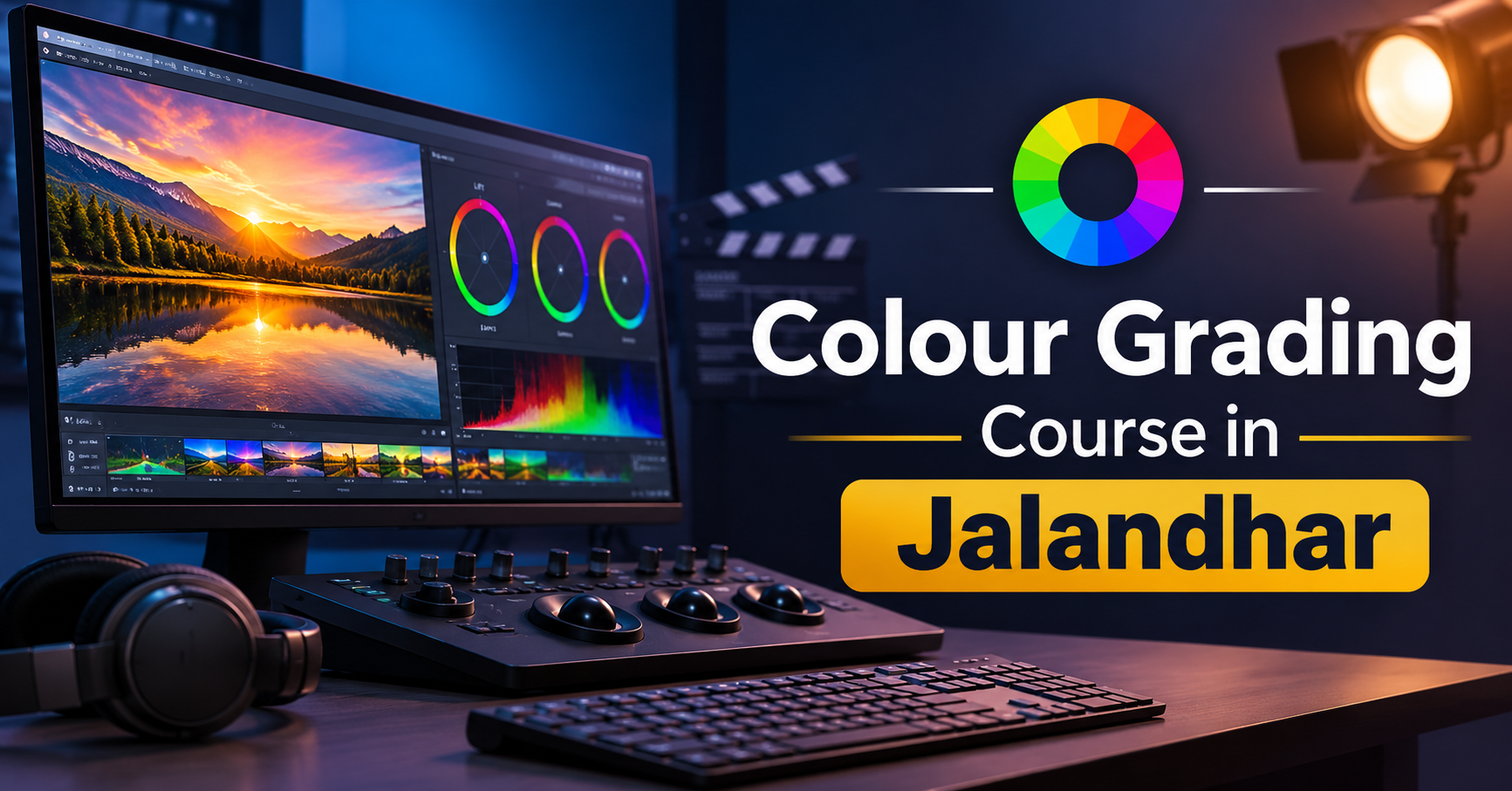
Colour Grading Course in Jalandhar
Video content has become an essential part of digital communication, entertainment, advertising, filmmaking, and social media marketing. From cinematic movies and music videos to Instagram reels, YouTube content, and business advertisements, visually appealing videos play an important role in attracting audiences. However, creating an engaging video requires more than recording good footage. Colour correction and colour grading are equally important for improving the overall visual quality and creating a professional appearance.
A Colour Grading Course in Jalandhar can help students and aspiring video editors understand how colours, lighting, contrast, and visual tones influence video production. Colour grading is a creative post-production technique that transforms ordinary footage into visually attractive content. It helps establish emotions, maintain consistency, and create a particular atmosphere throughout a video.
IAM provides an option for learners in Jalandhar who want to explore creative software training and develop practical digital media skills. Whether you are a beginner, student, photographer, content creator, or aspiring filmmaker, learning colour grading can help you understand modern video production techniques and improve your creative abilities.
What Is Colour Grading?
Colour Grading is the process of adjusting and enhancing the colours, brightness, contrast, saturation, shadows, and highlights of video footage. It is generally performed during the post-production stage to create a specific visual appearance or mood.
Professional editors use colour grading to make footage look cinematic, natural, dramatic, warm, cool, or visually consistent. For example, warm colour tones can create a nostalgic or comfortable atmosphere, while cooler tones can give a scene a dramatic or mysterious appearance.
Colour grading is widely used in:
Films and short movies.
Music videos and promotional films.
Wedding and event cinematography.
Commercial advertisements.
YouTube videos and vlogs.
Instagram reels and social media content.
Corporate presentations and brand videos.
Documentary and storytelling projects.
Learning Colour Grading in Jalandhar can help aspiring editors understand how professional video visuals are enhanced and prepared for different digital platforms.
Why Is Colour Grading Important in Video Production?
Colour grading is more than simply changing the colours of a video. It is an important visual storytelling technique that helps communicate emotions and maintain consistency throughout a project.
A video may contain multiple scenes recorded at different locations, times, or lighting conditions. Without proper colour correction, these scenes can look disconnected. Colour grading helps create a balanced visual appearance and improves the overall viewing experience.
Some important benefits include:
Improved Visual Quality: Enhances the appearance of video footage through better colour balance, contrast, and brightness.
Emotional Storytelling: Different colour combinations help communicate emotions and create specific atmospheres.
Professional Appearance: Makes videos look more polished and visually consistent.
Brand Identity: Helps businesses maintain a consistent visual style across promotional videos.
Better Scene Matching: Creates continuity between clips recorded under different lighting conditions.
Creative Expression: Allows editors to experiment with different cinematic styles and visual effects.
A professional Colour Grading Training in Jalandhar can introduce learners to these techniques and help them understand how colour influences the final output.
What Will You Learn in a Colour Grading Course?
A structured Colour Grading Course should cover basic colour concepts, correction techniques, professional software, and practical editing workflows. Beginners can start with fundamental adjustments before progressing towards advanced grading techniques.
1. Understanding Colour Theory
Colour theory is the foundation of professional colour grading. It explains how different colours interact and how they influence the appearance and mood of a video.
Important concepts include:
Primary and secondary colours.
Warm and cool colour combinations.
Complementary colours.
Colour harmony and contrast.
Colour psychology.
Saturation and colour balance.
Understanding these concepts helps learners make better creative decisions while editing different types of footage.
2. Learning Colour Correction Techniques
Colour correction is generally performed before creative grading. It focuses on fixing unwanted colour variations and making footage appear balanced and natural.
Learners can explore:
Brightness and exposure adjustments.
White balance correction.
Highlight and shadow management.
Contrast adjustments.
Saturation control.
Temperature and tint correction.
Matching colours between different clips.
These techniques are useful for maintaining consistency in professional video projects.
3. Understanding Professional Colour Grading Software
Different software applications offer tools for video editing, colour correction, and creative grading. Learning these applications can help students understand professional post-production workflows.
Some commonly used applications include:
DaVinci Resolve: DaVinci Resolve is widely recognised for its professional colour correction and colour grading capabilities. It provides colour wheels, curves, scopes, nodes, and advanced grading controls.
Adobe Premiere Pro: Premiere Pro offers colour adjustment and grading features through its Lumetri Color panel. Editors can use it to adjust exposure, contrast, white balance, and creative colour settings.
Adobe After Effects: After Effects provides colour correction effects and creative visual enhancement options that can be used in motion graphics and video projects.
A good Colour Grading Institute in Jalandhar should help learners understand the software tools relevant to their creative and professional goals.
4. Working with Colour Wheels and Scopes
Colour wheels and scopes are important tools used by professional colourists to make accurate adjustments.
Learners can understand:
Lift, Gamma, and Gain controls.
RGB colour channels.
Temperature and Tint.
Waveform monitoring.
Vectorscope analysis.
Histogram interpretation.
Highlight and shadow adjustments.
These tools help editors maintain colour accuracy and achieve consistent results across different scenes.
5. Creating Cinematic Colour Grading Effects
Cinematic grading gives videos a distinctive visual appearance. It can change the atmosphere of a scene and make storytelling more engaging.
Some popular techniques include:
Teal and orange colour grading.
Warm cinematic colour effects.
Cool and moody visual styles.
Vintage and retro colour grading.
Film-inspired colour treatments.
Natural skin tone enhancement.
High-contrast cinematic looks.
Practising these techniques helps learners understand how professional editors create different visual moods.
6. Colour Matching Between Multiple Clips
Colour matching is an important part of video post-production. When footage is recorded using different cameras or under different lighting conditions, the colours may not appear consistent.
Colour matching involves adjusting exposure, white balance, saturation, and contrast to create a uniform appearance.
This technique is particularly useful for wedding films, interviews, documentaries, advertisements, and short movies.
Difference Between Colour Correction and Colour Grading
Many beginners use colour correction and colour grading as interchangeable terms. However, both processes have different purposes in video editing.
Colour Correction focuses on fixing technical issues such as incorrect exposure, unwanted colour casts, and inconsistent white balance. Its main objective is to make footage look balanced and natural.
Colour Grading focuses on creating a particular visual style by adjusting colours, contrast, shadows, and highlights. Its main objective is to establish mood, atmosphere, and visual identity.
Both techniques are important for professional video production. Learning them together helps editors develop a complete understanding of the post-production process.
Why Choose a Colour Grading Course in Jalandhar?
Jalandhar has businesses, educational institutions, advertising agencies, photography studios, and digital media professionals who use video content for communication and promotion.
The increasing use of video across digital platforms has created interest in skills related to editing, cinematography, colour correction, and post-production.
Choosing a Colour Grading Course in Jalandhar can help learners explore these creative skills while developing their technical understanding.
Some reasons to explore colour grading training include:
Learn essential colour correction and grading techniques.
Understand professional video editing workflows.
Explore different colour grading software applications.
Develop creative visual storytelling skills.
Practise with different types of video footage.
Understand cinematic colour combinations.
Build a portfolio of edited video projects.
Improve your overall digital media knowledge.
At IAM Jalandhar, interested learners can enquire about available training programmes, software coverage, practical assignments, course duration, and batch schedules before enrolling.
Who Can Join a Colour Grading Course?
A Video Editing Course in Jalandhar that includes colour grading concepts can be useful for individuals interested in digital media and creative production.
The course may be suitable for:
Students: Those interested in filmmaking, multimedia, and creative software.
Beginners: Individuals who want to explore video editing and post-production.
Photographers: Professionals interested in improving their video production skills.
Content Creators: YouTubers and social media creators who want visually appealing videos.
Aspiring Filmmakers: Individuals interested in cinematic storytelling.
Digital Marketers: Learners who want to understand video advertisements and promotional content.
Wedding Editors: Individuals interested in enhancing wedding and event videos.
Working Professionals: People who want to expand their creative software knowledge.
Previous experience may be helpful, but beginners can start by learning the fundamentals of colour theory and video editing.
Career Opportunities After Learning Colour Grading
Video editing and post-production skills are useful across entertainment, advertising, digital marketing, online media, and creative production industries.
After developing practical knowledge and building a portfolio, learners may explore different career paths.
Some related roles include:
Colour Grading Artist: Enhances video footage and creates consistent visual styles.
Video Editor: Arranges, edits, and enhances video clips for different projects.
Post-Production Assistant: Supports editing and finishing activities.
Film Editing Assistant: Helps organise and prepare footage for film projects.
Wedding Video Editor: Edits and enhances wedding and event recordings.
Social Media Video Editor: Creates engaging videos for digital platforms.
Freelance Video Editor: Works independently on video editing assignments.
Content Creator: Produces original videos for online audiences.
Career opportunities depend on practical experience, technical knowledge, creative abilities, communication skills, and portfolio quality.
Learners can also expand their knowledge by exploring Video Editing Training in Jalandhar, Adobe Premiere Pro, After Effects, motion graphics, and cinematography.
Importance of Practical Projects in Colour Grading
Learning software tools is only the beginning of developing professional editing skills. Regular practice is necessary to understand how different adjustments influence the final appearance of a video.
Practical assignments allow learners to experiment with different colour combinations, compare results, and develop their own creative approach.
Some useful practice projects include:
Correcting exposure in outdoor video footage.
Creating cinematic looks for short films.
Matching colours across multiple video clips.
Enhancing wedding and event footage.
Developing warm and cool colour styles.
Creating promotional videos for businesses.
Comparing before-and-after colour grading results.
Applying different visual styles to the same video.
These assignments can help learners understand the complete colour grading workflow and create a portfolio that demonstrates their abilities.
When exploring Colour Grading Training in Jalandhar at IAM, ask about hands-on projects, software training, individual practice, trainer guidance, and portfolio development. These elements can help you evaluate whether the programme matches your learning requirements.
How to Start Learning Colour Grading?
If you want to develop your colour grading skills, begin with basic concepts and gradually move towards advanced techniques.
Follow these steps:
Understand basic colour theory and colour combinations.
Learn the difference between colour correction and colour grading.
Familiarise yourself with professional grading software.
Practise exposure, contrast, saturation, and white balance adjustments.
Experiment with different cinematic colour styles.
Work with different types of video footage.
Compare your edited videos with the original footage.
Save your best work and develop a creative portfolio.
Continue exploring advanced editing techniques and industry trends.
Consistent practice, creative experimentation, and constructive feedback can help you improve your technical and artistic abilities.
Conclusion
A Colour Grading Course in Jalandhar can be a valuable starting point for students, beginners, photographers, aspiring filmmakers, and content creators who want to develop video enhancement and post-production skills. From basic colour correction and cinematic grading to colour matching and visual storytelling, colour grading offers several creative possibilities in modern digital media.
IAM is an option for learners in Jalandhar who want to explore creative software training and develop practical digital media knowledge. Before enrolling, review the course curriculum, software coverage, practical assignments, course duration, and training facilities to make an informed decision.
Start by understanding colour theory, practise with different video clips, and experiment with creative grading techniques. With regular practice and a strong portfolio, you can develop valuable skills for video editing, filmmaking, and professional post-production projects.
Colour Grading Course in Jalandhar at IAM
Learn colour correction, cinematic grading and video enhancement at IAM Jalandhar. Develop creative skills through practical software training and projects.
Tell us whatyou wantto create.
A few lines about yourself and the course you're interested in. Our admissions team replies within two working days, and you can book a free campus visit or demo class.
Call admissions→Or send an enquiry to your nearest campus- Phone
- +91 98881 22241
- Address
- 1st Floor, IAM, Crystal Plaza, SCS 78, opp. PIMS Hospital, Jalandhar, Punjab 144001