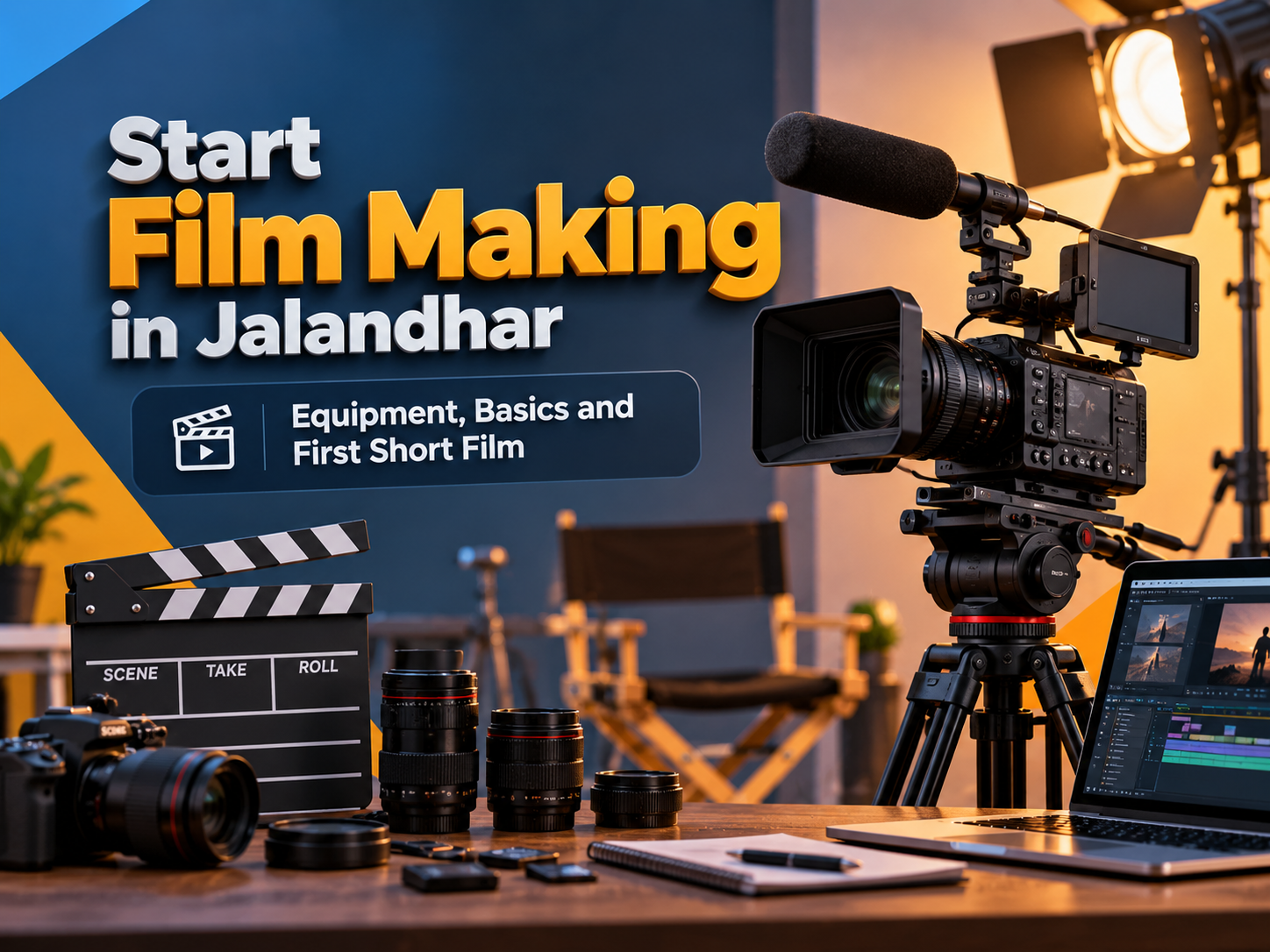
Start Film Making in Jalandhar: Equipment, Basics and First Short Film
Film & Editing · Preeti Jalandhar · 27 October 2026
**Excerpt:** Start your film making journey in Jalandhar with this beginner guide. Explore essential equipment, camera and sound basics, and the steps to create your first short film with learning options at IAM Jalandhar.
Film making turns ideas into stories told through moving images and sound. A short film may last only a few minutes, but it can involve writing, planning, camera work, lighting, performance, sound recording, and editing.
For beginners, the number of creative and technical choices can feel overwhelming. Starting with a simple story and manageable equipment makes the process easier to understand. The goal is to complete a project, review the result, and learn from each stage.
This guide to Film Making for Beginners in Jalandhar explains essential equipment, production basics, and a practical approach to creating a first short film. Students can contact IAM Jalandhar to discuss relevant learning options, practical facilities, and course availability.
What Is Film Making?
Film making is the process of presenting a story, idea, or subject through recorded images and sound. Projects may include fictional short films, documentaries, interviews, promotional videos, and educational content.
A finished film usually develops through four connected stages:
Development: Exploring the idea and preparing the story.
Pre-production: Planning people, locations, equipment, and shots.
Production: Recording visual and audio material.
Post-production: Editing, reviewing, and preparing the final film.
A Film Making Course in Jalandhar can introduce learners to these stages through practical exercises. Understanding the workflow helps students make decisions that support the finished story.
Why Start with a Short Film?
A short film gives beginners an opportunity to practise the complete process without managing a large production. A simple story can be filmed in one location with a small number of participants.
Completing a manageable project teaches students how preparation affects filming and how recording decisions influence the edit.
Through Short Film Making Training in Jalandhar, learners can practise:
Developing an achievable story.
Writing a short script.
Planning shots and sound.
Working with performers.
Recording usable footage.
Editing a complete sequence.
Reviewing the result.
The first project does not need several locations or elaborate equipment. A clear idea and thoughtful preparation provide a useful starting point.
Choosing Equipment for a Beginner Project
Equipment should match the project and the learner’s experience. A camera or smartphone capable of recording suitable footage can be enough for an initial exercise.
Before selecting equipment, consider the location, available light, required sound, and intended presentation. Students should understand what a tool does and how it supports the story.
Basic Film Making Equipment for Beginners may include:
A camera or suitable smartphone.
A tripod or stable support.
A microphone appropriate to the situation.
Headphones for monitoring sound.
A light source or suitable natural light.
Storage for footage and project files.
A computer with editing software.
Check compatibility, battery power, storage, and equipment condition before the shoot. A stable image and clear dialogue often contribute more to understanding than unnecessary effects.
Understanding Camera Basics
A camera records the images that form the visual part of a film. Beginners should become familiar with its controls through short tests before attempting a complete scene.
Important concepts include exposure, focus, frame rate, white balance, and composition. These settings affect how brightness, colour, and movement appear.
Camera Handling Training in Jalandhar can introduce:
Supporting the camera steadily.
Checking focus before recording.
Maintaining consistent exposure.
Selecting suitable recording settings.
Reviewing footage after a test.
Managing batteries and storage.
Handling equipment carefully.
Write down the settings used in each exercise. Comparing results helps students understand why a particular choice worked or caused difficulty.
Choosing Camera Angles and Shot Sizes
Shot size determines how much of a scene the viewer sees. A wide shot can establish a location, while a close-up may reveal an expression or important detail.
Beginners can practise using:
Wide shots to show a subject within a space.
Medium shots to show actions and conversations.
Close-ups to emphasise emotion or detail.
Cutaways to show relevant supporting information.
Point-of-view shots to represent what a character sees.
A Cinematography Course in Jalandhar can help learners understand how these choices affect meaning. Each shot should contribute useful information and fit the sequence rather than exist only because it looks attractive.
Composition and Visual Storytelling
Composition is the arrangement of elements within a frame. It influences where viewers look and how they understand relationships between people, objects, and spaces.
Before recording, inspect the entire frame. Check the background, subject position, empty space, and any distracting objects.
Useful composition habits include:
Keeping the intended subject clear.
Checking what appears behind the subject.
Using foreground and background purposefully.
Maintaining suitable space around the subject.
Considering where a character is looking or moving.
Avoiding unnecessary visual clutter.
Visual Storytelling Training in Jalandhar encourages students to ask what the audience needs to see at each moment. A purposeful visual choice can communicate an idea without additional explanation.
Sound Recording for Beginners
Clear sound helps viewers understand dialogue, location, and emotion. Traffic, fan noise, handling sounds, and inconsistent recording levels can make a scene difficult to follow.
Beginners should listen to the location before filming and record a short sound test. Monitoring through headphones helps reveal problems that may not be obvious from the camera display.
Important checks include:
Choosing a suitable microphone position.
Keeping dialogue clear.
Reducing avoidable background noise.
Avoiding contact with clothing or equipment.
Monitoring the complete recording.
Recording room tone where appropriate.
Labelling audio files clearly.
A Sound Recording Course in Jalandhar can introduce these habits. Good source audio gives the editor a stronger starting point during post-production.
Lighting Basics for a Short Film
Lighting helps make subjects visible and influences the atmosphere of a scene. Beginners can learn by observing natural light before working with more complex equipment.
A window can provide useful directional light for practice. Observe how the image changes when the subject or camera moves.
Students should consider:
Where the main light comes from.
Whether important details remain visible.
Whether shadows support the scene.
Whether light changes between takes.
Whether reflections distract from the subject.
Whether the setup allows safe movement.
Film Lighting Training in Jalandhar should include reviewing recorded footage. A setup that looks acceptable to the eye may appear different in the camera, so testing is part of the process.
Developing the First Short Film Idea
A beginner story can begin with one character, one location, and one clear situation. Limiting the scope helps students concentrate on storytelling and complete the project with available resources.
Start by answering:
Who is the main character?
What does the character want?
What prevents them from getting it?
What decision or action changes the situation?
How does the story end?
For example, a student might discover an important note just before leaving for an interview. The film can focus on the character’s reaction and decision without requiring several locations.
A Short Film Course in Jalandhar can help learners turn a simple idea into an achievable production.
Writing a Short Script
A script describes what happens and, where needed, what characters say. It gives the people preparing and recording the film a shared reference.
For a first project, keep the story focused. Each scene should contribute to the situation, character, or outcome.
Scriptwriting practice can include:
Writing a one-sentence story idea.
Describing the beginning, middle, and end.
Choosing a manageable location.
Writing clear actions.
Keeping dialogue purposeful.
Removing scenes that do not support the story.
Read the script aloud and consider what can be shown visually. Dialogue does not need to explain every thought if the performer’s actions and the framing can communicate it.
Planning Before the Shoot
Pre-production turns a script into a workable plan. It helps the team identify people, locations, equipment, props, and time requirements.
A Film Production Course in Jalandhar can introduce planning documents such as:
A script breakdown.
A shot list.
A simple shooting schedule.
A cast and crew contact list.
An equipment checklist.
A prop and costume list.
Location and permission notes.
For a small beginner project, these documents can remain simple. Their purpose is to make responsibilities clear and prevent avoidable confusion.
Confirm that everyone understands when and where they are needed. Allow time for setup, tests, and unexpected changes.
Creating a Storyboard and Shot List
A storyboard uses simple images to represent planned shots. It can explain framing, movement, and the order of visual information. The drawings do not need to be detailed artwork.
A shot list records the material required for each scene. It may include shot size, camera angle, action, sound needs, and movement notes.
Students exploring Short Film Production Training in Jalandhar can use both tools to think about editing before recording.
Check whether the planned shots show:
Where the scene takes place.
Who is present.
What action occurs.
Important reactions or details.
Information needed for continuity.
Planning also helps the team adapt if a location or schedule changes.
Working with Performers
Performers need to understand the scene, their character’s intention, and the actions expected within the frame. Clear, respectful communication helps everyone work towards the same purpose.
Before filming, discuss what the character wants and what changes during the scene. A short rehearsal can reveal issues with movement, dialogue, camera placement, or sound.
Useful directing habits include:
Explaining the scene’s purpose.
Giving specific instructions.
Listening to questions and concerns.
Allowing time for rehearsal.
Reviewing whether the action fits the frame.
Offering constructive feedback.
A Film Direction Course in Jalandhar can help learners practise communicating ideas while remaining open to useful suggestions from collaborators.
Understanding Continuity
Continuity helps related shots feel connected. It includes object positions, performer movement, clothing, lighting, and the sequence of actions.
For example, a cup held in one hand in a wide shot may appear distracting if it suddenly moves to the other hand in the next shot. Small inconsistencies can interrupt the viewer’s attention.
During a shoot, keep notes about:
Prop positions.
Costume details.
Where performers begin and end an action.
Direction of movement.
Lighting conditions.
Useful takes and any problems.
Continuity does not mean every shot must look identical. Changes should be intentional and understandable within the scene.
Filming the First Short Film
Before recording the full scene, check the location, sound, framing, and equipment. Record a short test and review it with headphones.
Follow the shot list while remaining open to practical adjustments. Make sure important actions and dialogue have been captured clearly.
A beginner production checklist includes:
Confirming available storage and battery power.
Checking focus and exposure.
Reviewing microphone placement.
Recording the planned coverage.
Noting useful takes.
Checking continuity.
Backing up footage after filming.
Do not assume a scene has been captured successfully without reviewing the material. A brief playback can reveal a technical issue while the team and location are still available.
Organising Footage for Editing
Editing begins with finding and understanding the recorded material. Create a clear folder structure for video, audio, graphics, project files, and exports.
Use meaningful filenames and keep original recordings protected. If the camera and audio were recorded separately, identify which files belong together.
Students interested in a Video Editing Course in Jalandhar should practise:
Importing and reviewing footage.
Identifying useful takes.
Organising clips by scene.
Synchronising material where required.
Saving project versions.
Keeping source files accessible.
Organisation reduces time spent searching and makes it easier to revise the project after feedback.
Building the First Edit
Start with a rough cut that establishes the story. Select the material needed to communicate the action and arrange it in a logical order.
First, check whether viewers can understand what is happening and why it matters. Then refine:
The beginning and ending of each shot.
Dialogue clarity.
Reactions and supporting details.
The pace of the scene.
Continuity between shots.
Unnecessary repetition.
Sound transitions.
Watch the complete sequence regularly. A collection of attractive shots still needs a coherent story.
Adding Music, Titles, and Final Finishing
Music, titles, and colour adjustments can support the finished film. Each addition should serve the story.
Check whether music competes with dialogue. Use readable titles and verify names and credits. If colour adjustments are needed, first address obvious differences between related shots.
Before exporting, review:
Picture and sound from beginning to end.
Correct spelling in titles and credits.
Suitable volume and clear dialogue.
Consistent visual presentation.
Required captions where appropriate.
Permissions for music, footage, and other assets.
After exporting, watch the saved file to confirm that it plays as expected.
Common Beginner Mistakes
Early projects often become difficult when their scope exceeds the available time, equipment, or experience. Other problems arise when sound and planning receive less attention than visuals.
Common mistakes include:
Choosing too many locations.
Writing a story that requires unavailable resources.
Skipping sound tests.
Recording without checking focus.
Filming too little coverage.
Ignoring continuity.
Leaving file organisation until editing begins.
Adding effects before the story is clear.
A Film Making Training Course in Jalandhar should help students learn from these issues through practical review and feedback.
Building a Beginner Film Portfolio
A portfolio can include completed short films, scene exercises, scripts, storyboards, and brief production notes. Choose work that demonstrates your contribution clearly.
For each project, explain the objective, your role, the approach used, a challenge encountered, and how feedback influenced revisions.
For collaborative projects, credit the people involved. Clearly identify supplied material and distinguish team work from your individual contribution. A short, complete project with thoughtful documentation can demonstrate valuable learning.
Exploring Film Making with IAM Jalandhar
When considering an IAM Film Making Course in Jalandhar, explain whether you are interested in writing, directing, camera work, sound, editing, or the complete production process.
Ask about practical assignments, equipment access, instructor feedback, and independent practice. Confirm course availability, duration, batch timings, and any additional production costs directly with IAM.
A suitable learning plan should connect technical instruction with achievable projects. Students should understand which exercises are individual, which involve collaboration, and how their work will be reviewed.
Conclusion
Starting film making becomes more manageable when beginners focus on a clear story, suitable equipment, and careful planning. A first short film can introduce scriptwriting, camera work, sound, lighting, directing, and editing through one connected project.
For learners exploring Film Making for Beginners in Jalandhar, progress comes from completing manageable work and reviewing each stage. Contact IAM Jalandhar to discuss relevant training options, then use your first short film to identify the skills you want to develop further.
- Film Making
- Short Film
- cinematography
- Camera Basics
- Film Production
- Sound Recording
- Video Editing
- IAM Jalandhar