How a Game Is Made: Concept, Art, Code and Testing, IAM Jalandhar Guide
Film & Editing · Nidhi Jalandhar · 5 November 2026
Ever wondered how your favourite video games are created? From the first game concept and character design to programming, animation, and testing, game development involves multiple creative and technical stages. Explore how games are made and discover the fundamentals of game development with IAM J
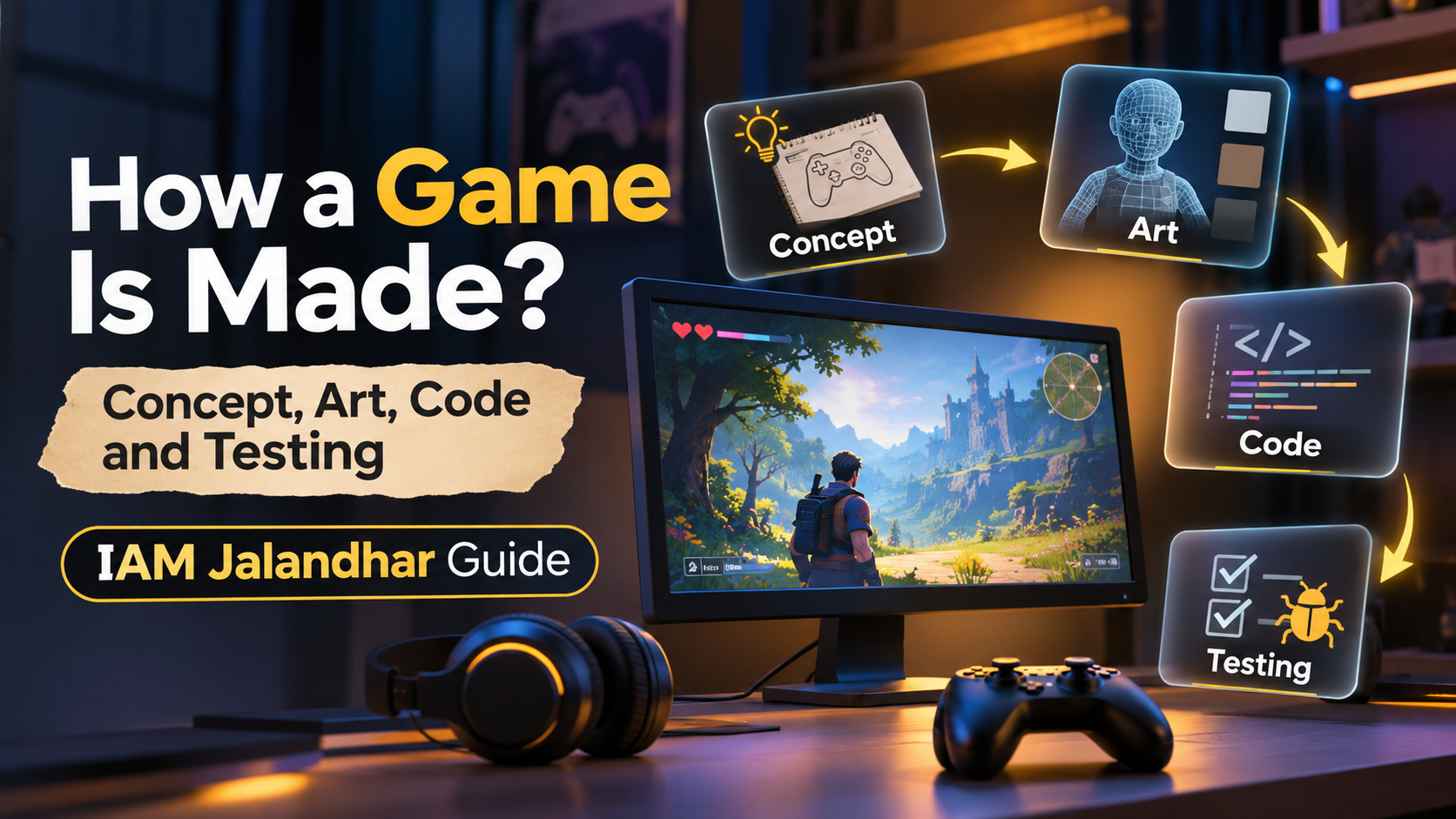
How a Game Is Made: Concept, Art, Code and Testing
Have you ever played a video game and wondered how its characters move, how its virtual world is created, or how every button produces a specific action? Behind every video game is a combination of creativity, technology, planning, and problem-solving.
Game development is a process that transforms an initial idea into an interactive digital experience. It involves several stages, including concept development, game design, art creation, programming, animation, sound design, and testing.
Whether it is a simple mobile game, a realistic racing simulation, or a large adventure game, every project follows a development process. Understanding these stages can help aspiring developers discover how the gaming industry works.
If you are interested in learning game development, understanding this process is a useful first step. At IAM Jalandhar, students can explore creative and technical aspects of digital game creation through structured learning.
1. Game Concept: Where Every Game Begins
Every game starts with an idea. Before developers begin creating characters or writing code, they need to understand what the game is about and what experience they want players to have.
This initial stage is known as concept development or pre-production.
The development team considers questions such as:
What is the main idea of the game?
Who is the target audience?
What type of game will it be?
What will players do during gameplay?
What makes the game interesting?
Which platform will support the game?
For example, a game concept could involve a player exploring an imaginary city, completing missions, collecting rewards, and unlocking new levels.
Developers also decide the game's genre, which may include action, adventure, racing, puzzle, simulation, strategy, or role-playing games.
Creating a Game Design Document
A Game Design Document (GDD) helps organise the main ideas and requirements of a game.
It may include:
Game storyline and concept.
Characters and their abilities.
Gameplay mechanics.
Levels and environments.
Objectives and challenges.
Visual style and design references.
Platform and technical requirements.
A clear concept gives the development team a direction before actual production begins.
2. Game Design: Planning the Player Experience
Once the concept is established, the next step is designing how the game will function.
Game design focuses on the rules, challenges, interactions, objectives, and overall player experience.
For example, in a racing game, designers decide how vehicles move, how players control them, how races are structured, and how winners are determined.
Important elements of game design include:
Gameplay Mechanics: These define how players interact with the game, including movement, jumping, collecting objects, fighting, and completing missions.
Level Design: Developers plan different stages, challenges, obstacles, and environments that players experience.
Character Design: Characters are planned according to the game's storyline, visual style, abilities, and personality.
User Interface (UI): Menus, buttons, health indicators, scoreboards, and other on-screen elements help players navigate the game.
User Experience (UX): Designers consider whether the game feels enjoyable, understandable, responsive, and engaging.
Good game design makes the experience interesting while giving players clear objectives and meaningful interactions.
3. Game Art: Creating Characters and Virtual Worlds
Visual design is one of the most exciting parts of game development. Game artists transform creative ideas into characters, objects, environments, and visual elements.
The artwork helps establish the game's identity and creates the world in which players interact.
2D Game Art
2D game artists create flat visual elements used in games, including:
Character illustrations.
Background designs.
Game icons.
Menus and interface elements.
Sprites and visual assets.
Environment illustrations.
These elements are commonly used in platform games, puzzle games, and mobile gaming experiences.
3D Game Art
3D artists create objects and environments with depth, shape, and realistic proportions.
Their work may include:
3D character modelling.
Environment modelling.
Props and objects.
Texturing and materials.
Lighting and scene composition.
Character rigging.
Animation preparation.
Software such as Blender and other 3D creation tools can be used to develop assets for game projects.
Creating Game Environments
Game environments can include cities, forests, buildings, roads, mountains, indoor spaces, and imaginary worlds.
Artists focus on composition, colours, lighting, textures, and visual details to create environments that support the game's concept.
The final assets are integrated into a game engine to build interactive scenes.
4. Game Programming: Bringing Ideas to Life
After the design and visual assets are prepared, programming helps turn them into a functional game.
Game programmers write code or use visual scripting systems to control how different elements behave.
Programming determines what happens when a player moves, jumps, interacts with an object, completes a mission, or reaches a particular level.
Common game programming concepts include:
Variables and data types.
Conditions and loops.
Functions and events.
Player movement.
Collision detection.
Object interaction.
Scoring systems.
Game rules and logic.
Debugging and error handling.
Depending on the development engine, programmers may use languages such as C# or C++.
Understanding Game Engines
Game engines provide the tools required to develop interactive gaming experiences. They bring together graphics, physics, sound, animation, scripting, and scene management.
Two widely used game engines include:
Unity: Used for developing 2D and 3D games, interactive applications, and experiences across different platforms.
Unreal Engine: Known for its real-time rendering capabilities, visual scripting through Blueprints, and development of detailed 3D environments.
Learning how game engines work helps aspiring developers understand how artwork, programming, and gameplay are combined.
5. Animation and Sound: Making Games Feel Alive
A game becomes more engaging when characters move naturally and the environment responds to player actions.
Animation helps create character movement, facial expressions, object interactions, and environmental effects.
Common animation elements include:
Walking and running animations.
Jumping and landing.
Character movements.
Object animations.
Camera movements.
Environmental animations.
Sound design is equally important. Background music, footsteps, environmental sounds, dialogue, and action effects help establish the atmosphere of a game.
For example, a racing game may include engine sounds, tyre movement, background music, and collision effects to make the gameplay more immersive.
6. Game Testing: Finding and Fixing Problems
Creating a game is not complete when programming and artwork are finished. Testing is necessary to identify problems and improve the overall experience.
Game testers and developers examine different parts of the game to ensure that features work as intended.
Testing may involve:
Functional Testing: Checking whether game features, controls, menus, and objectives work correctly.
Gameplay Testing: Evaluating whether the game is enjoyable, understandable, and balanced.
Performance Testing: Checking loading times, frame rates, responsiveness, and overall performance.
Compatibility Testing: Examining how the game performs on different devices, operating systems, or hardware configurations.
Bug Testing: Identifying errors such as character movement issues, missing assets, broken interactions, and unexpected crashes.
After testing, developers fix identified issues and repeat the process until the game reaches the required quality level.
7. Game Launch and Continuous Improvement
Once the game has been developed and tested, it can move towards release.
Before launch, developers prepare the final build, check platform requirements, organise game assets, and complete necessary publishing steps.
After release, development may continue through:
Bug fixes and updates.
New levels and characters.
Performance improvements.
Additional gameplay features.
Player feedback analysis.
Content updates.
Many games continue evolving even after their initial launch.
Tools Used in Game Development
Different stages of game creation require different software and technologies.
Some commonly used tools include:
Unity: 2D and 3D game development.
Unreal Engine: Real-time 3D development and interactive environments.
Blender: 3D modelling, animation, and asset creation.
Visual Studio: Programming and code development.
C#: Programming language commonly used with Unity.
C++: Programming language used in various game development workflows.
Git: Version control and project collaboration.
The tools selected depend on the type of game, development requirements, and the team's workflow.
Career Opportunities in Game Development
The gaming industry includes several creative and technical career paths. Individuals can specialise in design, programming, animation, visual development, testing, or production.
Some possible career options include:
Game Developer.
Game Designer.
Game Level Designer.
Game Programmer.
3D Game Artist.
Game Environment Artist.
Character Artist.
Game Animator.
Game Tester.
Technical Artist.
A strong portfolio, practical project experience, problem-solving abilities, and knowledge of relevant software can help learners prepare for opportunities in the gaming industry.
Learn Game Development at IAM Jalandhar
Understanding how games are made is the first step towards exploring this creative technology field. From planning a game concept and designing characters to programming interactive features and testing gameplay, every stage contributes to the final experience.
If you want to develop your knowledge of game creation, explore the Game Development Course in Jalandhar at IAM.
The learning journey can introduce you to game design fundamentals, 2D and 3D environments, programming concepts, animation, game engines, and interactive project development.
At IAM, students can enquire about the available syllabus, software tools, practical assignments, and course structure to understand how they can begin their game development journey.
Have an idea for your own game? Start exploring the skills to bring it to life with IAM Jalandhar.
- Game Development
- Game Design
- How Games Are Made
- Game Programming
- Video Game Development
- 2D Game Design
- 3D Game Development
- Unity