
Colourist Career Path: How to Get Started in Jalandhar
Film & Editing · Nidhi Jalandhar · 3 November 2026
Interested in building a career as a colourist? Discover how to start learning colour grading in Jalandhar, understand professional colour correction techniques, explore industry software and develop the creative skills required for film, video and digital media post-production.
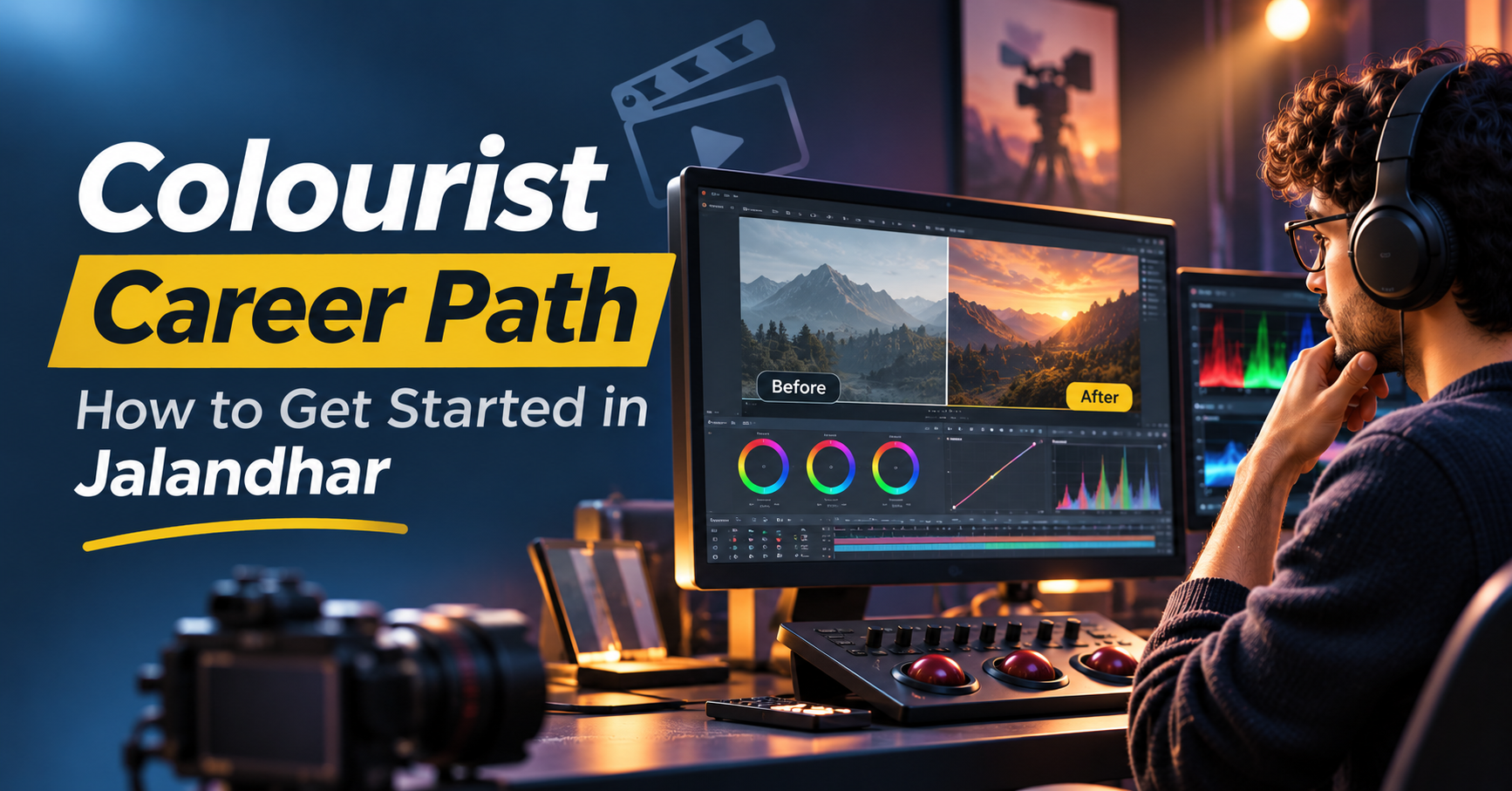
Colourist Career Path: How to Get Started in Jalandhar
Have you ever watched a film, music video or advertisement and noticed how its colours create a particular mood? Some scenes look warm and cinematic, while others use cool tones to create suspense, drama or emotion. This visual experience is often shaped by the work of a professional colourist.
Colour grading is an important part of video post-production. It helps transform raw footage into visually consistent and engaging content by adjusting colours, contrast, brightness and overall image appearance.
With the growing use of video content across films, advertisements, social media and digital platforms, colour grading has become an interesting creative skill to explore. If you are considering a Colourist Career in Jalandhar, learning colour correction, grading techniques and professional post-production workflows can help you begin your journey.
But where should you start? Which software should you learn? And what skills do production studios expect from aspiring colourists?
Let's explore the complete career path.
What Does a Professional Colourist Do?
A colourist is responsible for enhancing and maintaining the visual appearance of video footage during post-production. Their work involves adjusting colours, exposure, contrast and image tones to achieve a consistent visual style.
Colourists work with directors, cinematographers, editors and production teams to ensure that the final footage matches the creative vision of a project.
Their responsibilities may include:
Correcting exposure and brightness issues.
Balancing colours across different shots.
Adjusting contrast and saturation.
Creating cinematic colour looks.
Matching colours between multiple scenes.
Improving skin tones and natural colours.
Working with different video formats and colour spaces.
Preparing final footage for delivery.
For example, a filmmaker may want a romantic scene to have warm golden tones or a thriller to feature darker, cooler colours. A colourist uses different grading techniques to achieve the intended visual atmosphere.
Colour Correction vs Colour Grading: What's the Difference?
These two terms are closely connected, but they serve different purposes in video post-production.
Colour Correction
Colour correction focuses on making footage look balanced and natural. It involves fixing exposure, white balance, contrast and unwanted colour variations.
The objective is to create a consistent visual foundation before applying creative looks.
Colour Grading
Colour grading focuses on the creative appearance of the footage. It involves adjusting colours, tones and contrast to establish a particular mood or visual identity.
For example, a travel video may use bright, vibrant colours, while a dramatic film scene may use muted tones and deeper shadows.
Understanding both processes is essential for anyone interested in professional colour grading.
Essential Skills Every Aspiring Colourist Should Learn
Building a career in colour grading requires more than knowing how to use editing software. You also need an understanding of visual aesthetics, technical concepts and storytelling.
Here are some important skills to develop.
1. Understanding Colour Theory
Colour theory explains how different colours work together and how they influence visual perception.
Learn about:
Primary and secondary colours.
Complementary colour combinations.
Warm and cool colour temperatures.
Colour harmony and contrast.
Colour psychology and visual mood.
This knowledge helps colourists make creative decisions that support the storytelling process.
2. Exposure and White Balance
Understanding exposure helps you control how bright or dark an image appears.
White balance helps maintain accurate colours by correcting unwanted colour casts caused by different lighting conditions.
These fundamentals are essential before moving towards advanced grading techniques.
3. Working with Colour Scopes
Professional colour workflows use scopes to analyse image information.
Some important tools include:
Waveform Monitor
RGB Parade
Vectorscope
Histogram
Learning to read these scopes can help you make more accurate adjustments rather than relying only on how an image looks on a screen.
4. Skin Tone Correction
Natural-looking skin tones are important in films, interviews, advertisements and other video projects.
Colourists learn to balance skin tones while maintaining the overall visual style of a scene.
5. Cinematic Colour Grading
Cinematic grading involves developing a visual style that supports the mood and atmosphere of a project.
This may include adjusting highlights, shadows, midtones, saturation and colour contrast.
6. Shot Matching
Different shots may have different lighting conditions, camera settings or colour temperatures.
Shot matching helps maintain visual consistency throughout a video or film sequence.
7. Understanding Colour Spaces and Video Formats
Colourists should understand basic concepts such as:
RGB and YUV.
Rec.709.
HDR workflows.
Log footage.
LUTs (Look-Up Tables).
Bit depth and colour information.
These concepts help professionals work with different footage formats and delivery requirements.
Which Software Should You Learn for Colour Grading?
Choosing the right software is an important part of developing your technical skills.
Here are some popular tools used in video post-production.
DaVinci Resolve
DaVinci Resolve is widely recognised for its professional colour correction and grading capabilities. Its dedicated colour page provides tools for balancing footage, adjusting tones, working with nodes and creating creative looks.
Adobe Premiere Pro
Premiere Pro includes colour correction and grading tools through its Lumetri Color panel. It is useful for editors who want to manage basic and advanced colour adjustments within their video editing workflow.
Adobe After Effects
After Effects offers colour adjustment and visual effects capabilities. It can be useful when colour treatments need to be combined with motion graphics and compositing.
Learning one suitable application thoroughly and understanding the fundamentals of colour will provide a stronger foundation than simply collecting software knowledge.
How to Build a Colourist Portfolio
A portfolio allows potential employers and clients to understand your visual abilities and technical skills.
If you are a beginner, start with small projects and gradually move towards more advanced grading exercises.
Here are five practical portfolio ideas:
1. Before-and-After Colour Correction
Show the difference between original footage and your corrected version. Demonstrate improvements in exposure, white balance and contrast.
2. Cinematic Colour Grading
Take suitable footage and create different cinematic looks using colour adjustments and creative grading techniques.
3. Skin Tone Correction
Practise balancing skin tones while maintaining natural-looking colours and consistent lighting.
4. Shot Matching Project
Work with multiple clips from the same scene and create a consistent appearance across all shots.
5. Creative Mood Grading
Create different visual moods using the same footage, such as warm, cool, dramatic and vibrant treatments.
A well-organised collection of before-and-after examples can help demonstrate your understanding of colour and visual storytelling.
Career Opportunities After Learning Colour Grading
Once you develop relevant technical knowledge and practical experience, you can explore different roles in video production and post-production.
Some potential career options include:
Professional Colourist
Junior Colourist
Video Editor
Colour Correction Artist
Film Post-Production Artist
Digital Intermediate Assistant
Video Post-Production Executive
Freelance Colour Grading Artist
Colour grading skills can be useful in film production houses, advertising agencies, television studios, digital media companies and independent video production projects.
Career opportunities depend on your portfolio, practical experience, technical abilities and industry connections.
How to Start a Colourist Career in Jalandhar
If you are interested in entering the colour grading industry, following a structured learning approach can make the process easier.
Step 1: Understand Video Fundamentals
Learn about video formats, resolution, frame rates, exposure and basic image characteristics.
Step 2: Learn Colour Theory
Understand colour relationships, temperature, contrast, saturation and visual mood.
Step 3: Explore Colour Grading Software
Start working with tools such as DaVinci Resolve and understand their colour correction and grading features.
Step 4: Practise on Real Footage
Use suitable sample clips to practise exposure adjustments, white balance, shot matching and creative grading.
Step 5: Create a Portfolio
Develop before-and-after comparisons and different grading styles to showcase your abilities.
Step 6: Explore Professional Opportunities
Look for internships, junior post-production roles, freelance projects and opportunities to collaborate with filmmakers and video editors.
Explore Creative Media Training at IAM Jalandhar
Interested in developing skills in video production and post-production? Understanding colour grading can be a valuable addition to your creative skill set.
At IAM Jalandhar, aspiring creative professionals can explore animation and multimedia learning opportunities while developing their understanding of digital content creation and visual communication.
Whether you are interested in filmmaking, video editing, colour correction or cinematic visuals, building a foundation in creative media can help you explore different areas of the entertainment and digital production industry.
If you want to learn more about video editing, colour grading or related multimedia training, connect with IAM to enquire about available courses, curriculum, training duration and admission details.
Final Thoughts
Colour grading is where technical precision meets creative storytelling. It helps transform ordinary footage into visually engaging content by creating consistency, atmosphere and emotion.
For anyone interested in building a Colourist Career in Jalandhar, understanding colour theory, mastering grading software and practising on real footage are important starting points.
Begin with the fundamentals, experiment with different visual styles and build a portfolio that reflects your creative abilities.
Your journey into professional colour grading can start with learning to see colours differently. Connect with IAM Jalandhar to explore creative media training opportunities.
- colour grading
- Colour Correction
- Colourist Career
- Video Editing
- DaVinci Resolve
- Film Making
- Video Post Production
- Cinematic Editing