Cinematic Editing Techniques: Pacing, Transitions and Storytelling in Jalandhar
Film & Editing · Nidhi Jalandhar · 29 October 2026
Discover how pacing, transitions, and visual storytelling shape engaging films and videos. Explore cinematic editing techniques, scene continuity, rhythm, and professional post-production concepts with this guide for aspiring video editors and filmmakers in Jalandhar.
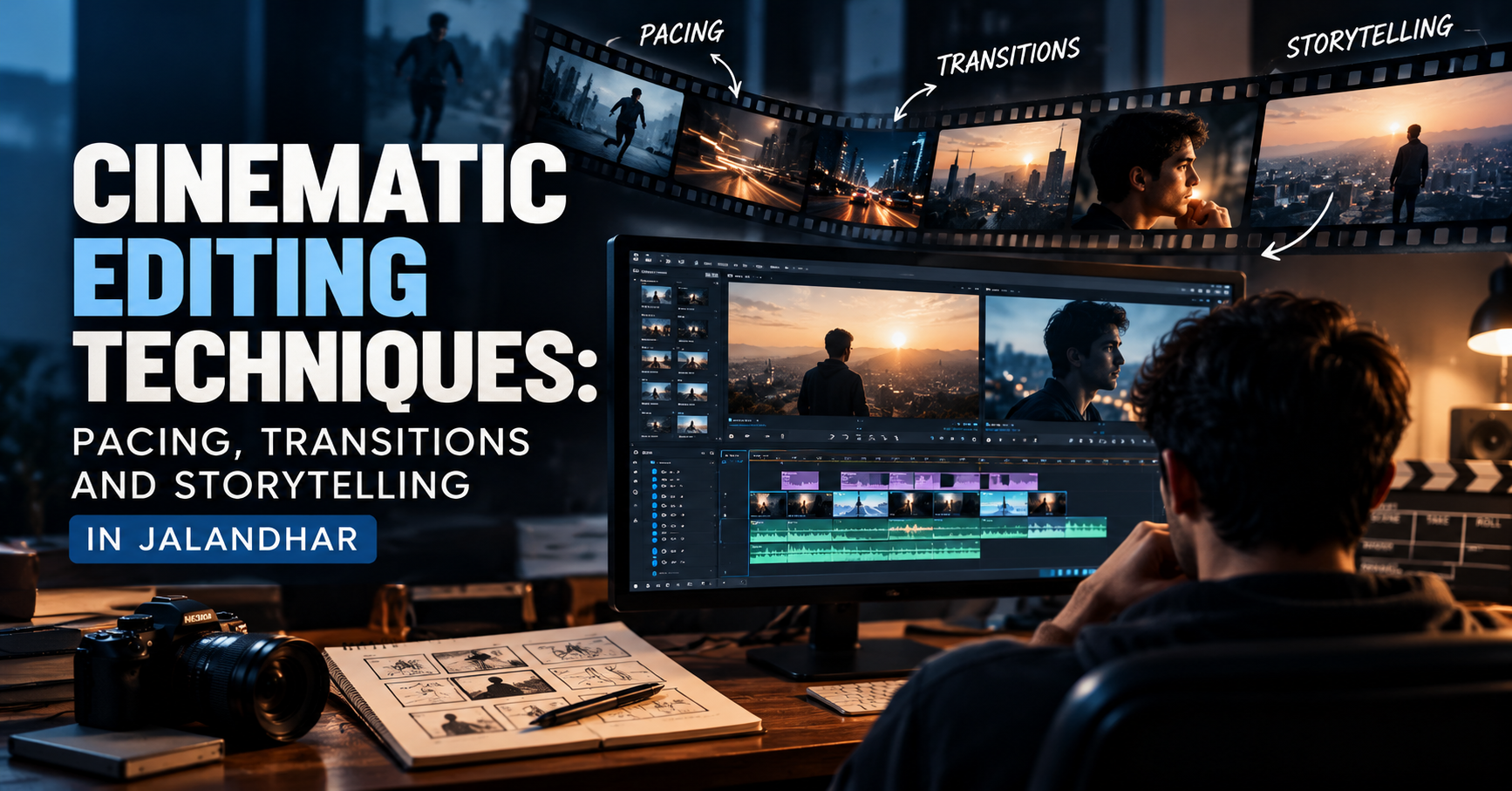
Cinematic Editing Techniques: Pacing, Transitions and Storytelling in Jalandhar
Cinematic editing is more than arranging video clips in sequence. It is the process of shaping footage into a meaningful visual experience that guides the audience through a story. From the timing of a cut to the rhythm of a music track, every editing decision can influence how viewers understand a scene and connect with its characters. For aspiring filmmakers, video editors, and content creators in Jalandhar, understanding cinematic editing techniques can help build a stronger foundation in visual storytelling.
Understanding the Role of Pacing in Film Editing
Pacing refers to the speed and rhythm at which a story unfolds on screen. A sequence with quick cuts can communicate urgency, excitement, or confusion, while longer shots can create suspense, reflection, or emotional depth. The right pacing depends on the purpose of the scene, the mood of the story, and the response the filmmaker wants to create.
Editors develop pacing by adjusting shot duration, dialogue timing, music, sound effects, and the relationship between consecutive scenes. An action sequence might use short shots to increase intensity, whereas an emotional conversation may benefit from longer takes that allow the audience to absorb expressions and dialogue.
Choosing the Right Transitions
Transitions determine how one shot or scene moves into the next. A straight cut is often the most effective choice because it keeps the audience focused on the story without drawing unnecessary attention to the edit. Other transitions, such as dissolves, fades, wipes, and match cuts, can serve specific creative purposes.
A dissolve can suggest the passage of time or connect two related moments. A fade to black may indicate an ending, a pause, or a shift in the narrative. Match cuts can connect shots through similar shapes, movement, composition, or meaning. Rather than using effects simply for decoration, editors should choose transitions that support the tone and direction of the story.
Storytelling Through Shot Selection and Continuity
Strong editing helps viewers understand where the action takes place, what characters are doing, and how events relate to one another. Continuity editing maintains a clear sense of space, movement, and time across multiple shots. Techniques such as the 180-degree rule, match-on-action, and eyeline matching help scenes feel coherent and natural.
Editors also use shot selection to control what the audience notices. A wide shot can establish a location, a medium shot can show interactions, and a close-up can highlight an expression or important detail. Combining these shots thoughtfully creates visual variety while preserving the scene's meaning.
Editing to Music, Dialogue, and Sound
Sound is a major part of cinematic rhythm. Cutting to a musical beat can add energy to a montage, but effective editing does not require every cut to match the music. Sometimes a cut that happens before or after a beat creates greater emotional impact.
Dialogue editing requires attention to timing, pauses, reactions, and natural speech patterns. Ambient sound, sound effects, and room tone can make scenes feel connected and believable. Editors should also balance audio levels so that dialogue remains clear and the soundtrack supports rather than overwhelms the visuals.
Creating Emotional Impact with Timing
The timing of a reaction shot, a pause, or a reveal can change how an audience interprets a moment. Holding a shot for a little longer may allow tension to build, while cutting away at the right moment can create surprise. These choices demonstrate why editing is closely linked to storytelling rather than simply technical assembly.
An editor should consider what viewers know at each point in the sequence and how much time they need to process the information. The goal is to create a rhythm that feels appropriate to the scene instead of applying the same editing style to every project.
Common Editing Mistakes to Avoid
Too many transitions can distract viewers from the story. Inconsistent audio levels can interrupt the viewing experience, while overly rapid cuts may make important actions difficult to follow. Poor continuity can also confuse the audience about character movement, screen direction, or the order of events.
A useful editing review involves watching the sequence without stopping, checking whether the story remains understandable, listening for audio problems, and removing shots that do not contribute meaningfully. Feedback from other viewers can reveal issues that the editor may overlook after repeatedly watching the same footage.
Developing Cinematic Editing Skills in Jalandhar
Aspiring editors can strengthen their skills by practising with short films, interviews, promotional videos, and narrative scenes. Start with a simple sequence, experiment with different shot orders, and compare how pacing changes the mood. Try creating two versions of the same scene: one with quick cuts and another with longer shots. Reviewing the results helps demonstrate how editing choices influence storytelling.
Learners exploring filmmaking and video editing in Jalandhar can also build a portfolio of short projects that showcase continuity, transitions, sound design, pacing, and narrative structure. A well-organized portfolio can help demonstrate creative judgment and technical development to potential clients, production teams, or employers.
Conclusion
Cinematic editing brings images, sound, rhythm, and emotion together to create a coherent story. By understanding pacing, choosing purposeful transitions, maintaining continuity, and editing with sound in mind, creators can make their videos more engaging and easier to follow. Consistent practice, thoughtful feedback, and experimentation are essential for developing an editing style that serves the story rather than distracting from it.
- Cinematic Editing
- , Film Editing
- Video Editing
- Pacing Techniques
- Video Transitions
- Visual Storytelling
- Film Production
- post-production