Audio Mixing and Mastering in Audition for Videos and Podcasts, Jalandhar
Preeti Jalandhar · 3 November 2026
Learn professional audio mixing and mastering in Adobe Audition at IAM Jalandhar. Explore noise reduction, sound enhancement, voice editing, and audio production techniques for videos and podcasts.
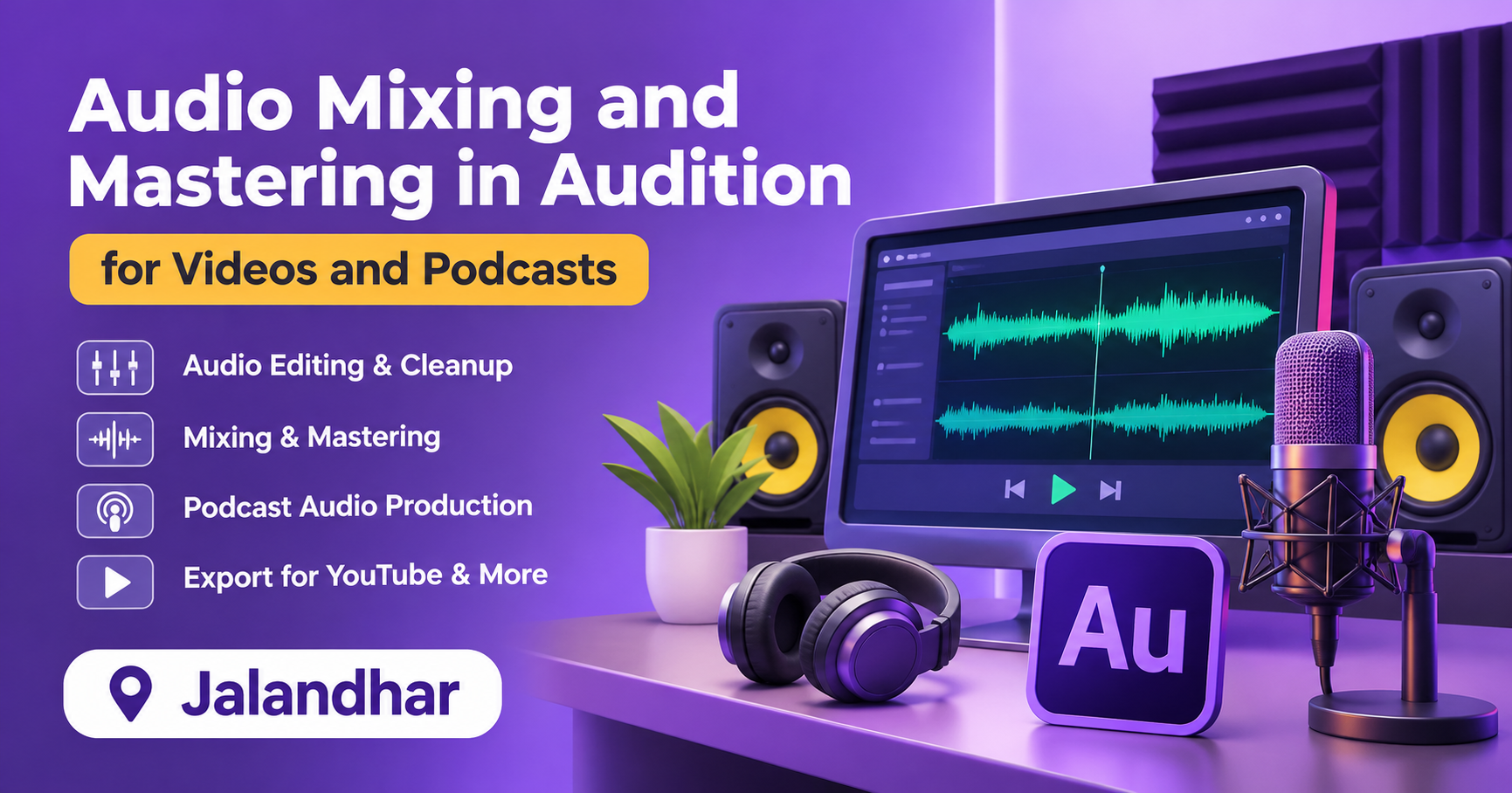
Audio plays an important role in creating professional videos, podcasts, advertisements, and digital content. Good visuals may attract viewers, but clear and balanced sound keeps them interested. Whether you are creating YouTube videos, recording podcasts, producing interviews, or editing promotional content, learning professional audio techniques can improve the overall quality of your work. Enrolling in Audio Mixing and Mastering Training in Jalandhar can help you understand how to edit, enhance, mix, and master audio using professional software.
Adobe Audition is a popular audio editing application used by content creators, video editors, podcasters, and audio professionals. It provides various tools for recording, noise reduction, sound correction, audio mixing, and mastering. Learning Adobe Audition in Jalandhar can help students develop practical audio production skills and understand how professional sound editing works.
IAM provides opportunities for learners interested in developing creative and technical skills related to digital media, video editing, and audio production. With practical learning, students can explore the different features of Adobe Audition and understand how to produce clear, balanced, and professional-sounding audio for videos and podcasts.
What Is Audio Mixing and Mastering?
Audio mixing and mastering are two important stages of professional audio production. Both processes improve the quality of recorded sound, but they serve different purposes.
Audio Mixing involves combining different audio elements, such as voice recordings, background music, sound effects, and other audio tracks. The purpose is to create a balanced sound where every element can be heard clearly.
Audio Mastering is the final stage of audio production. It focuses on improving the overall sound quality, consistency, loudness, and clarity of the finished audio.
A professional Audio Mixing and Mastering Course in Jalandhar can help learners understand both processes and develop the technical knowledge required to work on different audio projects.
Why Learn Adobe Audition for Videos and Podcasts?
Adobe Audition is widely used for professional audio editing and sound production. It offers a range of features that make it useful for editing voice recordings, podcasts, interviews, promotional videos, and other digital content.
Learning Adobe Audition Training in Jalandhar can help students understand how to improve audio quality and solve common recording problems.
Some important benefits of learning Adobe Audition include:
Editing and improving voice recordings.
Removing unwanted background noise.
Balancing voice and background music.
Improving audio clarity and volume.
Adding sound effects and transitions.
Recording and editing podcast episodes.
Working with multiple audio tracks.
Creating professional audio for videos.
Understanding audio mixing and mastering techniques.
Preparing audio files for different digital platforms.
These skills are useful for anyone interested in video production, podcast editing, and digital content creation.
Important Topics Covered in Audio Mixing and Mastering Training
A structured Audio Editing Course in Jalandhar should cover the complete audio production process, from recording and editing to mixing and final mastering.
1. Introduction to Adobe Audition
The first step is understanding the Adobe Audition interface and its basic features. Students learn how the software works and how different tools are used in audio production.
Important topics include:
Introduction to Adobe Audition.
Understanding the workspace and interface.
Creating and saving audio projects.
Importing and exporting audio files.
Understanding audio formats.
Exploring waveform and multitrack editing.
Basic audio editing tools.
Understanding audio tracks and channels.
This foundation helps beginners become familiar with the software before moving towards advanced audio techniques.
2. Audio Recording Techniques
Recording is an important part of creating professional podcasts and videos. Poor recording quality can affect the final output, even when advanced editing techniques are used.
Students can learn:
Basic microphone setup.
Understanding microphone types.
Recording voiceovers.
Recording interviews and conversations.
Adjusting recording levels.
Understanding input and output settings.
Avoiding unwanted background sounds.
Maintaining consistent recording volume.
Learning proper recording techniques helps create cleaner audio and reduces the need for excessive editing.
3. Noise Reduction and Audio Cleaning
Background noise is a common problem in video and podcast recordings. Sounds such as fans, traffic, electrical interference, and unwanted room noise can affect recording quality.
A professional Audio Editing Training in Jalandhar can introduce students to different noise-reduction techniques in Adobe Audition.
Topics include:
Removing background noise.
Reducing unwanted sound frequencies.
Using noise reduction tools.
Removing clicks and pops.
Improving voice clarity.
Reducing unwanted hum and hiss.
Cleaning recorded dialogue.
Improving voice consistency.
These techniques are useful for creating clean audio for interviews, educational videos, podcasts, and promotional content.
4. Understanding Audio Mixing
Audio mixing is the process of combining multiple sound elements into one balanced audio composition.
Students learn how to work with different audio tracks and adjust their levels according to the requirements of a project.
Important concepts include:
Understanding multitrack sessions.
Adjusting audio volume.
Balancing voice and background music.
Working with multiple audio layers.
Applying equalisation.
Using compression.
Adjusting stereo positioning.
Controlling audio dynamics.
Creating smooth audio transitions.
Proper mixing ensures that dialogue, music, and sound effects work together without overpowering one another.
5. Equalisation (EQ) Techniques
Equalisation is used to adjust different frequency ranges within an audio recording. It helps improve sound clarity and control unwanted frequencies.
In Adobe Audition Audio Mixing, students can explore:
Understanding low, mid, and high frequencies.
Removing unwanted low-frequency sounds.
Improving vocal clarity.
Reducing harsh frequencies.
Enhancing voice presence.
Using parametric equalisation.
Applying EQ to different audio tracks.
These techniques are especially helpful when editing voiceovers, interviews, and podcast recordings.
6. Compression and Audio Dynamics
Compression helps control differences between louder and softer parts of an audio recording. It makes the overall sound more consistent when applied correctly.
Students can learn:
Understanding audio compression.
Threshold and ratio settings.
Attack and release controls.
Managing loud audio peaks.
Improving vocal consistency.
Using limiters.
Controlling dynamic range.
Understanding compression helps produce balanced audio that sounds consistent across different listening environments.
7. Audio Effects and Sound Enhancement
Adobe Audition includes various audio effects that help improve the overall sound quality and creative presentation of recordings.
Students can explore:
Reverb and echo effects.
Delay effects.
Pitch adjustments.
Audio fading.
Sound enhancement.
Stereo effects.
Vocal processing.
Creative sound transitions.
Using these effects appropriately can make videos and podcasts sound more polished and engaging.
Audio Mastering Techniques in Adobe Audition
Mastering is the final stage of audio production. After completing the mixing process, the audio is prepared for its intended platform and listening environment.
A Professional Audio Mastering Course helps learners understand how to improve the final sound without compromising audio quality.
Important mastering topics include:
Final audio equalisation.
Loudness management.
Peak level control.
Limiting techniques.
Dynamic range management.
Stereo image consistency.
Audio quality checking.
Exporting mastered audio.
Preparing audio for online platforms.
Mastering is not simply about making audio louder. It is about achieving a balanced, clear, and consistent final result.
Audio Mixing and Mastering for Videos
Videos require clear dialogue, suitable background music, and properly balanced sound effects. Poor audio can reduce the overall quality of even well-produced videos.
Learning Audio Mixing for Videos helps students understand how to synchronise and balance different sound elements.
Some important applications include:
YouTube video editing.
Educational video production.
Promotional and advertising videos.
Interview editing.
Corporate videos.
Documentary production.
Short-form social media videos.
Product demonstration videos.
Video tutorials and presentations.
Students can learn how to improve voice clarity, adjust music levels, add sound effects, and prepare audio for professional video projects.
Audio Mixing and Mastering for Podcasts
Podcasts have become a popular format for sharing information, discussing topics, conducting interviews, and building personal brands.
A professionally edited podcast should have clear speech, consistent volume, and minimal unwanted background noise.
Through Podcast Editing Training in Jalandhar, learners can understand how to produce better-quality podcast episodes using Adobe Audition.
Important podcast editing skills include:
Recording podcast conversations.
Editing long voice recordings.
Removing unwanted pauses and mistakes.
Cleaning background noise.
Balancing multiple speakers.
Adding intro and outro music.
Adjusting voice levels.
Applying equalisation and compression.
Adding transitions and sound effects.
Exporting final podcast episodes.
These techniques help create a smooth listening experience for podcast audiences.
Difference Between Audio Mixing and Audio Mastering
Although mixing and mastering are connected, both processes have different objectives.
Audio Mixing:
Combines multiple audio tracks.
Balances voice, music, and sound effects.
Adjusts individual track levels.
Uses EQ and compression.
Improves the overall arrangement of sound.
Audio Mastering:
Focuses on the final mixed audio.
Improves overall tonal balance.
Controls loudness and peaks.
Ensures consistent playback quality.
Prepares the final audio for distribution.
Understanding the difference between these processes is important for anyone interested in professional audio production.
Who Can Join an Adobe Audition Course?
An Adobe Audition Course in Jalandhar can be useful for beginners as well as individuals who already have experience in video editing or digital content creation.
The training may be suitable for:
Students: Those interested in learning creative digital skills.
Video Editors: Professionals who want to improve their audio editing knowledge.
Podcast Creators: Individuals interested in producing professional podcast episodes.
YouTubers: Content creators who want better audio quality in their videos.
Digital Marketers: Individuals working on promotional and advertising content.
Freelancers: People interested in providing audio editing services.
Content Creators: Individuals producing social media videos and digital content.
Media Professionals: People interested in improving their audio production skills.
Basic computer knowledge can be helpful for beginners. No advanced audio engineering experience is necessarily required to start learning the fundamentals.
Practical Projects to Develop Audio Editing Skills
Practical projects help students understand how different audio techniques are used in real-world production.
Some useful practice projects include:
1. Podcast Episode Editing
Edit a recorded podcast by removing unwanted pauses, reducing noise, and balancing different speakers.
2. YouTube Video Audio Editing
Improve voice clarity, add background music, and synchronise audio with video content.
3. Voiceover Recording
Record and enhance a voiceover for an educational or promotional video.
4. Interview Audio Cleaning
Remove unwanted background sounds and improve the clarity of recorded conversations.
5. Promotional Video Sound Design
Combine dialogue, music, and sound effects to create a professional promotional video.
6. Audio Mastering Practice
Apply final EQ, compression, and limiting techniques to prepare a balanced audio file.
These projects help students understand the complete audio production workflow and develop confidence in using Adobe Audition.
Career Opportunities After Learning Audio Mixing and Mastering
Learning audio mixing and mastering can support different career paths in the digital media and content production industries.
Some related roles include:
Audio Editor: Editing and improving recorded audio files.
Podcast Editor: Preparing podcast episodes for publishing.
Video Editor: Combining visual content with professionally balanced audio.
Sound Editor: Working with dialogue, sound effects, and background music.
Content Creator: Producing videos and audio-based digital content.
Freelance Audio Editor: Providing audio editing services independently.
Audio Production Assistant: Supporting recording and editing projects.
Digital Media Assistant: Working on multimedia content for businesses and brands.
Career opportunities depend on practical knowledge, project experience, technical ability, and the quality of a learner's portfolio.
Why Learn Audio Mixing and Mastering at IAM in Jalandhar?
IAM offers learners an opportunity to explore creative and technical skills related to digital media and content production.
Students interested in Audio Mixing and Mastering Training at IAM in Jalandhar can explore the fundamentals of Adobe Audition and understand how audio is recorded, edited, mixed, and mastered for different types of projects.
Important learning areas include:
Understanding Adobe Audition tools and features.
Learning audio recording techniques.
Exploring noise reduction and audio cleaning.
Practising multitrack audio editing.
Understanding EQ and compression.
Learning audio mixing and mastering.
Editing audio for videos and podcasts.
Developing practical project experience.
Improving technical and creative skills.
IAM aims to support learners in understanding digital creative tools and developing practical knowledge that can be applied to different content production requirements.
For students interested in video editing, podcast production, and audio enhancement, learning Adobe Audition can be a valuable addition to their creative skill set.
Tips for Creating Professional Audio for Videos and Podcasts
Creating high-quality audio requires attention to recording, editing, mixing, and mastering. Here are some useful tips:
Always record in a quiet environment.
Use a suitable microphone for voice recording.
Maintain proper recording levels.
Remove unnecessary background noise.
Keep dialogue clear and easy to understand.
Balance background music with spoken audio.
Use EQ to improve vocal clarity.
Apply compression carefully to control volume differences.
Avoid excessive audio effects.
Check the final audio using headphones and speakers.
Export files using suitable audio formats and settings.
Listen to the final output before publishing.
Following these practices can help improve audio quality and create a better listening experience.
Conclusion
Audio quality is an essential part of professional video production and podcast creation. Clear dialogue, balanced background music, controlled sound levels, and proper mastering can make digital content more engaging and professional.
Enrolling in Audio Mixing and Mastering Training in Jalandhar can help students understand the complete audio production process, from recording and noise reduction to mixing and final mastering. Learning Adobe Audition provides practical knowledge of professional audio editing tools and techniques used in different multimedia projects.
IAM provides an opportunity for learners to explore creative digital skills and develop their understanding of audio production for videos and podcasts. Whether you are a student, aspiring video editor, podcast creator, or content enthusiast, learning audio mixing and mastering can help you strengthen your technical abilities and explore new creative possibilities.
Start learning with IAM in Jalandhar and develop the skills to create clearer, more balanced, and professional-quality audio for today's digital content.
- audio mixing
- Audio Mastering
- Adobe Audition
- Podcast Editing
- Video Audio Editing
- sound design
- Audio Production
- Digital Media Training