
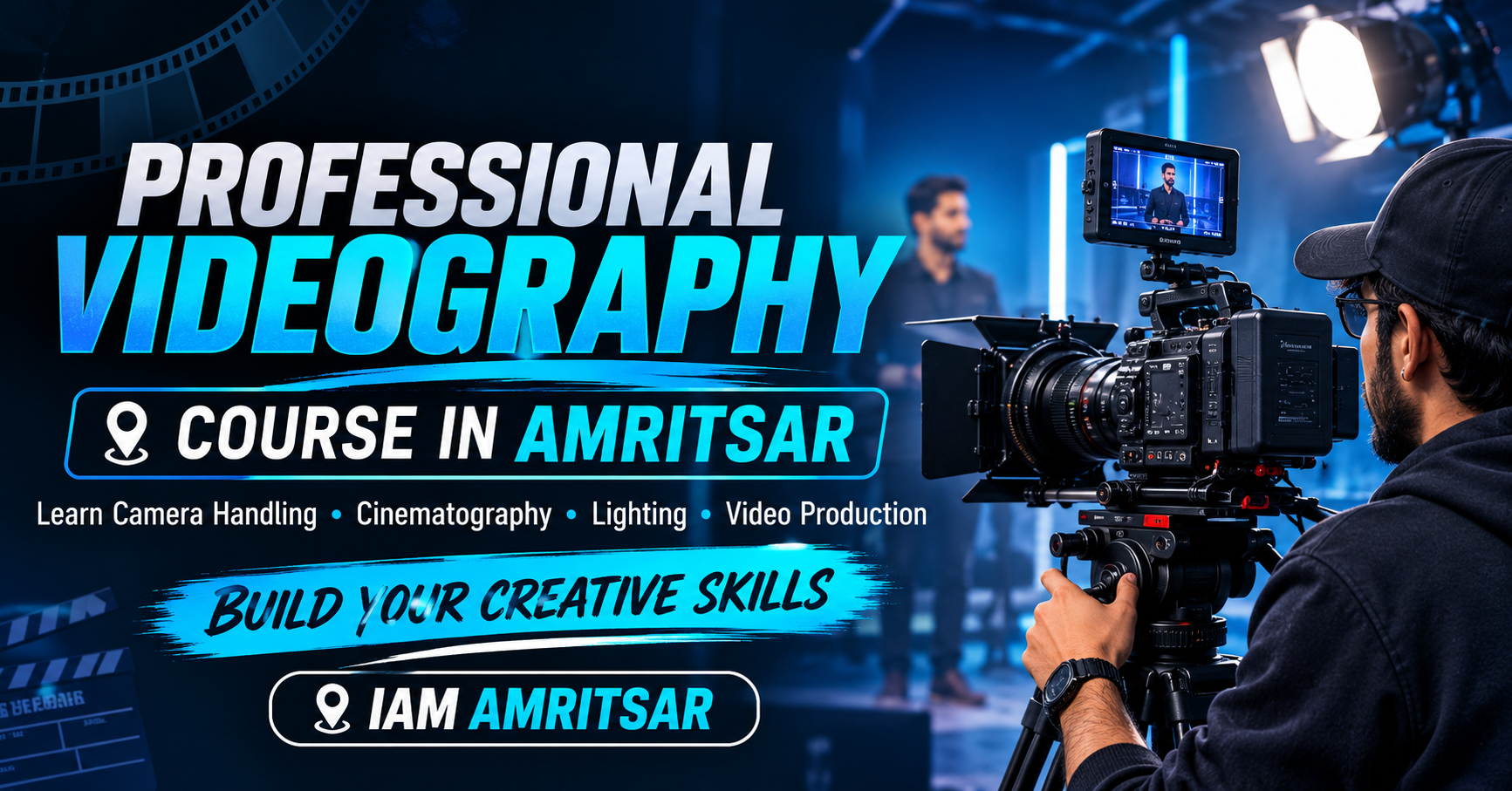
Professional Videography Course in Amritsar
Professional Videography Course in Amritsar – Learn Video Shooting and Cinematography Skills
Videography is an important part of modern media, entertainment, advertising, and digital content creation. Businesses, brands, filmmakers, content creators, and organisations use professional videos to communicate ideas, promote products, tell stories, and engage audiences. From capturing creative shots to producing cinematic videos, videography combines camera knowledge, lighting techniques, composition, storytelling, and video production skills.
If you are looking for a Professional Videography Course in Amritsar, learning professional video shooting techniques can help you develop valuable creative and technical skills. Whether you are a student, beginner, aspiring filmmaker, photographer, content creator, video editor, or creative professional, understanding videography can help you explore opportunities in the media and entertainment industry.
IAM provides opportunities for students to explore creative video production techniques and develop practical videography skills. Through Professional Videography Training in Amritsar, learners can understand camera operations, shot composition, lighting arrangements, camera movements, framing techniques, and professional video shooting workflows.
The training focuses on introducing students to camera handling, cinematography fundamentals, visual storytelling, lighting techniques, shot types, and practical video production. These concepts help learners understand how to capture engaging and visually appealing video content.
What Is Videography?
Videography is the process of capturing moving images using cameras and recording equipment to create videos for different purposes. It involves planning shots, operating cameras, managing lighting, recording audio, and capturing visual content.
Professional videography combines technical camera knowledge with creativity and storytelling.
Some important applications of videography include:
Wedding and event videography.
Corporate and business videos.
Product and promotional videos.
Social media video content.
YouTube video production.
Documentary filmmaking.
Music video production.
Travel and lifestyle videos.
Commercial advertisements.
Short films and creative projects.
Learning videography techniques helps students understand how professional videos are planned, recorded, and produced.
Why Choose a Professional Videography Course in Amritsar at IAM?
Learning professional videography requires an understanding of camera settings, lighting, composition, movement, and visual storytelling. Practical training helps students explore these techniques and develop confidence in handling video production equipment.
IAM focuses on helping students explore creative video production techniques and develop practical media skills.
Here are some important areas covered through videography training:
1. Learn Professional Camera Handling
Understand camera operations, camera settings, focus control, exposure, shutter speed, ISO, aperture, and white balance.
2. Understand Cinematography Fundamentals
Explore framing, composition, shot sizes, camera angles, perspective, and visual storytelling techniques.
3. Practical Lighting Techniques
Learn how to use natural and artificial lighting to create balanced, professional-looking video shots.
4. Explore Camera Movements
Understand different camera movements, including panning, tilting, tracking, handheld shooting, and smooth camera transitions.
5. Develop Creative Video Shooting Skills
Learn how to plan shots, capture different scenes, experiment with visual styles, and develop creative video concepts.
What Will You Learn in the Professional Videography Course?
A Professional Videography Course in Amritsar introduces students to different camera techniques, cinematography principles, and video production workflows.
The learning process can cover the following topics:
1. Introduction to Videography
Students begin by understanding the fundamentals of video production and the role of videography in modern media.
Topics include:
Introduction to videography.
Basics of video production.
Understanding camera equipment.
Video formats and resolutions.
Introduction to cinematography.
Video production planning.
Understanding visual storytelling.
2. Camera Settings and Operations
Camera knowledge is essential for capturing professional-quality footage. Students learn how different camera settings affect video recording.
Topics include:
Camera types and equipment.
Aperture, shutter speed, and ISO.
White balance and exposure.
Manual and automatic focus.
Frame rates and resolution.
Lens selection.
Focus control and depth of field.
3. Shot Composition and Framing
Composition helps create visually balanced and engaging video scenes.
Students can understand:
Rule of thirds.
Wide, medium, and close-up shots.
Camera angles and perspectives.
Leading lines.
Symmetry and visual balance.
Subject positioning.
Background composition.
Creative framing techniques.
4. Lighting Techniques for Videography
Lighting plays an important role in creating professional video footage. Students learn how to control light and create different visual moods.
Topics include:
Introduction to video lighting.
Natural and artificial lighting.
Three-point lighting.
Key light, fill light, and backlight.
Indoor and outdoor lighting.
Soft and hard lighting.
Shadow control.
Creative lighting arrangements.
5. Camera Movements and Shooting Techniques
Camera movements help make videos more dynamic and engaging.
Topics include:
Pan and tilt movements.
Tracking shots.
Dolly movements.
Handheld camera techniques.
Static shots.
Follow shots.
Gimbal shooting basics.
Smooth camera movement techniques.
6. Audio Recording for Video Production
Clear audio is an important part of professional video production. Students understand basic audio recording techniques and equipment.
Topics include:
Introduction to audio recording.
Microphone types.
Voice recording techniques.
Background noise management.
Audio levels.
Microphone placement.
Recording interviews.
Basic audio monitoring.
7. Different Types of Videography
Students explore different videography styles and understand how shooting techniques change according to project requirements.
Topics include:
Wedding videography.
Event videography.
Corporate videography.
Product videography.
Promotional video shooting.
YouTube video production.
Documentary videography.
Social media video creation.
8. Visual Storytelling and Video Planning
Professional videography involves planning scenes and communicating ideas through visuals.
Students can learn:
Understanding video concepts.
Storyboarding basics.
Shot planning.
Scene composition.
Creating shot lists.
Understanding camera continuity.
Visual storytelling techniques.
Planning video sequences.
9. Practical Video Production Projects
Practical assignments help students apply camera and cinematography techniques.
Some project ideas include:
Shooting a promotional video.
Creating a short cinematic sequence.
Recording an interview.
Capturing product videos.
Shooting indoor and outdoor scenes.
Creating social media video content.
Recording event highlights.
Developing a short video project.
10. Video Editing and Post-Production Basics
Understanding post-production helps students learn how recorded footage becomes a complete video.
Topics can include:
Introduction to video editing.
Organising video footage.
Selecting and arranging clips.
Basic transitions.
Colour correction fundamentals.
Audio synchronisation.
Video export settings.
Preparing videos for digital platforms.
Benefits of Learning Professional Videography
Professional videography skills help individuals understand how to capture creative footage and communicate ideas through video.
Some important benefits include:
Developing professional camera handling skills.
Understanding cinematography fundamentals.
Improving creative thinking and composition.
Learning lighting and exposure techniques.
Understanding visual storytelling.
Developing practical video production knowledge.
Exploring different video shooting styles.
Creating professional video projects.
Building a creative portfolio.
Understanding modern digital content production.
Who Can Join Professional Videography Training in Amritsar?
The Professional Videography Course in Amritsar can be useful for students and professionals interested in video production, filmmaking, and creative media.
It may be suitable for:
School and college students.
Beginners and freshers.
Aspiring videographers.
Photography enthusiasts.
Video editors.
Content creators.
YouTube creators.
Aspiring filmmakers.
Digital marketing students.
Creative professionals.
Basic computer knowledge and an interest in cameras, filmmaking, and creativity can help beginners get started. Previous professional videography experience is not necessarily required to learn the fundamentals.
Career Opportunities After Learning Videography
Videography skills are useful across the media, entertainment, advertising, and digital marketing industries. Individuals who develop practical camera handling, shooting, and video production knowledge can explore different career opportunities.
Some possible roles include:
Professional Videographer.
Camera Operator.
Video Production Assistant.
Cinematography Assistant.
Event Videographer.
Wedding Videographer.
Content Creator.
Video Production Executive.
Social Media Video Creator.
Freelance Videographer.
Career opportunities depend on practical experience, creativity, camera knowledge, portfolio quality, and industry requirements.
Students can also explore freelance projects by creating promotional videos, event coverage, product videos, and digital content for businesses and individuals.
How Videography Is Important for Digital Marketing
Video content has become an important part of modern digital marketing. Businesses use videos to promote products, explain services, showcase their brands, and connect with audiences across digital platforms.
Some applications of videography in digital marketing include:
Instagram Reels and video content.
YouTube videos.
Facebook promotional videos.
Product demonstration videos.
Business promotional content.
Brand storytelling videos.
Corporate presentations.
Event highlights.
Digital advertising campaigns.
Learning videography helps students understand how professional video content can support digital communication and marketing activities.
How to Build a Strong Videography Portfolio
A portfolio helps showcase your camera handling abilities, creativity, shooting techniques, and video production experience.
Here are some tips for building a strong videography portfolio:
Include different video shooting styles.
Create cinematic video sequences.
Practise indoor and outdoor shooting.
Showcase different camera movements.
Record professional interviews.
Create product and promotional videos.
Experiment with lighting techniques.
Include event and lifestyle footage.
Develop short video projects.
Organise your best work professionally.
A strong portfolio should demonstrate creativity, technical understanding, visual storytelling, and practical video production skills.
Practical Learning and Creative Skill Development at IAM
Learning videography becomes more effective when students combine technical knowledge with practical shooting exercises. IAM focuses on helping learners explore creative video production techniques and develop practical media skills.
Students interested in Professional Videography Training in Amritsar can explore different camera techniques and understand how professional video content is created.
Learners can focus on developing their understanding of:
Professional camera handling.
Camera settings and exposure.
Cinematography fundamentals.
Lighting and composition.
Camera movements and framing.
Audio recording basics.
Visual storytelling.
Video production planning.
Practical shooting assignments.
Video editing fundamentals.
Through practical exercises and creative projects, students can gradually improve their shooting abilities and develop confidence in video production.
Conclusion
Videography plays an important role in modern filmmaking, digital marketing, entertainment, and content creation. From camera handling and lighting to cinematography and visual storytelling, professional videography combines creativity with technical skills.
If you are looking for a Professional Videography Course in Amritsar, IAM provides an opportunity to explore camera techniques, video production concepts, and creative shooting skills.
Whether you are a beginner, student, photography enthusiast, content creator, video editor, or aspiring filmmaker, learning professional videography can help you explore new possibilities in the creative media industry.
Start developing your camera skills, create engaging video projects, and explore the world of professional videography with IAM in Amritsar.
Tell us whatyou wantto create.
A few lines about yourself and the course you're interested in. Our admissions team replies within two working days, and you can book a free campus visit or demo class.
Call admissions→Or send an enquiry to your nearest campus- Phone
- +91 98881 22241
- Address
- 1st Floor, IAM, Crystal Plaza, SCS 78, opp. PIMS Hospital, Jalandhar, Punjab 144001