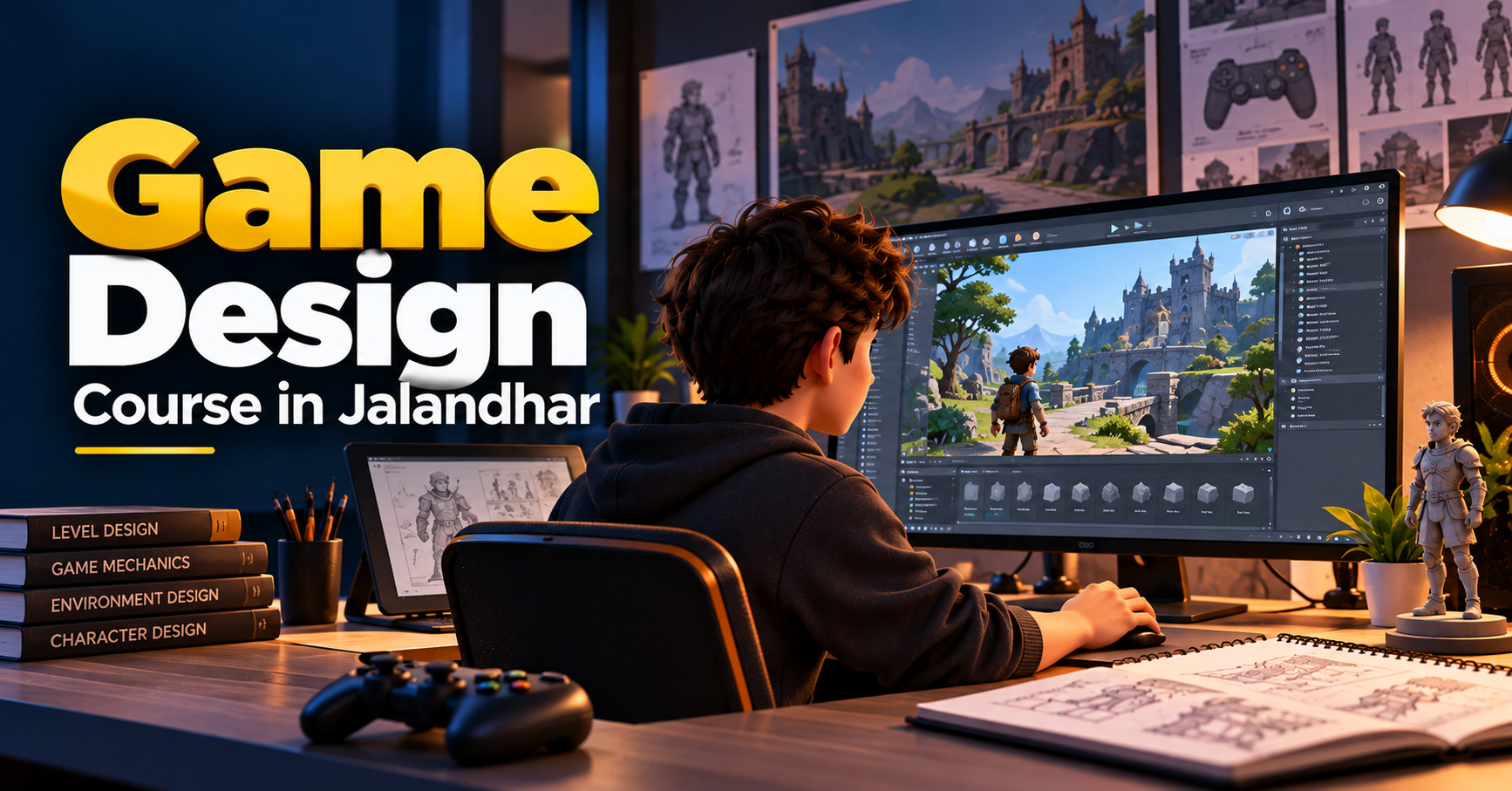
Game Design Course in Jalandhar
Game Design Course in Jalandhar – Turn Your Ideas into Playable Worlds
Every great game begins with an idea. It could be a mysterious world waiting to be explored, a challenging level that tests a player’s skills, or a character whose journey keeps players engaged. Game design is the creative process that transforms these ideas into interactive experiences.
The Game Design Course in Jalandhar at IAM – Institute of Animation and Multimedia is for learners who are curious about how video games are imagined, planned, and developed. Explore the creative concepts behind gameplay, game environments, characters, levels, and interactive storytelling while discovering how different elements work together to create an engaging game experience.
Game design is more than creating attractive graphics. It involves understanding player behaviour, designing challenges, developing rules, balancing difficulty, and building experiences that encourage players to keep exploring.
Whether you are interested in mobile games, PC games, console games, or interactive digital experiences, learning game design can help you understand the creative thinking behind the games you enjoy.
What Is Game Design?
Game design is the process of planning the rules, mechanics, challenges, objectives, characters, environments, and interactions that shape a game.
A game designer thinks about what players can do, what challenges they will face, how they progress, and what makes the experience enjoyable. The designer may also work with artists, animators, programmers, sound designers, and other members of a development team.
Game design can involve areas such as:
Gameplay mechanics and rules
Game concepts and planning
Level and environment design
Character and player interactions
Game progression and difficulty
Interactive storytelling
User interface and user experience
Playtesting and balancing
These elements work together to shape how a game feels and how players experience it.
What You Can Explore in a Game Design Course
Game design brings creativity, logical thinking, storytelling, and problem-solving together. A structured learning experience can introduce students to the fundamentals of interactive game creation.
1. Game Design Fundamentals
Before building a game, it is important to understand what makes it engaging. Game design fundamentals introduce learners to the basic concepts behind interactive experiences.
Topics may include:
Understanding different game genres
Game objectives and rules
Player goals and challenges
Game mechanics
Player feedback
Game progression
Basic game design terminology
These concepts can help learners understand how games are structured and how players interact with them.
2. Game Concept Development
Every game starts with a concept. It may be a simple puzzle, an adventure, a racing challenge, or an imaginative world with unique characters.
Learners may explore how to develop a game idea by considering:
Game theme and genre
Target audience
Core gameplay idea
Player objectives
Main challenges
Game setting
Unique features
Concept development helps transform a broad idea into a more focused game plan.
3. Gameplay Mechanics and Player Interaction
Gameplay mechanics define what players can do within a game and how the game responds to their actions.
For example, a player might jump across platforms, collect objects, solve puzzles, or unlock new abilities. The designer decides how these actions work and how they contribute to the overall experience.
Possible learning areas include:
Player movement and controls
Interaction systems
Objectives and rewards
Challenges and obstacles
Rules and feedback
Progression systems
Basic gameplay balancing
Understanding mechanics helps learners think about how to make gameplay clear, engaging, and enjoyable.
4. Level Design – Build Challenges Worth Exploring
Level design is the process of creating the stages, environments, and challenges through which players progress.
A well-designed level can guide players naturally, introduce new challenges, and encourage exploration without making the experience confusing.
Learners may explore:
Level layout and structure
Player pathways
Obstacles and challenges
Exploration and discovery
Difficulty progression
Environmental storytelling
Level objectives
From a simple platforming stage to a complex adventure environment, level design shapes the player’s journey.
5. Game Environment and World Design
Game environments help establish the atmosphere and identity of a game. A world may be futuristic, mysterious, realistic, fantasy-inspired, or completely original.
Environment design can involve:
World concepts
Scene composition
Environment layouts
Visual themes
Props and background elements
Player navigation
Mood and atmosphere
Understanding environment design can help learners think about how a game world communicates information and supports gameplay.
6. Character Design and Interactive Storytelling
Characters can give players a reason to care about a game. Their appearance, abilities, motivations, and interactions can contribute to the overall experience.
Learners may explore concepts related to:
Character concepts
Character roles
Player and non-player characters
Character abilities
Story-driven gameplay
Dialogue and narrative concepts
Character progression
Interactive storytelling differs from traditional storytelling because players may influence how events unfold through their choices and actions.
7. Game Interface and User Experience
A game interface helps players understand what is happening and what they can do next. Menus, health indicators, maps, buttons, and inventory screens are all examples of interface elements.
Possible learning areas include:
User interface fundamentals
Menu design
HUD concepts
Player feedback
Navigation and usability
Information hierarchy
Basic user experience principles
A clear interface can make a game easier to understand and more comfortable to play.
8. Playtesting and Game Balancing
A game may look exciting during planning, but the actual player experience can be different. Playtesting helps designers identify problems and understand how people interact with the game.
Learners can explore:
Testing game mechanics
Identifying confusing sections
Reviewing difficulty
Collecting player feedback
Improving level flow
Balancing challenges and rewards
Refining the player experience
Testing and refinement are important parts of game design because they help turn an initial concept into a more engaging experience.
The topics above represent common game design learning areas. Confirm IAM’s current syllabus, software, practical assignments, and training structure before publishing them as guaranteed course inclusions.
Game Design vs. Game Development
Game design and game development are closely connected, but they are not exactly the same.
Game design focuses on the ideas and systems that shape the player experience. Designers consider gameplay, rules, levels, challenges, progression, and interaction.
Game development is the broader process of building a working game. It may include programming, visual art, animation, sound, testing, and technical implementation.
A game designer may work with developers to turn a design concept into a playable experience. Some professionals also develop skills across both areas.
Practical Projects You Can Explore
Project-based learning can help students understand how game design concepts work together. Depending on the course structure, possible practice projects may include:
Creating a basic game concept
Designing a simple level layout
Planning gameplay rules and objectives
Developing a character concept
Designing a game interface
Creating a player progression plan
Reviewing a game through playtesting
A portfolio of design documents, level layouts, concepts, and playable projects can help demonstrate a learner’s creative thinking and understanding of game design.
Who Can Join the Game Design Course?
The Game Design Course in Jalandhar may be suitable for:
Creative beginners: Individuals who want to explore how games are planned and designed.
Students: Learners interested in animation, multimedia, interactive media, or gaming.
Gaming enthusiasts: People who enjoy playing games and want to understand the design decisions behind them.
Aspiring game designers: Individuals interested in developing gameplay concepts, levels, and interactive experiences.
Digital artists: Creators who want to explore how visual design connects with gameplay and interactive storytelling.
Creative problem-solvers: People who enjoy developing ideas, designing challenges, and thinking about how users interact with digital experiences.
An interest in games, creativity, and problem-solving can be a helpful starting point.
Career Opportunities Related to Game Design
Game design skills may be relevant to different areas of the gaming and interactive media industry. Depending on specialization, practical skills, experience, and portfolio, possible career areas may include:
Game Designer
Level Designer
Gameplay Designer
Game Design Assistant
Game Content Designer
Interactive Experience Designer
Game QA Tester
Junior Game Development Team Member
Career opportunities vary by employer and individual capability. A course does not guarantee employment. Practical experience, a strong portfolio, communication, and continued learning can be important for entering the industry.
Why Explore Game Design at IAM Jalandhar?
Game design is a creative field where ideas, logic, visual thinking, and player experience come together. Learning its fundamentals can help students understand how interactive worlds are planned and how game experiences are shaped.
At IAM – Institute of Animation and Multimedia, learners can enquire about training options related to game design and multimedia.
Before enrolling, ask about:
Current course syllabus
Software and tools covered
Course duration and fees
Practical projects
Game design assignments
Portfolio development
Batch timings
Admission requirements
These details can help you understand whether the course aligns with your interests and learning goals.
Start Your Game Design Journey in Jalandhar
The next memorable game could begin with your idea. From gameplay mechanics and level layouts to interactive storytelling and player experiences, game design offers a creative way to explore the world of interactive entertainment.
Discover the Game Design Course in Jalandhar at IAM – Institute of Animation and Multimedia and explore the creative process behind designing engaging games.
Contact IAM to learn more about the course syllabus, fees, duration, batch timings, and admission process.
Design Worlds. Create Gameplay. Shape Player Experiences.
Explore game concepts, gameplay mechanics, level design, interactive storytelling, and player experience with the Game Design Course in Jalandhar at IAM.
Tell us whatyou wantto create.
A few lines about yourself and the course you're interested in. Our admissions team replies within two working days, and you can book a free campus visit or demo class.
Call admissions→Or send an enquiry to your nearest campus- Phone
- +91 98881 22241
- Address
- 1st Floor, IAM, Crystal Plaza, SCS 78, opp. PIMS Hospital, Jalandhar, Punjab 144001