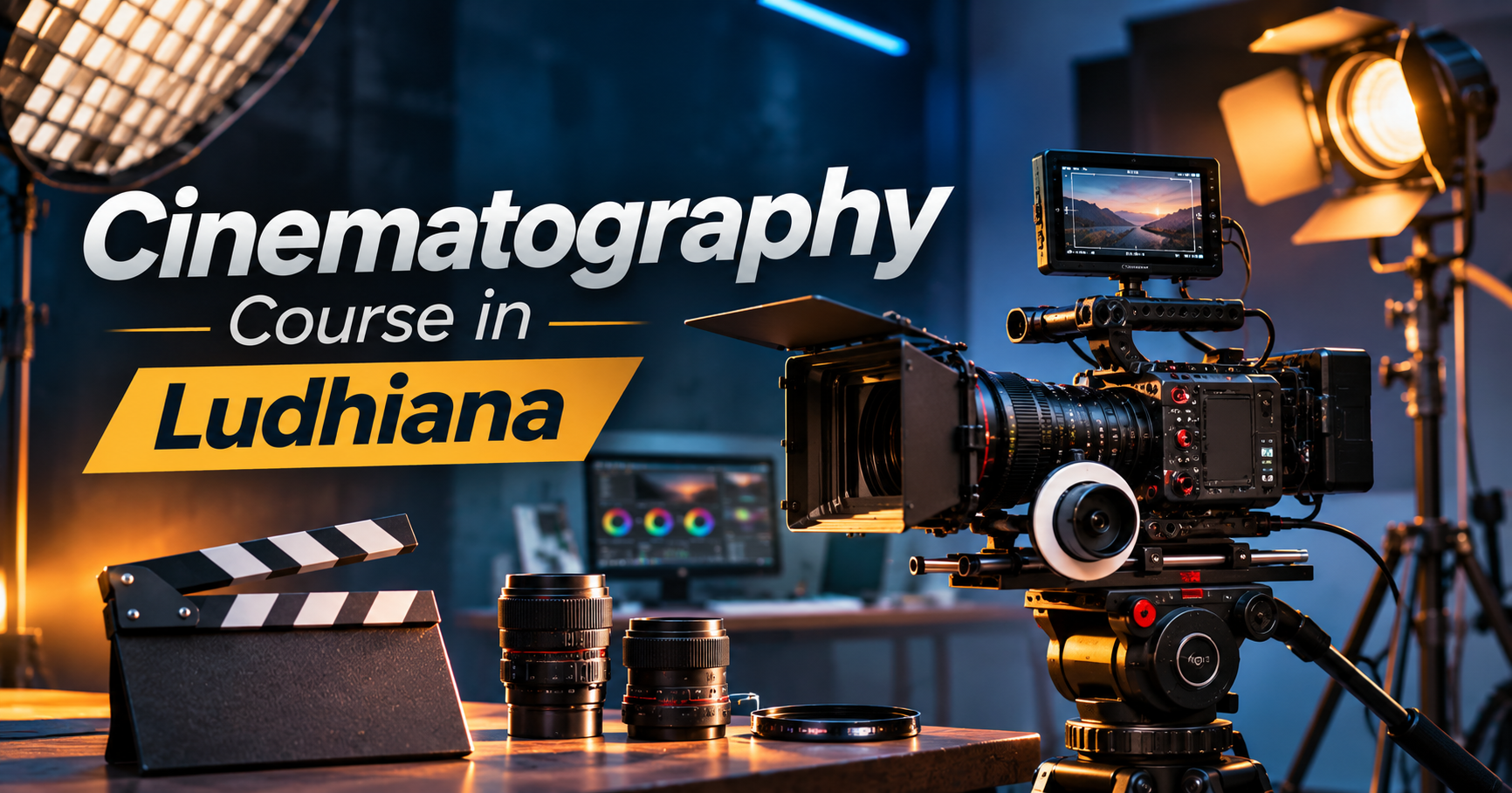
Cinematography Course in Ludhiana
Cinematography Course in Ludhiana
Cinematography is one of the most important elements of filmmaking. It is the art and technique of capturing moving images through camera work, lighting, composition, lenses, colour, framing, and visual storytelling. A strong cinematographer does more than operate a camera—they helps transform a director’s vision into powerful visuals that communicate emotions, atmosphere, characters, and stories.
For students and aspiring filmmakers looking to build a career in the creative industry, a Cinematography Course in Ludhiana can provide the practical knowledge and technical skills required to understand professional filmmaking. The course can help learners explore camera techniques, lighting setups, shot composition, lenses, exposure, visual storytelling, and professional production workflows.
What is Cinematography?
Cinematography is the process of creating and capturing visual imagery for films, documentaries, music videos, advertisements, web series, short films, and other video productions.
It involves several creative and technical decisions. A cinematographer decides how a scene should look and feel by selecting the appropriate camera, lens, lighting, framing, camera movement, and colour approach.
For example, a dramatic scene may use low-key lighting, close-up shots, and slow camera movements to create tension. On the other hand, a commercial advertisement may use bright lighting, smooth camera movements, and carefully composed product shots to create an attractive visual style.
This combination of creativity and technology makes cinematography an exciting career option for people interested in filmmaking and visual storytelling.
Why Choose a Cinematography Course in Ludhiana?
Ludhiana is an important city in Punjab with a growing interest in media, digital content, filmmaking, photography, advertising, and creative education. With the increasing popularity of short-form videos, digital advertising, music videos, web content, and independent filmmaking, visual production skills have become increasingly valuable.
A Cinematography Course in Ludhiana can help students develop practical filmmaking skills in a structured environment. Instead of learning only through theory, students can work on practical assignments and understand how professional shoots are planned and executed.
The course can also help learners develop a portfolio of video projects that demonstrates their camera, lighting, composition, and storytelling abilities.
What Will You Learn in a Cinematography Course?
A professional Cinematography Course in Ludhiana generally covers the fundamental and advanced aspects of camera-based filmmaking.
1. Camera Fundamentals
Students begin by understanding how cameras work and how different settings affect the final image. Topics may include:
Camera types
Resolution
Frame rates
Shutter speed
ISO
Aperture
White balance
Exposure
Focus
Dynamic range
Understanding these fundamentals allows filmmakers to make informed technical decisions during production.
2. Camera Angles and Shots
Shot selection plays a major role in visual storytelling. Students learn about different camera shots and angles, including:
Extreme wide shot
Wide shot
Medium shot
Medium close-up
Close-up
Extreme close-up
Over-the-shoulder shot
Low-angle shot
High-angle shot
Eye-level shot
Each shot can communicate a different emotion, relationship, or narrative purpose.
3. Camera Movements
Camera movement can add energy and emotion to a scene. Students learn techniques such as:
Pan
Tilt
Tracking
Dolly
Crane
Push-in
Pull-out
Handheld shooting
Gimbal movement
Understanding when and why to use a particular movement is more important than simply knowing how to operate the equipment.
Lighting for Cinematography
Lighting is a fundamental part of cinematography. Even a well-composed shot can look ordinary without proper lighting.
Students in a Cinematography Course in Ludhiana can learn about natural and artificial lighting, light direction, intensity, colour temperature, shadows, and contrast.
Common lighting concepts include:
Key light
Fill light
Backlight
Three-point lighting
Soft lighting
Hard lighting
Practical lighting
Low-key lighting
High-key lighting
Students can learn how lighting can create different moods, from bright and energetic to dark and dramatic.
Understanding Lenses
Lenses influence perspective, depth, framing, and the overall visual character of a shot.
A cinematography course introduces students to different types of lenses, such as wide-angle, standard, telephoto, and prime lenses. Students learn how focal length affects perspective and how lens selection can support storytelling.
For instance, a wide-angle lens can be useful for landscapes and large environments, while a telephoto lens can help isolate subjects from the background.
Composition and Framing
Composition refers to how visual elements are arranged within the frame. Good composition helps guide the viewer’s attention and creates visual balance.
Students can learn concepts such as:
Rule of thirds
Leading lines
Symmetry
Depth
Negative space
Framing within a frame
Balance
Foreground and background
Visual hierarchy
These techniques can be applied to films, advertisements, music videos, documentaries, and digital content.
Visual Storytelling
Cinematography is not simply about creating beautiful images. Every visual decision should support the story.
A Cinematography Course in Ludhiana can help students understand how camera angles, lighting, colour, composition, and movement can communicate emotions and narrative information without relying entirely on dialogue.
Students can practice creating scenes that communicate happiness, suspense, fear, romance, drama, or excitement through visual techniques.
Colour and Cinematic Look
Colour has a powerful impact on the mood of a production. Students can learn the fundamentals of colour temperature, colour harmony, contrast, saturation, and cinematic colour treatment.
For example, warm tones may create a comfortable or nostalgic atmosphere, while cooler tones can create a serious or mysterious mood.
Understanding colour helps cinematographers maintain visual consistency throughout a project.
Practical Filmmaking Projects
Practical experience is an important part of cinematography education. Students can work on projects such as:
Short films
Music videos
Product videos
Commercial advertisements
Documentary scenes
Interview setups
Social media videos
Narrative scenes
Cinematic reels
These projects allow students to apply camera, lighting, composition, and storytelling concepts in real production situations.
Cinematography and Modern Digital Content
Cinematography is no longer limited to traditional films. Businesses, creators, advertising agencies, production houses, and digital platforms require high-quality visual content.
Today, cinematography skills can be useful for:
YouTube videos
Instagram and social media content
Brand advertisements
Music videos
Web series
Short films
Corporate films
Product commercials
Documentary filmmaking
Event films
This expanding digital content ecosystem has created more opportunities for people with strong visual production skills.
Career Opportunities After a Cinematography Course
After completing a Cinematography Course in Ludhiana, students can explore different creative roles depending on their skills and experience.
Potential career paths include:
Cinematographer
Director of Photography (DOP)
Camera Operator
Assistant Cinematographer
Camera Assistant
Videographer
Film Production Assistant
Video Content Creator
Commercial Videographer
Documentary Filmmaker
Freelance Cinematographer
Students can work with production houses, advertising agencies, media companies, event companies, digital content teams, independent filmmakers, or freelance clients.
Who Can Join a Cinematography Course?
A cinematography course can be suitable for beginners as well as students who already have some experience with cameras and video production.
It may be ideal for:
12th-pass students
College students
Aspiring filmmakers
Photography enthusiasts
Video creators
Content creators
VFX and animation students
Digital marketing professionals
Freelancers
Working professionals looking to upgrade their video skills
A strong interest in storytelling, photography, visual design, and filmmaking can be a good starting point.
Build Your Cinematography Portfolio
A professional portfolio is extremely important in creative careers. Instead of only listing technical skills on a resume, students can showcase their actual work through short films, cinematic sequences, advertisements, interviews, and other video projects.
A good portfolio should demonstrate variety in camera work, lighting, composition, storytelling, and visual style.
Regular practice and experimentation can help students develop their own visual identity and improve their confidence behind the camera.
Start Your Filmmaking Journey
Cinematography combines technology, creativity, observation, and storytelling. From choosing the right lens and framing a subject to designing lighting and creating a cinematic mood, every decision contributes to the final visual experience.
A Cinematography Course in Ludhiana can help aspiring filmmakers develop these skills through structured learning and practical projects. Whether your goal is to work in films, advertising, music videos, digital content, documentaries, or freelance production, cinematography can provide a strong foundation for a creative career.
If you are passionate about cameras, filmmaking, and visual storytelling, learning cinematography can be the first step toward turning your ideas into compelling visual stories. Start learning, practice consistently, create meaningful projects, and build a portfolio that showcases your unique creative vision.
Cinematography Course in Ludhiana
Learn professional cinematography, camera techniques, lighting, lenses, composition and visual storytelling. Gain practical filmmaking skills, work on real projects and build a strong portfolio for careers in films, advertising, music videos, digital content and video production.
Tell us whatyou wantto create.
A few lines about yourself and the course you're interested in. Our admissions team replies within two working days, and you can book a free campus visit or demo class.
Call admissions→Or send an enquiry to your nearest campus- Phone
- +91 98881 22241
- Address
- 1st Floor, IAM, Crystal Plaza, SCS 78, opp. PIMS Hospital, Jalandhar, Punjab 144001