Is Animation a Good Career After 12th? An Honest Answer
Animation & Gaming · Nandini · 21 October 2026
Is animation a good career after 12th? Explore career opportunities, courses, salary expectations, required skills, and industry challenges in India. Discover how to choose the right animation course and build a successful career in 2D animation, 3D modelling, VFX, and motion graphics.
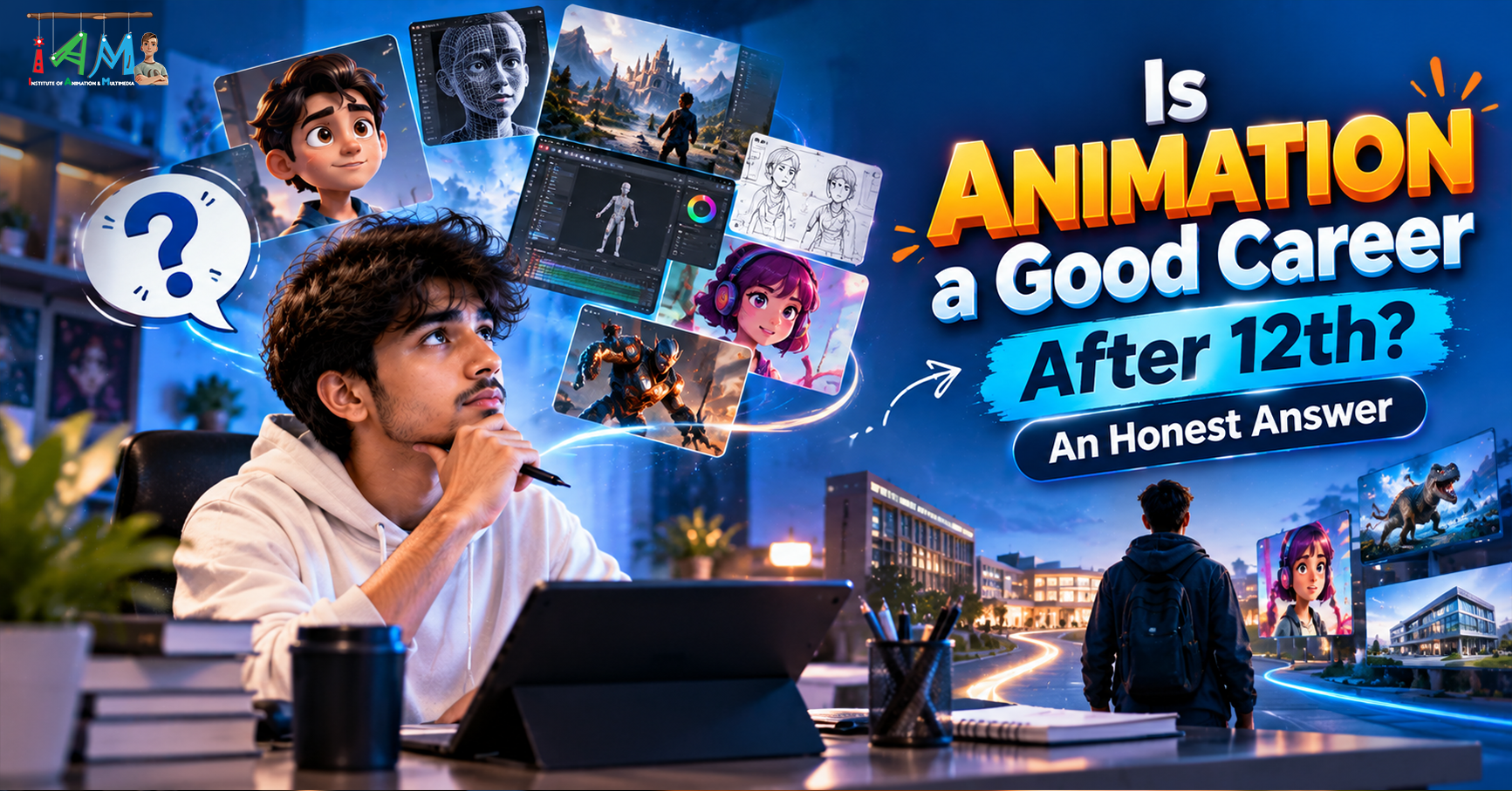
Is Animation a Good Career After 12th? An Honest Answer
Choosing a career after 12th can be confusing. While some students prefer traditional options such as engineering, medical, or commerce, others want to explore their creativity and turn their passion into a profession. If you enjoy drawing, movies, video games, visual effects, or digital content, animation might be a career worth considering.
But is animation really a good career after 12th? Can you earn well? Do you need to be good at drawing? And what opportunities are available in the animation industry?
Let's explore the facts, career opportunities, challenges, and skills you need to make an informed decision.
What Is Animation as a Career?
Animation is the process of creating movement and bringing characters, objects, and ideas to life through digital visuals. It combines creativity, storytelling, technology, and design to produce engaging visual experiences.
Today, animation is used across multiple industries, including entertainment, advertising, gaming, education, digital marketing, and online content creation.
As an animation professional, you may work on animated films, television shows, video games, advertisements, YouTube videos, product demonstrations, or visual effects for movies.
The field is much broader than cartoon-making. It includes 2D animation, 3D animation, motion graphics, character design, visual effects (VFX), and computer-generated imagery (CGI).
Why Choose Animation After 12th?
There are several reasons why animation can be a promising career choice for students who enjoy creative work.
1. Multiple Career Opportunities
Animation offers different career paths depending on your interests and strengths. You can specialise in character animation, 3D modelling, visual effects, motion graphics, or game art.
You can also explore opportunities in advertising agencies, animation studios, gaming companies, film production houses, and digital media agencies.
2. Creativity Meets Technology
Animation is an excellent choice for students who enjoy both creativity and technology. You can use professional software to create characters, design environments, build 3D models, and produce cinematic scenes.
As you gain experience, you can develop your own visual style and work on increasingly complex projects.
3. Opportunities Beyond Films and Television
Animation is no longer limited to movies and cartoons. Businesses use animated videos for advertising, product demonstrations, social media campaigns, and educational content.
Gaming, virtual production, interactive media, and emerging AI-assisted creative workflows also offer new areas to explore.
4. Freelancing and Independent Projects
Animation skills can help you work independently as a freelancer. You may create animated advertisements, explainer videos, motion graphics, product visuals, or social media content for clients.
However, freelancing requires more than creative skills. Communication, project management, client handling, and consistent quality are equally important.
5. You Can Start Learning After Any Stream
Whether you have completed 12th in Arts, Commerce, or Science, you can generally begin learning animation through suitable certificate courses, diplomas, or degree programmes.
Some specialised college programmes may have specific eligibility requirements, so always check the admission criteria before applying.
What Courses Can You Pursue After 12th?
After completing your schooling, you can choose a course based on your career goals, budget, and preferred learning style.
Popular animation and multimedia courses include:
Diploma in Animation
2D Animation
3D Animation
3D Modelling and Texturing
VFX and Compositing
Motion Graphics
Game Design and Development
Graphic Designing
Video Editing and Filmmaking
A diploma or certificate course can be suitable if you want focused, practical training. A bachelor's degree may be a better fit if you want a broader academic qualification and a longer learning experience.
Before enrolling, compare the syllabus, practical assignments, faculty experience, portfolio development, software training, and placement support.
Do You Need Drawing Skills to Become an Animator?
This is one of the most common questions students ask.
No, you do not need to be an expert at drawing to start learning animation.
Drawing can be particularly useful in 2D animation, storyboarding, and character design. However, many other specialisations rely more heavily on different skills.
For example:
3D Animation: Movement, timing, body mechanics, and storytelling.
3D Modelling: Shape, form, proportions, and spatial understanding.
VFX: Compositing, visual problem-solving, and technical precision.
Motion Graphics: Design, typography, timing, and visual communication.
Game Art: Asset creation, visual design, and understanding of game environments.
You can improve these skills with regular practice and structured training. The important thing is to identify the specialisation that matches your interests.
What Skills Do You Need for a Successful Animation Career?
Learning software is only one part of becoming an animation professional. Employers and clients also value your ability to solve creative problems and produce high-quality work.
The most useful skills include:
Creative thinking: Developing original ideas, characters, scenes, and visual concepts.
Technical proficiency: Learning industry-relevant tools such as Blender, Autodesk Maya, Adobe After Effects, or other software suited to your specialisation.
Attention to detail: Understanding lighting, movement, composition, textures, and visual consistency.
Storytelling: Communicating emotions, ideas, and messages through visuals.
Portfolio development: Demonstrating your skills through original projects and well-presented work.
Teamwork and communication: Collaborating with designers, editors, directors, developers, and clients.
You do not need to master every software package. Focus on the tools and techniques relevant to your chosen career path.
Salary After 12th: How Much Can an Animator Earn?
Animation salaries vary significantly depending on your skills, location, specialisation, portfolio, employer, and experience.
Completing a course does not automatically guarantee a particular salary. Beginners may start with modest compensation, while experienced professionals with strong portfolios and specialised skills can access better opportunities.
The following figures are broad illustrative estimates for India, not guaranteed or verified industry averages.
Experience levelIllustrative annual salaryFresher or entry-level artist₹1.8–3.6 lakhProfessional with 2–4 years of experience₹3.5–7 lakhExperienced specialist₹7–12 lakh or more
Actual salaries may fall below or above these ranges. Freelancers and independent artists have different income patterns, depending on their clients, project rates, and workload.
If salary is your main priority, research current job listings for your preferred role, compare the required skills, and examine the opportunities available in your city.
Is Animation a Stable Career?
Animation can become a sustainable long-term career, but success is not automatic.
The industry is competitive, and entry-level candidates may find it challenging to secure their first job without practical experience or a strong portfolio. Project-based work and freelance income can also fluctuate.
Technology is changing the way animation is produced. AI-assisted tools can speed up certain tasks, but professionals still need artistic judgement, storytelling ability, technical understanding, and the skills to refine creative output.
To improve your long-term prospects:
Keep updating your skills.
Build a portfolio with original projects.
Learn the complete production workflow for your specialisation.
Understand feedback, deadlines, and professional collaboration.
Explore related skills such as editing, compositing, motion graphics, or game art.
The goal should not simply be to learn software. It should be to become someone who can use creative and technical skills to solve real production problems.
What Are the Challenges of Choosing Animation?
An honest career decision should include the challenges as well as the opportunities.
1. Continuous learning is essential. Software, workflows, and production techniques evolve, so you need to keep practising and updating your knowledge.
2. Competition can be high. A certificate alone may not distinguish you from other applicants. Your portfolio and practical abilities matter.
3. Projects can involve long hours. Production deadlines, revisions, and detailed work can require patience and discipline.
4. Your first job may take time. You may need to complete personal projects, internships, or junior assignments before finding the right opportunity.
5. The right specialisation matters. Animation is a broad field. Choosing a course without understanding its syllabus or career outcomes can waste time and money.
Understanding these challenges before enrolling will help you make a more realistic decision.
How to Choose the Right Animation Institute After 12th
The institute you choose can influence the quality of your training and the projects you complete.
Before joining an animation course, consider the following factors:
Practical training: Does the course include hands-on assignments and real creative projects?
Industry-relevant software: Will you learn tools used in your chosen specialisation?
Portfolio development: Will you create work that demonstrates your abilities to potential employers?
Faculty experience: Do the trainers understand professional production workflows?
Student work: Can you see examples of projects created by previous students?
Placement transparency: Are placement claims supported by verifiable outcomes, and are the terms clearly explained?
Course suitability: Does the duration, syllabus, and fee structure match your goals?
Avoid choosing an institute only because of attractive advertisements or promises of guaranteed employment. Review the actual training quality and understand all course terms before making a decision.
Is Animation Better Than Traditional Career Options?
There is no single career that is best for every student.
If you enjoy visual storytelling, digital art, gaming, films, and creative technology, animation may be a more suitable option than a career you choose only because of social pressure.
On the other hand, if you dislike detailed computer-based work, struggle with repetitive practice, or are not interested in visual creativity, animation may not be the right fit.
You should also consider your financial circumstances, the cost of education, available local opportunities, and the time you are willing to invest in developing professional skills.
A good career is not simply one that sounds exciting. It is one that matches your abilities, interests, and long-term goals.
Final Verdict: Is Animation a Good Career After 12th?
Yes, animation can be a good career after 12th if you have a genuine interest in creativity, technology, and visual storytelling—and are willing to develop practical skills consistently.
The field offers several possible career paths, including 2D animation, 3D modelling, character animation, VFX, motion graphics, and game art. However, getting a job and earning a good salary depend on your specialisation, portfolio, experience, and ability to meet industry expectations.
You do not need to be a professional artist before you begin. You need curiosity, patience, a willingness to learn, and the commitment to practise.
If you are unsure, start by exploring beginner-level projects, watching professional workflows, and comparing courses before investing in formal training.
Start Your Creative Journey with IAM
If you are exploring animation and multimedia courses after 12th, the Institute of Animation & Multimedia (IAM) offers a learning pathway to explore creative fields such as 3D Animation, Graphic Designing, Video Editing, VFX, Filmmaking, and Generative AI.
Explore the available courses, review the practical training approach, and choose a specialisation that matches your interests and career goals.
Your creative journey starts with the right skills, consistent practice, and a portfolio that showcases what you can do.
Ready to explore your options? Contact IAM to learn more about its animation and multimedia courses and the training opportunities available to you.
- Animation Career
- Animation Courses After 12th
- Animation Career in India
- 3D Animation
- 2D Animation
- VFX Course
- Animation Salary in India
- Multimedia Courses