Game Sound Design: Creating Audio for Better Gameplay – Amritsar
Animation & Gaming · Harman Phagwara · 18 November 2026
Explore Game Sound Design techniques, audio production tools, sound effects, interactive audio and music composition. Discover essential skills, professional software, job roles and career opportunities for aspiring game audio designers in Amritsar with IAM.
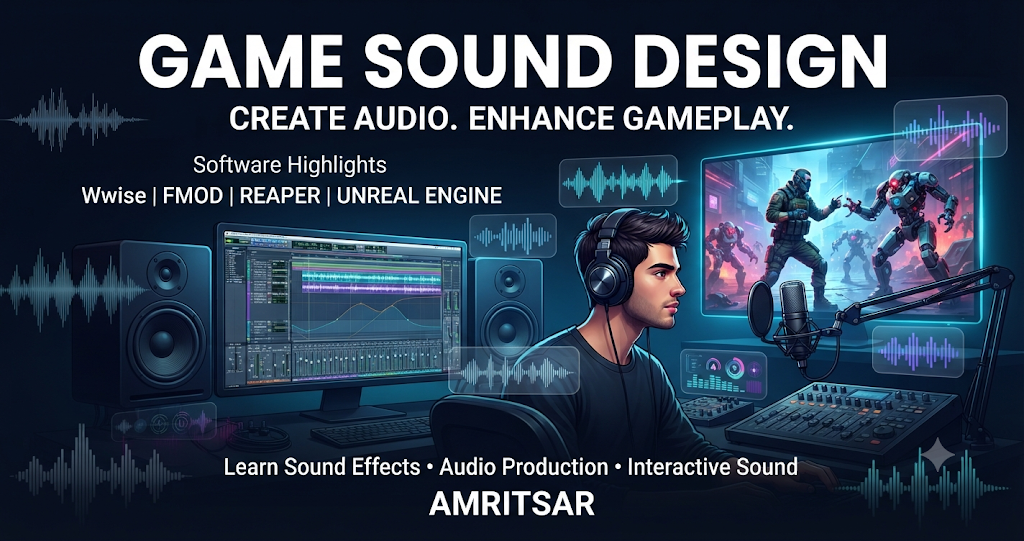
Game Sound Design: Creating Audio for Better Gameplay – Amritsar
Game Sound Design is an important part of modern video game development. From background music and character movements to weapon sounds, environmental effects, and interactive audio, sound plays a major role in creating an engaging gaming experience. If you are interested in music, audio production, gaming, and creative technology, learning Game Sound Design can open doors to exciting opportunities in the gaming and entertainment industries.
Today, game developers use professional sound design techniques to make virtual environments feel realistic, interactive, and immersive. Students in Amritsar interested in game development, animation, and audio production can explore how different sounds are created, edited, mixed, and integrated into video games.
What Is Game Sound Design?
Game Sound Design is the process of creating, editing, recording, and implementing audio elements for video games. It includes everything players hear while playing a game, such as background music, character voices, footsteps, environmental sounds, weapon effects, and user interface audio.
Unlike traditional film sound design, game audio often responds to player actions and changes according to gameplay situations. For example, footsteps may change depending on the surface, background music may become intense during combat, and environmental sounds may vary according to the location.
Game Sound Design generally includes:
Sound Effects (SFX): Creating sounds for weapons, explosions, footsteps, vehicles, objects, and character movements.
Background Music: Developing music that matches the game's environment, emotions, and gameplay situations.
Ambient Sound: Creating environmental audio such as wind, rain, traffic, water, forests, and city environments.
Voice Design: Recording, editing, and processing character dialogues, narration, and voice performances.
Interactive Audio: Designing sounds that respond to player actions and gameplay events.
User Interface Sounds: Creating audio feedback for menus, buttons, notifications, achievements, and game interactions.
How Does Game Sound Design Work?
Creating audio for video games involves multiple stages, from understanding the game's environment to implementing finished sounds into the game engine.
Understanding Game Requirements
The first step is understanding the game's genre, storyline, characters, environment, and gameplay mechanics. A racing game requires engine sounds, tire movements, and collision effects, while a horror game may need atmospheric music, suspenseful effects, and environmental audio.
Sound Recording and Creation
Sound designers create audio using microphones, recording equipment, synthesizers, and digital sound libraries. They may record real-world sounds or create entirely new audio effects using software.
Audio Editing and Processing
Recorded sounds are edited to remove unwanted noise, adjust timing, improve clarity, and create the desired effect. Techniques such as equalization, compression, reverb, pitch shifting, and layering help develop professional-quality audio.
Sound Mixing and Mastering
Different audio elements are balanced to create a consistent listening experience. Background music, dialogue, sound effects, and environmental audio must work together without overpowering one another.
Game Audio Implementation
The final audio is integrated into the game using audio middleware and game engines. Sound designers configure audio events, triggers, spatial positioning, and interactive responses to make sounds work correctly during gameplay.
Professional Software and Tools Used in Game Sound Design
Learning industry-relevant software helps aspiring sound designers understand professional audio production and game development workflows.
Reaper
Reaper is a digital audio workstation used for recording, editing, arranging, and mixing audio. It provides flexible tools for creating and processing game sound effects.
Ableton Live
Ableton Live is used for music production, sound experimentation, synthesis, and audio arrangement. It helps designers create background scores, electronic sounds, and musical elements.
FL Studio
FL Studio is popular for music composition, beat production, sound creation, and audio arrangement. It can be used to develop music and sound elements for different game genres.
Audacity
Audacity is an audio editing application useful for recording, cleaning, trimming, and processing sound effects.
Wwise
Wwise is an interactive audio middleware platform used to integrate dynamic audio into video games. It allows sound designers to create interactive sound events, manage audio behaviours, and control sound according to gameplay conditions.
FMOD
FMOD is a professional audio middleware solution used to design and implement interactive game audio. It helps developers create responsive sound effects, music transitions, and environmental audio systems.
Unreal Engine and Unity
Game engines such as Unreal Engine and Unity provide audio tools for implementing sound effects, background music, spatial audio, and interactive audio events within game environments.
Essential Skills Required for Game Sound Design
A professional game sound designer needs a combination of creative, technical, and audio production skills.
Important skills include:
Sound Recording and Editing
Sound Effects Creation
Audio Mixing and Mastering
Music Composition Fundamentals
Digital Audio Workstation Knowledge
Foley Recording Techniques
Audio Layering and Processing
Equalization and Compression
Spatial and 3D Audio
Interactive Audio Implementation
Wwise and FMOD Fundamentals
Game Engine Audio Integration
Understanding how sound influences player emotions, gameplay feedback, and environmental realism is also important for creating effective game audio experiences.
Why Should Amritsar Students Learn Game Sound Design?
The gaming and interactive entertainment industries require creative professionals who understand how audio contributes to gameplay. Sound design is an important specialization for students interested in music, audio engineering, video games, animation, and digital entertainment.
Students in Amritsar can explore Game Sound Design to understand how professional audio elements are developed and used in interactive environments.
Learning this field can help students:
Understand professional audio production workflows.
Develop creative sound effects for different game genres.
Explore music production and sound editing.
Learn interactive audio implementation.
Build practical audio design projects.
Develop skills for gaming and entertainment careers.
Whether you are a beginner, music enthusiast, aspiring game developer, or creative student, Game Sound Design offers an opportunity to combine audio creativity with technology.
Practical Projects for Game Sound Design Students
Practical projects help students understand how sound works in real gaming environments. Working on different audio assignments can improve creativity, technical knowledge, and problem-solving abilities.
Some useful project ideas include:
Footstep Sound Design: Create different footsteps for walking, running, and jumping on surfaces such as grass, wood, metal, and concrete.
Weapon Sound Effects: Design shooting, reloading, impact, and explosion sounds for action games.
Game Background Music: Compose background music for adventure, racing, horror, and fantasy games.
Environmental Audio: Create atmospheric sounds for forests, underwater environments, cities, and outdoor locations.
Character Sound Design: Develop character voices, movement sounds, breathing effects, and action sounds.
Game Menu Audio: Design button clicks, menu transitions, notifications, and selection sounds.
Interactive Audio Project: Use Wwise or FMOD to create sound events that respond to player movements and game interactions.
These practical projects can become part of a portfolio that demonstrates audio production and interactive sound design abilities.
Career Opportunities After Learning Game Sound Design
After developing practical audio production skills and understanding interactive audio systems, students can explore different career opportunities in the gaming and entertainment industries.
Game Sound Designer
Creates sound effects, environmental audio, character sounds, and other audio elements for video games.
Audio Designer
Works on recording, editing, processing, and organizing audio assets for games and interactive media.
Foley Artist
Creates realistic sound effects by recording physical actions such as footsteps, object movements, clothing sounds, and other everyday activities.
Game Audio Implementer
Integrates audio assets into game engines using middleware such as Wwise and FMOD.
Music Composer for Games
Creates original background scores, musical themes, and soundtracks that support gameplay and storytelling.
Sound Effects Editor
Edits, processes, layers, and organizes audio effects for gaming, films, animation, and other digital productions.
Audio Programmer
Works with game developers to build technical audio systems, interactive sound behaviours, and advanced audio functionality.
Career Growth and Future Opportunities
Game Sound Design offers different career development opportunities for individuals who combine audio creativity with technical expertise.
With experience, specialization, and a strong portfolio, professionals can explore advanced roles such as:
Senior Game Sound Designer
Lead Audio Designer
Interactive Audio Specialist
Technical Sound Designer
Game Audio Director
Audio Production Supervisor
Freelance Game Audio Professional
Career growth depends on practical experience, software knowledge, audio quality, project contributions, and understanding of modern game development workflows.
Build Your Game Sound Design Skills at IAM Amritsar
Explore the creative world of gaming audio and understand how sound brings virtual environments to life. Game Sound Design learning at IAM Amritsar can help students explore audio production concepts, sound effects creation, music design, editing techniques, and interactive audio workflows.
Through practical exercises and creative projects, learners can develop an understanding of how different audio elements contribute to engaging gameplay experiences.
Whether your interest is in game development, music production, sound effects, or interactive entertainment, developing Game Sound Design skills can help you explore new creative possibilities.
Start your journey into game audio production and discover how creative sound can make every gaming experience more immersive with IAM Amritsar.
- Game Sound Design
- Game Audio Production
- Interactive Audio Design
- Video Game Sound Effects
- Audio Middleware
- Wwise Audio Integration
- FMOD Studio
- Spatial Audio Design