Game Designer vs Game Artist vs Game Developer: Amritsar Careers
Harman Phagwara · 4 November 2026
Expert in Game Design, 3D Game Art, and Game Development. Master professional workflows, industry-standard software, character creation, gameplay design, and real-time game production.
Game Designer vs Game Artist vs Game Developer: Amritsar Careers
The gaming industry has become an exciting field that combines creativity, digital art, technology, and programming. From mobile and PC games to console games and virtual reality experiences, every game requires different professionals to bring ideas to life. Three important roles in this industry are Game Designer, Game Artist, and Game Developer. Although these professionals work together, each has different responsibilities in the game creation process.
For students in Amritsar who enjoy gaming, digital art, animation, or technology, understanding the difference between these career paths can help them choose the right direction. Learning about game design, 2D and 3D graphics, character creation, animation, and game development can introduce beginners to different opportunities within the gaming industry.
At IAM Amritsar, students interested in creative technology and digital design can explore related skills and understand how interactive gaming experiences are planned and developed. Whether you are a school student, college student, beginner, or aspiring creative professional, exploring these career options can help you identify your interests and future learning goals.
What Is a Game Designer?
A Game Designer is responsible for planning how a game works and what players experience. They develop the game concept, rules, objectives, challenges, levels, characters, and gameplay mechanics.
Game designers focus on making games interesting, enjoyable, and engaging for players. They decide how players interact with the game, complete missions, overcome challenges, and progress through different stages.
Some important responsibilities of a Game Designer include:
Developing game concepts and ideas.
Planning gameplay mechanics and rules.
Creating levels, missions, and challenges.
Developing storylines and game objectives.
Understanding player behaviour and experience.
Planning game features and balancing difficulty.
What Is a Game Artist?
A Game Artist focuses on the visual appearance of a game. They create the characters, environments, objects, backgrounds, textures, and other graphical elements that make a game visually attractive.
Game artists use digital art and 2D or 3D design techniques to bring the visual ideas of a game to life. Their work helps establish the game's style, atmosphere, and visual identity.
Some important responsibilities of a Game Artist include:
Creating 2D characters and illustrations.
Designing 3D characters and objects.
Developing game environments and backgrounds.
Creating textures, materials, and visual assets.
Working on character appearances and expressions.
Supporting animation and visual development.
What Is a Game Developer?
A Game Developer is responsible for the technical development of a game. They use programming languages, game engines, and development tools to turn game concepts and visual designs into functional interactive experiences.
Game developers work on gameplay systems, player controls, animations, physics, performance, and technical features. Their role connects the creative elements of a game with its actual functionality.
Some important responsibilities of a Game Developer include:
Writing and managing game code.
Developing gameplay features and mechanics.
Implementing character movements and controls.
Working with game engines such as Unity and Unreal Engine.
Fixing bugs and improving game performance.
Testing and maintaining game functionality.
Game Designer vs Game Artist vs Game Developer: Key Differences
Although all three professionals contribute to game creation, their primary responsibilities are different.
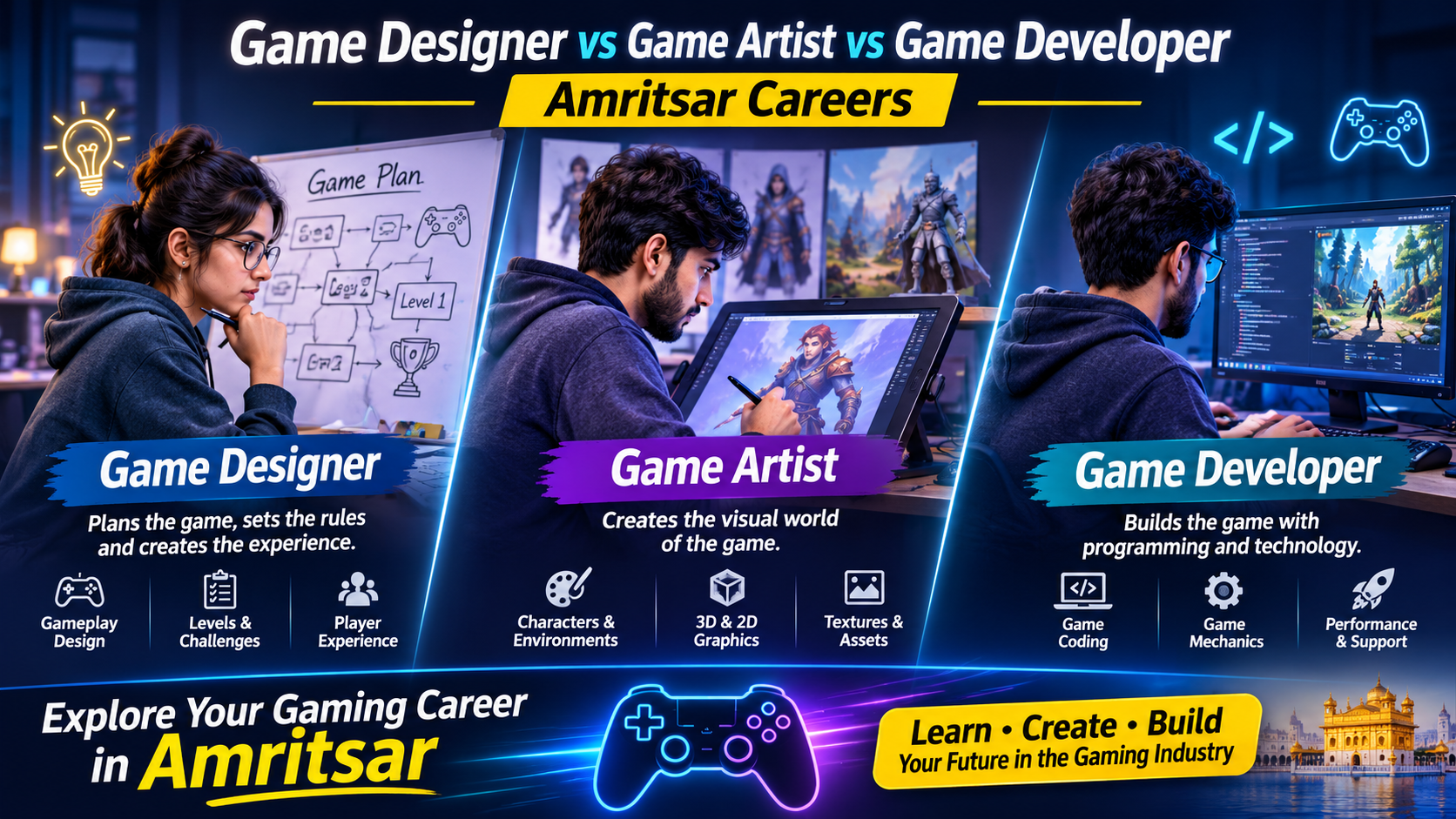
Game Designer: Plans the gameplay, rules, levels, and overall player experience.
Game Artist: Creates the characters, environments, objects, and visual elements.
Game Developer: Builds the technical systems and programming that make the game work.
For example, when creating a racing game, the Game Designer plans the tracks, rules, and racing challenges. The Game Artist creates the cars, roads, backgrounds, and visual effects. The Game Developer programs the vehicle controls, movement, collision systems, and gameplay functionality.
All three roles work together to create a complete gaming experience.
Skills Required for Each Career
Each career requires a different combination of creative and technical skills.
Skills for Game Designers
Creative thinking and storytelling.
Problem-solving and logical thinking.
Level and gameplay planning.
Understanding player experience.
Communication and teamwork.
Skills for Game Artists
Drawing and visual composition.
2D and 3D modelling.
Character and environment design.
Colour theory and texturing.
Animation and digital illustration.
Skills for Game Developers
Programming and logical thinking.
Knowledge of game engines.
Coding and debugging.
Understanding game mechanics.
Problem-solving and testing.
Popular Software Used in the Gaming Industry
Different software tools help professionals complete specific tasks during game creation.
Unity: Used for developing 2D and 3D games and interactive experiences.
Unreal Engine: Used for advanced game development and real-time 3D environments.
Blender: Used for 3D modelling, animation, and rendering.
Adobe Photoshop: Used for digital artwork, textures, and game graphics.
Figma: Used for designing game interfaces, menus, and UI layouts.
Godot: Used for creating 2D and 3D games.
Understanding these tools can help beginners explore different areas of game design, digital art, and development.
Which Gaming Career Is Right for You?
Choosing the right career depends on your interests, creativity, and technical abilities.
If you enjoy creating game ideas, planning missions, developing stories, and thinking about how players interact with games, Game Design may be suitable for you.
If you enjoy drawing, designing characters, creating digital artwork, or building 3D environments, Game Art could be an interesting direction.
If you enjoy programming, solving technical problems, understanding software, and building interactive applications, Game Development may be a better choice.
Students do not need to become professional gamers to explore these career options. Interest in creativity, technology, and regular practical learning can provide a useful starting point.
Career Opportunities Related to Game Design in Amritsar
The gaming industry connects with several creative and technical professions. Depending on their skills, education, practical experience, and portfolio, students can explore career paths such as:
Game Designer
2D Game Artist
3D Game Artist
Character Designer
Environment Artist
Game Animator
Level Designer
Game UI/UX Designer
Unity Developer
Unreal Engine Developer
These roles may also connect with animation, 3D modelling, visualisation, digital media, and interactive entertainment.
Start Exploring Gaming and Creative Skills at IAM Amritsar
If you are interested in gaming, digital creativity, animation, or interactive technology, understanding the difference between Game Designer, Game Artist, and Game Developer is a useful first step.
At IAM Amritsar, students can explore creative and technology-related learning opportunities to understand digital design concepts, visual development, and related software skills. Practical exercises and creative projects can help beginners identify their strengths and develop their interests.
Before choosing a learning path, discuss the available curriculum, software coverage, practical projects, course duration, and eligibility with the IAM team.
Conclusion
Game Designer, Game Artist, and Game Developer are three different but interconnected career paths in the gaming industry. Designers plan the gameplay, artists create the visuals, and developers build the technical functionality that brings everything together.
- Game Design
- Game Development
- Game Artist
- Gaming Careers
- 2D Game Design
- 3D Game Design
- Character Design
- Game Animation