Advanced Film Making in Amritsar: Direction, Sound Design and Post-Production
Film & Editing · Nandini · 29 October 2026
Explore Advanced Film Making in Amritsar and learn the essentials of film direction, sound design, cinematography, and post-production. Discover editing techniques, audio mixing, colour grading, and visual effects to develop practical filmmaking skills and bring your creative stories to life.
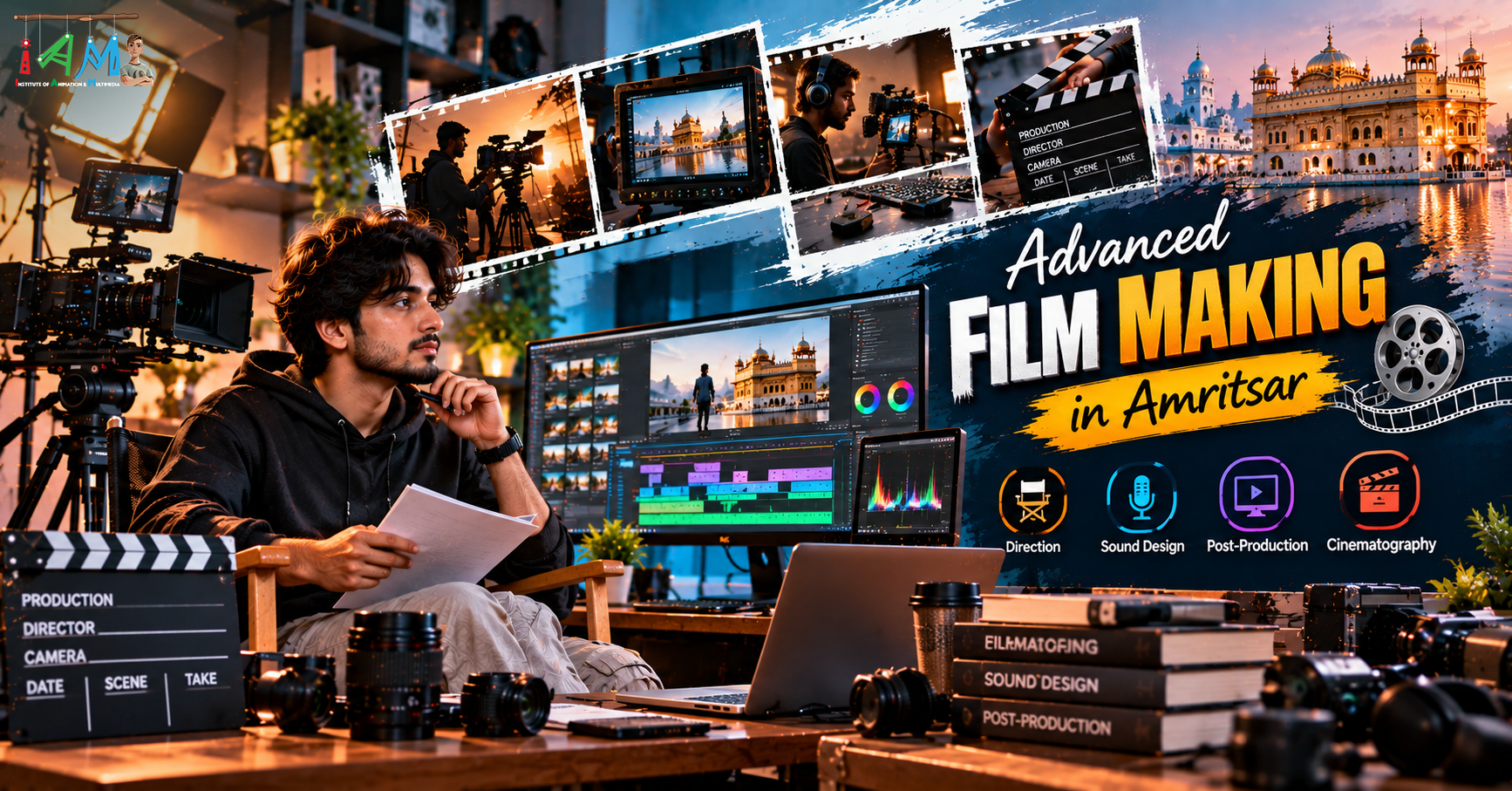
Advanced Film Making in Amritsar: Direction, Sound Design and Post-Production
Filmmaking is an art that combines storytelling, creativity, technology, and teamwork to bring ideas to life on screen. From short films and documentaries to advertisements, music videos, and feature films, every production requires careful planning and technical expertise. For aspiring filmmakers who want to develop their skills beyond the basics, understanding direction, sound design, and post-production is essential.
Advanced Film Making in Amritsar is an exciting subject for students and creative professionals interested in exploring the technical and artistic aspects of filmmaking. By learning how to direct scenes, create immersive sound, and refine footage during post-production, aspiring filmmakers can develop the skills needed to produce engaging visual stories.
Whether you are a beginner with filmmaking experience, a video editor, or someone interested in pursuing a career in film production, understanding these three areas can help you improve your creative approach and production workflow.
What Is Advanced Filmmaking?
Advanced filmmaking involves the planning, production, and refinement of films using professional storytelling techniques and production methods. It goes beyond operating a camera and recording footage. It requires an understanding of visual storytelling, directing actors, managing production teams, designing sound, and editing scenes into a coherent narrative.
Modern filmmaking also involves digital tools that help creators improve image quality, manipulate sound, add visual effects, and deliver content for different platforms.
Students exploring Advanced Film Making in Amritsar can benefit from understanding how the major stages of filmmaking work together to create a professional final product.
1. Film Direction: Turning Ideas into Visual Stories
Film direction is one of the most important aspects of filmmaking. A director guides the creative vision of a project and ensures that performances, camera movements, lighting, sound, and editing support the intended story.
Understanding Script and Story Development
Before shooting begins, filmmakers need a clear understanding of the screenplay. This includes the plot, characters, dialogue, setting, and emotional journey of the story.
Directors analyse scripts to identify important scenes, character motivations, and visual storytelling opportunities.
Key activities include:
Understanding the screenplay and its central message.
Developing a visual approach for each scene.
Planning shot sequences and camera angles.
Coordinating with cinematographers and production designers.
Guiding actors to deliver convincing performances.
Strong preparation helps reduce confusion during production and allows the team to work more efficiently.
Shot Composition and Camera Blocking
Shot composition determines how people, objects, and backgrounds appear within the frame. Camera blocking involves planning the movement and positioning of actors and cameras during a scene.
Directors use wide shots, medium shots, close-ups, and over-the-shoulder shots to communicate information and control audience attention.
For example, a close-up can emphasise an actor's emotions, while a wide shot can establish the setting and show the relationship between characters and their surroundings.
Understanding these techniques helps filmmakers create scenes that feel intentional and visually engaging.
Working with Actors and Production Teams
A director must communicate ideas clearly and collaborate with actors, cinematographers, editors, sound professionals, and other crew members.
Good direction involves explaining the purpose of a scene, providing useful performance feedback, and maintaining consistency throughout the production.
These skills are particularly important when working on short films, advertisements, music videos, and independent projects.
2. Sound Design: Creating an Immersive Experience
Sound design is often overlooked by beginners, but it plays a significant role in the emotional impact of a film. Clear dialogue, appropriate background music, and carefully selected sound effects help audiences understand scenes and connect with characters.
A professional filmmaking workflow considers sound during production as well as during post-production.
Dialogue Recording and Audio Quality
Dialogue communicates essential information and helps establish character relationships. Poorly recorded dialogue can make a film difficult to understand, even when the visuals are excellent.
Filmmakers should understand microphone placement, recording levels, background noise, and the importance of monitoring audio during shooting.
Good production sound reduces the need for extensive corrections later.
Foley and Sound Effects
Foley involves creating or recording everyday sounds that support on-screen actions. Examples include footsteps, clothing movements, doors closing, and objects being handled.
Sound effects can also be used to create atmosphere, emphasise movement, or establish an environment.
For example, a scene set on a busy street may combine traffic sounds, distant conversations, footsteps, and vehicle horns to make the location feel realistic.
Background Music and Emotional Impact
Music helps establish mood, build tension, and guide emotional responses. A suspenseful scene may use subtle sound textures, while a dramatic moment may benefit from a carefully timed musical score.
Sound designers must balance music with dialogue and sound effects to ensure that important information remains clear.
Audio Mixing
Audio mixing involves adjusting the volume, clarity, and placement of different sound elements.
A balanced mix allows dialogue, music, ambient sound, and effects to work together without competing for attention.
Learning these techniques can help aspiring filmmakers produce more polished and immersive content.
3. Post-Production: Shaping the Final Film
Post-production begins after the footage has been recorded. It includes editing, colour correction, sound editing, visual effects, titles, and final export.
This stage transforms raw footage into a finished film that communicates the director's intended vision.
Video Editing and Storytelling
Editing determines the order, timing, and rhythm of a film. Editors select the best takes, remove unnecessary material, arrange scenes, and maintain continuity.
Important editing techniques include:
Continuity editing.
Shot and scene transitions.
Dialogue editing.
Pacing and rhythm.
Montage sequences.
Audio synchronisation.
An effective edit ensures that the story flows naturally and that each scene contributes to the overall narrative.
Colour Correction and Colour Grading
Colour correction helps balance exposure, white balance, and colour consistency across shots. Colour grading then allows filmmakers to establish a particular visual style.
For example, a warm colour palette may create a welcoming atmosphere, while cooler tones may support a serious or suspenseful scene.
Learning these techniques helps filmmakers create visual consistency and strengthen the mood of their productions.
Visual Effects and Graphics
Visual effects can enhance footage by removing unwanted elements, combining images, creating digital environments, or adding computer-generated objects.
Titles, credits, motion graphics, and other visual elements can also improve the presentation of a film.
Depending on the project, filmmakers may use applications such as Adobe After Effects, Adobe Premiere Pro, DaVinci Resolve, or other specialised production tools.
Final Export and Delivery
The final stage involves preparing the film for its intended platform. Different platforms may require different resolutions, aspect ratios, codecs, and audio settings.
Filmmakers should review the final edit, check for sound problems, confirm colour consistency, and export the project using suitable settings.
Careful quality control ensures that the finished film looks and sounds as intended.
Why Learn Advanced Filmmaking in Amritsar?
Amritsar is a well-known cultural and educational centre in Punjab, making it an interesting place for aspiring creatives to explore filmmaking and multimedia skills.
Students interested in Advanced Film Making in Amritsar can focus on developing practical knowledge of direction, sound design, cinematography, editing, and post-production.
When choosing a filmmaking course, look for opportunities to work on practical projects, collaborate with other students, understand production workflows, and build a portfolio.
A good training programme should combine theoretical knowledge with hands-on experience so that students can apply what they learn to real creative projects.
Career Opportunities After Advanced Filmmaking Training
Filmmaking skills can be useful across different areas of the media and entertainment industry.
Potential career paths include:
Film Director
Assistant Director
Video Editor
Sound Designer
Post-Production Editor
Cinematographer
Documentary Filmmaker
Commercial Video Producer
Independent Filmmaker
Career opportunities depend on your practical skills, experience, portfolio, and professional network. Building original projects and collaborating with other creatives can help you gain experience and demonstrate your abilities.
Start Your Filmmaking Journey with IAM
Advanced filmmaking combines direction, sound design, and post-production to transform creative ideas into compelling visual stories. Understanding these areas helps aspiring filmmakers approach projects with greater confidence and a stronger technical foundation.
If you are interested in Advanced Film Making in Amritsar, focus on developing your storytelling abilities, practising camera techniques, learning sound fundamentals, and experimenting with editing workflows.
At IAM – Institute of Animation & Multimedia, aspiring creatives can explore learning opportunities in filmmaking and related areas, including video editing, VFX, graphic designing, 3D modelling, and Generative AI.
Before enrolling, review the available syllabus, practical training, course duration, and fees to find a programme that matches your goals.
Ready to bring your stories to life? Start developing your filmmaking skills and take the next step towards exploring opportunities in the creative industry.
- Advanced Film Making in Amritsar
- Film Making Course in Amritsar
- Film Direction Training
- Sound Design for Films
- Film Post-Production
- Cinematography and Film Editing
- Filmmaking Training in Amritsar
- Film Production Techniques