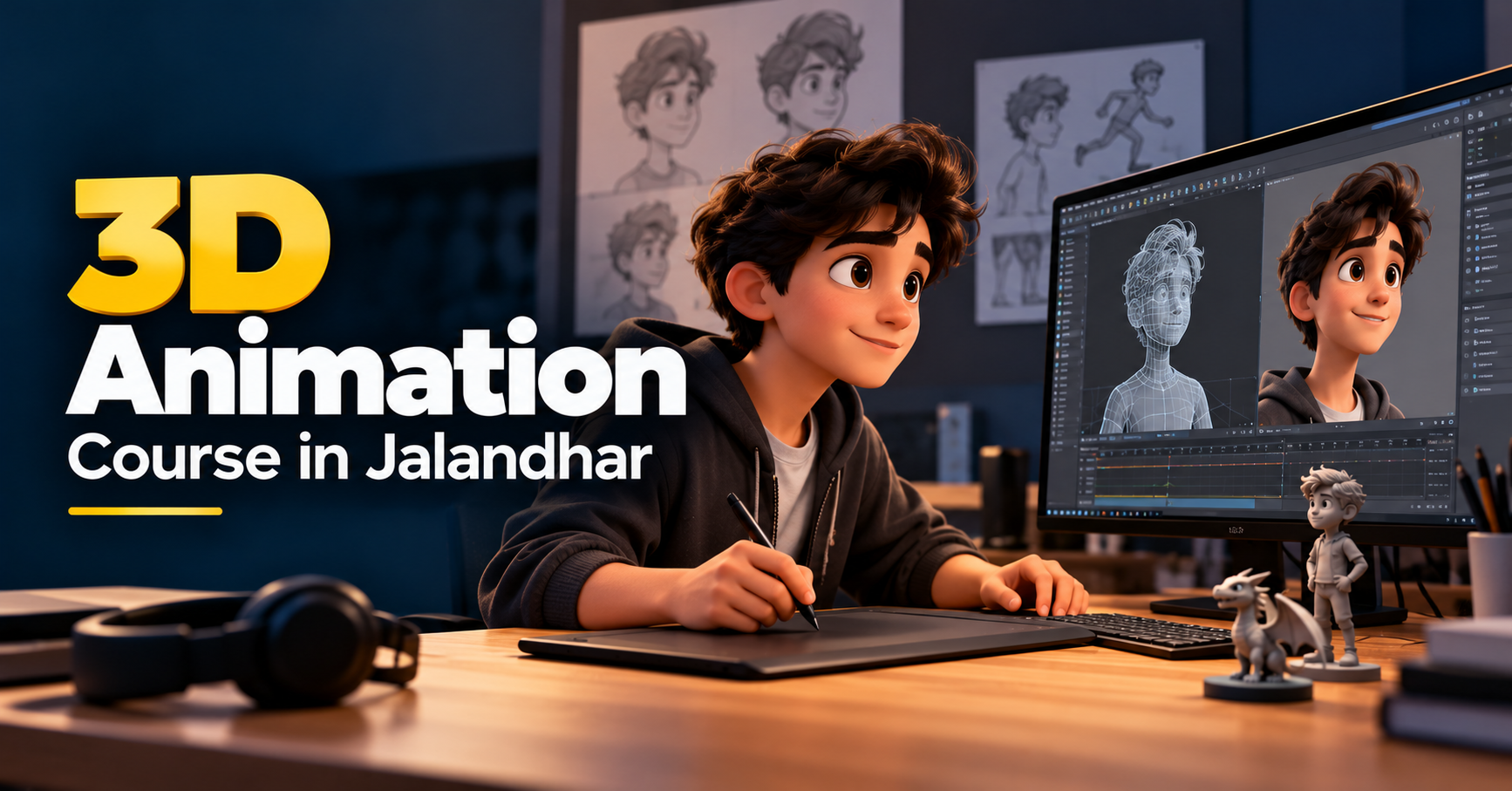
3d Animation Course in Jalandhar
3D Animation Course in Jalandhar – Turn Imagination into Motion at IAM
A character comes to life. A fantasy world feels real. An ordinary object becomes part of an extraordinary visual story. That is the creative power of 3D animation.
The 3D Animation Course in Jalandhar at IAM – Institute of Animation and Multimedia is designed for learners who want to explore the art and technology behind animated characters, digital environments, and moving 3D visuals. Whether you are fascinated by animated films, video games, visual storytelling, or digital content, 3D animation offers a way to transform ideas into visual experiences.
3D animation combines creativity, design, movement, timing, and technical understanding. It involves building digital objects, shaping characters, creating environments, and bringing scenes to life through motion. With the right learning foundation, students can begin exploring how animated visuals are developed from an initial concept to a finished sequence.
What Is 3D Animation?
3D animation is the process of creating movement within a three-dimensional digital environment. Unlike traditional 2D animation, which works with height and width, 3D animation also uses depth to create objects and scenes that can be viewed from different angles.
A 3D animated scene may include characters, props, lighting, textures, backgrounds, and camera movement. These elements are brought together to create a visual sequence.
3D animation is used across various creative industries, including:
Animated films and entertainment
Video games
Advertising and promotional content
Television and digital media
Architectural visualization
Product visualization
Educational and explainer videos
Virtual production and immersive experiences
Learning the fundamentals of 3D animation can help students understand how these visual experiences are created.
What You Can Explore in a 3D Animation Course
3D animation involves several connected creative processes. A structured learning experience can introduce students to these processes and help them understand how a 3D scene develops.
1. Understanding the 3D Workspace
Every 3D project begins with understanding the digital environment. Learners can explore how to navigate a 3D workspace, view objects from different angles, and work with essential scene elements.
Topics may include:
3D viewport navigation
Object selection and transformation
Working with coordinates
Scene organization
Understanding basic 3D terminology
Managing objects and assets
These fundamentals provide a starting point for working with 3D animation software.
2. 3D Modeling – Build Your Digital World
Modeling is the process of creating three-dimensional objects. It can involve designing simple props, everyday objects, stylized assets, or more detailed forms.
Learners may explore:
Basic geometric shapes
Polygon modeling concepts
Object proportions
Shape refinement
Modeling tools and workflows
Creating simple 3D assets
From a basic object to a detailed digital prop, modeling helps transform visual ideas into three-dimensional forms.
3. Materials, Textures, and Surface Details
A 3D model becomes more visually convincing when its surface has the right appearance. Materials and textures help define whether an object looks metallic, wooden, plastic, rough, smooth, or glossy.
This area may introduce learners to:
Material properties
Texture fundamentals
Surface appearance
Colour selection
UV mapping concepts
Applying materials to 3D objects
Understanding these concepts helps students develop more detailed and visually appealing 3D scenes.
4. Lighting – Shape the Mood of a Scene
Lighting can change the way a 3D scene feels. A bright environment may look cheerful, while dramatic shadows can create tension or mystery.
Learners can explore lighting concepts such as:
Basic light types
Light placement
Shadows and highlights
Scene illumination
Lighting for mood
Basic render settings
Lighting is an important part of visual storytelling because it guides attention and helps establish the atmosphere of a scene.
5. Rigging – Prepare Characters for Movement
Rigging involves creating a digital structure that allows a character or object to move. A rig may include joints, controls, and relationships that help animators pose and animate a model.
Possible learning areas include:
Basic skeletal structures
Joints and hierarchy
Character controls
Simple rigging concepts
Preparing a model for animation
Rigging connects the modeling process with animation, allowing digital characters to be posed and moved.
6. 3D Animation – Bring Ideas to Life
Animation is where a static 3D model begins to move. Animators use timing, spacing, poses, and movement principles to create actions that communicate emotion and intention.
Learners may explore:
Keyframes
Timing and spacing
Object movement
Basic character animation
Pose development
Animation curves
Movement principles
Simple animation sequences
Whether it is a character walking, an object bouncing, or a camera moving through a scene, animation helps create a sense of life and motion.
7. Camera Movement and Visual Storytelling
A 3D scene is not only about the objects inside it. The camera also plays a role in how the audience experiences the scene.
Learners can explore:
Camera positioning
Framing and composition
Camera movement
Scene depth
Visual focus
Basic shot planning
These concepts can help students understand how camera choices influence the presentation of a 3D animation.
8. Rendering and Final Output
Rendering is the process of generating the final image or sequence from a 3D scene. It combines elements such as models, materials, lighting, and camera settings to produce the finished visual output.
Learners may explore:
Render settings
Image quality fundamentals
Lighting and material review
Frame output
Basic render optimization
Preparing animation for presentation
Rendering brings the different parts of a 3D project together into a final visual result.
The topics above describe common 3D animation learning areas. Please confirm IAM’s current software, syllabus, project work, and training structure before publishing them as guaranteed course inclusions.
From Your First Model to Your First Animation
3D animation is a creative process built step by step. A simple learning project might begin with a basic object, move into modeling and materials, and then introduce animation and rendering.
For example, a student could create a stylized 3D character, apply materials, set up lighting, and animate a short movement sequence. The project can help demonstrate how separate 3D concepts work together.
A portfolio may include:
3D models and props
Character poses
Short animation clips
Lighting studies
Turntable renders
Simple animated scenes
Creating and refining projects can help learners demonstrate their creative development and technical understanding.
Who Can Learn 3D Animation?
The 3D Animation Course in Jalandhar may be suitable for:
Creative beginners: People who want to explore digital art and animation from the fundamentals.
Students: Learners interested in animation, multimedia, filmmaking, or game-related creative fields.
Aspiring animators: Individuals who want to understand how animated characters and objects are created.
Digital artists: Creators who want to explore three-dimensional modeling and motion.
Video and multimedia learners: People interested in adding 3D visuals to their creative skill set.
A passion for visual storytelling, patience, and willingness to practice can be helpful when learning animation.
Career Areas Related to 3D Animation
3D animation skills can be relevant to a range of creative roles. Depending on a learner’s specialization, practical experience, software knowledge, and portfolio, possible areas may include:
3D Animator
3D Modeling Artist
Character Animator
3D Generalist
Lighting Artist
3D Visualization Artist
Animation Production Assistant
Multimedia Artist
Career opportunities vary by employer and individual capability. A course does not guarantee a job; building a strong portfolio and continuing to practice are important parts of professional development.
Why Explore 3D Animation at IAM Jalandhar?
Learning 3D animation can help you explore a creative field where art and technology work together. At IAM – Institute of Animation and Multimedia, learners can enquire about training options that introduce them to the world of animation and digital visual creation.
Before enrolling, ask about:
Current course syllabus
Software covered
Course duration and fees
Practical assignments and projects
Portfolio development
Batch timings
Admission requirements
Understanding these details can help you choose a course that matches your interests and learning goals.
Begin Your 3D Animation Journey in Jalandhar
Every animated scene begins with an idea. With modeling, materials, lighting, movement, and rendering, that idea can gradually become a complete visual experience.
Explore the 3D Animation Course in Jalandhar at IAM – Institute of Animation and Multimedia and discover the creative possibilities of three-dimensional animation.
Contact IAM to learn more about the course, current syllabus, fees, duration, and admission process.
Bring Your Imagination to Life with 3D Animation
Explore 3D modeling, materials, lighting, rigging, animation, camera movement, and rendering with the 3D Animation Course in Jalandhar at IAM.
Tell us whatyou wantto create.
A few lines about yourself and the course you're interested in. Our admissions team replies within two working days, and you can book a free campus visit or demo class.
Call admissions→Or send an enquiry to your nearest campus- Phone
- +91 98881 22241
- Address
- 1st Floor, IAM, Crystal Plaza, SCS 78, opp. PIMS Hospital, Jalandhar, Punjab 144001