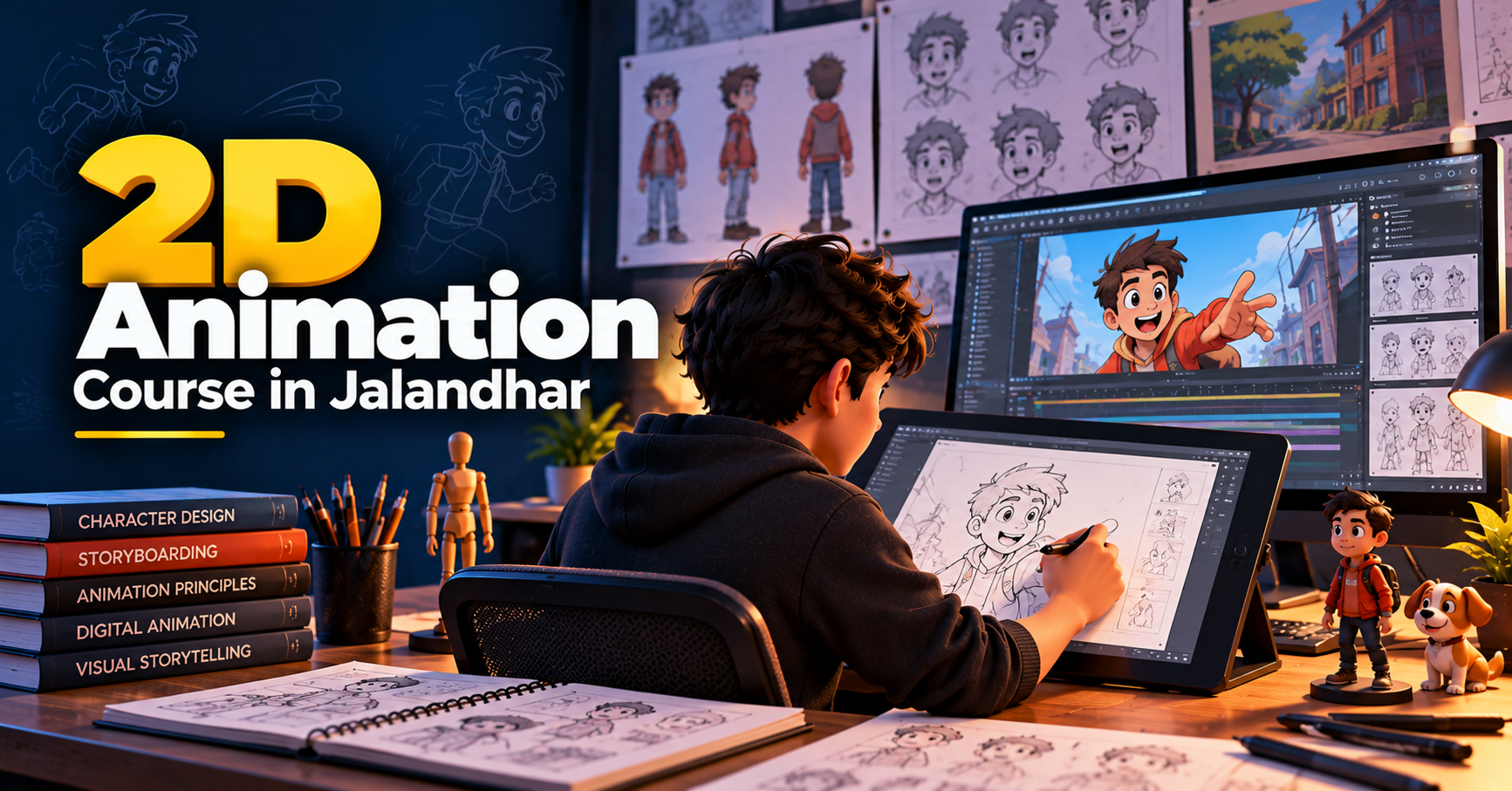
2D Animation Course in Jalandhar
2D Animation Course in Jalandhar – Bring Your Drawings to Life at IAM
A simple drawing can become a character. A series of illustrations can turn into a story. And a few carefully planned frames can create the illusion of movement. This is the creative magic of 2D animation.
The 2D Animation Course in Jalandhar at IAM – Institute of Animation and Multimedia is for learners who enjoy drawing, visual storytelling, character creation, and creative expression. Explore how static illustrations are transformed into animated sequences through movement, timing, expressions, and storytelling.
From expressive characters and imaginative backgrounds to animated scenes and short visual stories, 2D animation combines artistic ideas with a structured production process.
Whether you are interested in cartoons, animated films, digital content, or motion-based storytelling, learning 2D animation can help you understand how stories are created frame by frame.
The Art of Making Drawings Move
2D animation creates the illusion of movement using a sequence of images. Each frame represents a moment in an action, and when the frames are played in order, the viewer sees movement.
Animators carefully consider the position, expression, timing, and spacing of objects or characters to make an action feel believable.
A character may blink, jump, laugh, walk, or react to something. Even a simple movement can communicate emotion when it is planned thoughtfully.
2D animation is used in many creative areas, including:
Animated films and cartoons
Television and web series
Explainer videos
Educational content
Advertising and promotional videos
Motion graphics
Digital storytelling
Game animation and interactive media
From a Sketch to a Story: The 2D Animation Process
2D animation is more than drawing a sequence of pictures. It involves planning, designing, animating, refining, and presenting a visual story.
1. Story Ideas and Visual Planning
Every animation begins with an idea. It could be a funny character moment, an emotional scene, or a short story told through movement.
Before animation begins, creators often plan the sequence and decide how the story will unfold.
This stage may involve:
Story concepts
Character ideas
Scene planning
Basic script development
Storyboarding
Shot sequence planning
Storyboarding helps organize the story visually and gives the animator a guide for the scenes that need to be created.
2. Character Design – Give Your Ideas a Personality
Characters are often the heart of an animated story. Their shapes, expressions, colours, and movements can help communicate their personality.
Character design may explore:
Character silhouettes
Shape language
Facial expressions
Body proportions
Character poses
Turnaround drawings
Visual consistency
A character designed for comedy may use exaggerated expressions, while a character in a dramatic story may rely on subtle facial movements.
3. The Fundamentals of Drawing for Animation
Drawing is an important foundation for many 2D animation workflows. Animators use sketches and poses to communicate movement, emotion, and action.
Learners may explore concepts such as:
Basic forms and proportions
Gesture drawing
Line of action
Poses and silhouettes
Perspective fundamentals
Drawing expressions
Visual clarity
The goal is not only to create attractive drawings, but also to make actions and emotions easy to understand.
4. Animation Principles – Make Every Movement Feel Alive
Animation principles help make movement feel clear, expressive, and engaging. They guide how an action begins, develops, and finishes.
Common principles include:
Squash and Stretch: Helps communicate flexibility, weight, and impact.
Anticipation: Prepares the audience for an action before it happens.
Timing: Influences the speed and feeling of a movement.
Spacing: Determines how far an object moves between frames.
Follow-Through and Overlapping Action: Helps movement feel connected and natural.
Arcs: Describes the curved paths often followed by natural movement.
Exaggeration: Makes actions or expressions more expressive when used intentionally.
These principles can be applied to character actions, objects, and animated scenes.
5. Frame-by-Frame Animation
Frame-by-frame animation involves drawing or adjusting images across a sequence to create movement. Each frame contributes to the action.
For example, a character walking requires a sequence of poses that communicate the movement of the body, legs, arms, and head.
Learners may explore:
Key poses
In-between frames
Walk cycles
Basic action sequences
Facial animation
Timing and spacing
Refining movement
This approach can help animators understand how movement is constructed and how small changes between frames affect the final result.
6. Digital 2D Animation Workflows
Digital animation tools allow artists to create, edit, organize, and refine animation sequences. Depending on the software and course structure, learners may explore digital workflows such as:
Working with animation timelines
Managing layers
Creating keyframes
Using drawing tools
Organizing scenes
Editing animation sequences
Preparing animated output
The specific software covered should be confirmed with IAM before publishing the course details as final.
7. Backgrounds, Colour, and Scene Composition
An animated character needs a visual world to inhabit. Backgrounds and colours help establish the location, mood, and atmosphere of a scene.
This area may introduce learners to:
Background design
Colour selection
Scene composition
Foreground and background elements
Visual depth
Mood and atmosphere
Character-background integration
A well-designed scene can support the story without distracting the audience from the main action.
8. Sound and Final Animation Output
Sound can make an animation more expressive. Dialogue, music, and sound effects help communicate action and emotion.
The final stage may involve:
Basic audio integration
Dialogue and sound-effect placement
Reviewing animation timing
Scene refinement
Export settings
Preparing the final video
Sound and visual timing work together to create a more complete animated experience.
The topics above describe common 2D animation learning areas. Confirm IAM’s actual syllabus, software, duration, and practical assignments before publishing them as confirmed course inclusions.
What Can You Create with 2D Animation?
2D animation offers many ways to communicate ideas visually. Depending on the project and skills developed, learners may explore creative formats such as:
Short animated stories
Cartoon character sequences
Animated explainer videos
Educational animations
Character walk cycles
Animated social media content
Motion-based illustrations
Short promotional animations
A small project can be a useful way to practice timing, character expression, scene planning, and storytelling.
Who Can Explore 2D Animation?
The 2D Animation Course in Jalandhar may be suitable for:
Creative beginners: People who want to explore animation and visual storytelling.
Students: Learners interested in animation, multimedia, illustration, or digital media.
Drawing enthusiasts: Individuals who enjoy creating characters, expressions, and illustrations.
Aspiring animators: People interested in learning how animated movement is created.
Digital content creators: Creators who want to explore animated visuals for videos and online content.
Visual storytellers: Individuals who enjoy communicating ideas through characters, scenes, and movement.
An interest in creativity and a willingness to practice can be a helpful starting point.
Career Areas Related to 2D Animation
2D animation skills may be relevant to different creative roles. Depending on specialization, experience, practical skills, and portfolio, learners may explore areas such as:
2D Animator
Character Animator
Animation Artist
Storyboard Artist
Digital Illustrator
Motion Graphics Artist
Animation Production Assistant
Multimedia Artist
Career opportunities depend on individual skills, portfolio quality, and employer requirements. Completing a course does not guarantee a job or income.
Why Explore 2D Animation at IAM Jalandhar?
2D animation brings together drawing, movement, storytelling, and digital creativity. Learning its fundamentals can help students understand how visual ideas are transformed into animated experiences.
At IAM – Institute of Animation and Multimedia, Jalandhar, learners can enquire about the 2D Animation Course and explore how it aligns with their creative interests.
Before enrolling, ask about:
Current course syllabus
Software covered
Course duration and fees
Practical assignments
Animation projects
Portfolio development
Batch timings
Admission requirements
These details can help you understand whether the course matches your learning goals.
Start Your 2D Animation Journey in Jalandhar
Every animated story begins with a simple idea. Through drawing, character design, timing, movement, and visual storytelling, that idea can become a sequence that captures attention and imagination.
Explore the 2D Animation Course in Jalandhar at IAM – Institute of Animation and Multimedia and discover the creative process behind bringing illustrations to life.
Contact IAM to learn more about the course syllabus, fees, duration, batch timings, and admission process.
Bring Your Drawings to Life with 2D Animation
Explore character design, drawing, animation principles, frame-by-frame animation, and visual storytelling with the 2D Animation Course in Jalandhar at IAM.
Tell us whatyou wantto create.
A few lines about yourself and the course you're interested in. Our admissions team replies within two working days, and you can book a free campus visit or demo class.
Call admissions→Or send an enquiry to your nearest campus- Phone
- +91 98881 22241
- Address
- 1st Floor, IAM, Crystal Plaza, SCS 78, opp. PIMS Hospital, Jalandhar, Punjab 144001